After my car accident, I went through an incredibly challenging time. Thanks to Lawyer Jun Lee and his exceptional team, I received tremendous support and strength.
Jay Kim
Personal Injury Client


Trusted by accident victims and businesses across Ontario
Overview
Were you injured in an accident while not working, and now your insurer says there's nothing for you? Our experienced non-earner benefits lawyers in North York represent the accident victims Ontario's benefits system most often shortchanges. The full-time students. The recent graduates still job-hunting. The stay-at-home parents, retirees, and unemployed accident victims who don't qualify for income replacement benefits, and whose claim for the non-earner benefit (NEB) is denied as a matter of insurer routine. Our team has recovered over $30M+ for accident victims across North York, Ontario and the GTA. NEB claims hold a special place in that practice. They belong to the people the system implicitly tells "your time wasn't worth anything", and the law, properly argued, says otherwise.
Start by understanding what the benefit is and why insurers fight it. Section 12 of the Statutory Accident Benefits Schedule (the Ontario regulation that sets out the accident benefits available under an auto insurance policy) governs this benefit. If the policy bought non-earner coverage, the insurer pays a weekly amount that the coverage sets, not an amount the Schedule sets, and it pays that amount to a narrower group of people than it once did. The $185 per week figure people know was the Schedule's standard rate before the benefit became an optional purchase. Treat it as a benchmark, and check the certificate of insurance (the page listing what the policy actually bought) for the real number. The benefit goes to an insured person who sustains an impairment in an accident and, within 104 weeks, suffers a "complete inability to carry on a normal life." Nothing is payable for the first 4 weeks after that complete inability begins, and nothing is payable more than 104 weeks after the accident.

One change now governs every NEB file, and it belongs before anything else. Since July 1, 2026 the non-earner benefit is itself an optional purchase rather than part of every policy, and the group of people it can be paid to was narrowed at the same time. Start with what is certain. Medical, rehabilitation and attendant care stayed mandatory on every Ontario policy, so treatment and personal care funding are yours whatever else turns out to be true. The non-earner benefit now depends on two questions instead of one. First, was this coverage actually bought on the policy that responds to your accident? Second, are you one of the people the narrowed rules still cover, meaning the named insured (the person the policy is in the name of), that person's spouse, a dependant of either, or a driver listed on the policy? If you are not linked to a policy in one of those four ways, you get the three mandatory benefits, medical, rehabilitation and attendant care, and nothing more, no matter how much optional coverage the driver who struck you bought. So the first real work on the file is establishing which policies you connect to, and how.
That phrase, "complete inability to carry on a normal life," is where these claims are won and lost. Read literally, the way insurer denial letters read it, it sounds like a benefit reserved for the bedridden. If you can dress yourself, walk to the corner, or make a sandwich, the insurer examination (IE) report says you're "independent with self-care" and the denial follows. But that literal reading is not the law.
Ontario's Court of Appeal set the governing approach years ago, and tribunals apply it still. The analysis compares your life before the accident to your life after it. It weighs the activities you ordinarily engaged in, and asks whether the impairment continuously prevents you from engaging in substantially all of them. Critically, engagement is assessed qualitatively. An activity you can technically perform, but only with pain, only partially, only rarely, or only as a shadow of how you lived it before, may no longer count as "engaging" in it at all.
The student who attends class but absorbs nothing through the headaches. The grandmother who "can cook" but no longer hosts the Sunday dinners that organized her family's week. The retiree whose walking, gardening, volunteering life has contracted to a couch. These are exactly the claims the case law protects and the IE reports erase.
Two traps make early legal advice in NEB claims worth more than almost anywhere else in the benefits system. The first is the election trap. You cannot receive both income replacement and non-earner benefits. Claimants eligible for both must elect one, and the election is made early, often on an adjuster's framing. Choosing wrong, or being steered wrong, can cost the larger benefit. Tribunals have unwound invalid elections, but the cleanest path is making the right one the first time, with advice.
The second is the deduction question in your lawsuit. When your tort claim (a civil lawsuit for damages) against the at-fault driver resolves, defendants routinely argue NEBs should be deducted from your income-loss award. Ontario courts have grappled with whether the NEB compensates income, which is deductible, or loss of enjoyment of normal life, which is not. It is a live, technical fight worth real money, and your benefits file and your lawsuit must navigate it together, under one strategy.
Based right here in North York at 1110 Finch Ave W, VC Lawyers brings 70+ years of combined experience in Ontario's accident benefits system to every NEB file. That covers the applications, the Ontario Claim Form 3 (OCF-3) framing, the IE responses, the Licence Appeal Tribunal (LAT) disputes within two years of every denial, and the tort coordination.
We work under a written contingency fee agreement, so there are no upfront legal fees. You get a free consultation, and no legal fee is payable unless the claim succeeds.
Get in touch
Tell us what happened and a lawyer will personally review your case. Personal injury consultations are free and there are no fees unless we win. For all other practice areas, a consultation fee applies.
Prefer to call? (416) 661-4529

Background
Look at who actually gets hurt on North York's roads and the NEB's constituency appears immediately. The York University and Seneca students crossing Keele and Finch. The stay-at-home parents driving the school runs of Willowdale and Bathurst Manor. The retirees walking the plazas and parks of Bayview Village and Parkwoods.
They are struck as pedestrians, injured as passengers, and hurt in collisions. None of them are on a payroll, and all of them live full lives the accident contracted. Medical, rehabilitation and attendant care are theirs on whichever policy responds, without conditions. The income replacement benefit has nothing for them, and the non-earner benefit is the system's answer to the rest of that loss. Since July 1, 2026, reaching it takes two things: a policy that bought the coverage, and a connection to that policy as the named insured, the spouse, a dependant of either, or a listed driver. A student on a parent's policy is usually inside that class. A pedestrian with no policy in the household may be outside it entirely, whatever the driver who struck them bought. Working out which of those describes you is where these files begin, and the insurer's reflexive denial of the claims that clear it is the gap this practice fills.
The words: an impairment that, within 104 weeks of the accident, causes a complete inability to carry on a normal life. The Schedule defines that as an impairment that continuously prevents the person from engaging in substantially all of the activities in which the person ordinarily engaged before the accident.
The approach the courts require: a genuine comparison of the claimant's activities and life circumstances before the accident against after. That makes the pre-accident evidence half the case. Whose normal life? Yours. The test is anchored in your actual activities, not an average person's. That is why a rich, documented before-picture, meaning the course load, the caregiving schedule, the volunteering, the garden, the grandchildren, is the strongest single asset an NEB claim can hold.
The qualitative principle is where most denials fall apart. "Engaging in" an activity means engaging in it substantially as before. The decisions are consistent: doing an activity with significant pain may not qualify as engaging in it. Neither does doing it occasionally where it was daily, partially where it was complete, or in a manner that guts what the activity was.
The IE report's checklist ("independent with self-care, housekeeping and mobility") answers the literal question. The law asks the comparative, qualitative one. The gap between those questions is where wrongly denied NEBs are won back.
The honest boundary: pain alone, without proof of what it prevents, has lost at the Tribunal. Claimants whose evidence stops at "I hurt" rather than detailing the activities continuously prevented give the literal reading room to operate. The lesson isn't that the test is harsh. It's that the evidence must be built specifically, activity by activity, before and after.
Not sure where you stand? One conversation will tell you.

Students and recent graduates. Full-time students whose education the accident derailed. The before-picture lives in transcripts, course loads, and extracurriculars; the after-picture lives in the failed semesters, the accommodations, and the program withdrawals. Where applicable, education-related expense provisions may add to the claim. A student's contracted life, meaning study, sport, social, and part-time everything, maps onto the NEB test as clearly as any claimant's.
Stay-at-home parents and caregivers. The household's unpaid work, covering childcare, eldercare, and the home itself. Their "normal life" was structured, demanding, and entirely activity-based. That makes the before-and-after comparison vivid when documented: who does the school runs now, who lifts the toddler, who cooks for the household, who cares for the parent the claimant cared for. Where the separate caregiver benefit is in play, whether as optional coverage or in catastrophic cases, we claim that too. They are different benefits with different tests.
Retirees. The constituency insurers discount most and the test protects equally. A retirement of walking, gardening, volunteering, faith community, grandchildren, and travel is a normal life in the fullest sense. Its contraction to pain management and a recliner is precisely what the benefit compensates. Age does not dilute the claim; the comparison is to your before, at any age.
The unemployed and between-jobs. Job seekers, recent arrivals, and people on other benefits: the claimants the IRB structure excludes and the NEB catches, provided a policy in the picture bought the coverage and counts them as named insured, spouse, dependant, or listed driver. The before-picture is built from the actual life lived, including the search, the training, the family role, and the day's real content.
IRB vs. NEB: choose once, choose right. Some claimants arguably qualify for both, including the part-time worker, the student with a job, and the recently employed, and the Schedule forces an election between them. The numbers differ. The IRB's 70%-of-gross calculation runs against the NEB's flat weekly amount, and the benefits carry differing durations and tests. Since July 1, 2026 both are optional purchases available to a narrower group, so the election only arises where one policy bought both and you stand inside that policy's class of named insured, spouse, dependant, or listed driver. The weekly amounts are the ones the certificate fixes, so reading the certificate, and confirming where you sit on it, is step one of the comparison.
The adjuster's framing is not advice, and elections made wrong are presumptively final. Tribunals have unwound elections made without proper information, but the appeal is the hard road and the informed first choice is the easy one. No one should sign an election form without the comparison done.
The tort deduction fight. When your lawsuit settles or goes to verdict, defendants argue your NEBs should be deducted from the income-loss award under the Insurance Act's collateral-benefits rules (provisions that can reduce court awards by insurance benefits already received). Ontario's courts have pulled in both directions. Some lines of authority treat the NEB as compensation for loss of enjoyment of normal life, not deductible from income awards. Others treat it as income replacement, and therefore deductible.
The dollars at stake are exactly the NEBs you received. The argument is won with positioning that starts long before settlement, in how the benefits file and the lawsuit characterize the same benefit. One firm running both files is not a convenience here; it's the strategy.
By the numbers
The test, the case law, and the traps that define NEB practice.

Living in North York
Not every life runs through a payroll, and North York's days prove it on every block. The Seneca student on the Finch bus with a course load and three volunteer commitments. The Willowdale parent whose "job" is two school runs, a toddler, and an aging mother across the hall. The Parkwoods retiree whose week is the garden, the mall walk, the faith community, and the grandchildren on Sundays.
When a collision contracts one of those lives, no paycheque stops, but a life does. Ontario's benefits system wrote the non-earner benefit for exactly that loss. Our practice exists to make the system keep that promise, for the claimants it was written for and most often denied to.
The deadlines here are shorter than most people expect.
Step by step
Our process
Important
NEB timelines are unforgiving twice over. The standard Statutory Accident Benefits Schedule (SABS) clocks apply: notice within 7 days, the application within 30 days, and 2 years from each denial to the LAT. The benefit's own structure adds more. Nothing is payable for the first 4 weeks after the complete inability begins, entitlement is tied to the 104-week window, and payment stops 104 weeks after the accident, so delayed fights are fights over a shrinking pot. And the IRB/NEB election, once made, is presumptively final. Whether you're applying, electing, or holding a denial, get advice now. Contact a non-earner benefits lawyer in North York today.
Every situation is different. Yours deserves a specific answer.
Know their playbook
In the news
The NEB's public life happens in tribunal decisions and insurance-industry reporting rather than headlines. The pattern those decisions document is remarkably stable. Insurers deny on literal readings and IE checklists ("independent with self-care"). Claimants lose where the evidence stopped at pain, and win where the comparative, qualitative record was built, under an analytical framework Ontario's Court of Appeal settled years ago and the Licence Appeal Tribunal applies still.
Around the edges, reform keeps moving. Benefit levels, waiting periods, and durations have shifted across successive SABS amendments, and the July 1, 2026 changes moved the non-earner benefit itself into the optional column and confined it to the named insured, the spouse, dependants of either, and drivers listed on the policy, while leaving medical, rehabilitation and attendant care mandatory for everyone injured. So what governs your claim is the Schedule as of your accident date, the coverage actually bought, and your own place on the policy that bought it.
For claimants, the documented pattern is the practical lesson: NEB outcomes track evidence quality more tightly than almost any benefit in the system. The law's test is more generous than the denial letter's. The distance between them is crossed with a before-and-after record built the way the case law rewards.
Rather ask someone who handles these matters every week?
Why VC Lawyers
Choosing wisely
Before hiring any firm, ask a few questions. Do they know the comparative, qualitative test the Court of Appeal set, and build evidence to it, activity by activity? Will they invest in the before-picture, meaning the inventory, the witnesses, and the records, that decides these claims? Do they treat the IRB/NEB election as the binding financial decision it is? Will they answer IE checklists with the framework the law actually applies, and run the LAT hearing on it? And do they protect the tort-deduction fight from the benefits file forward, with both claims under one roof?
At VC Lawyers, the answer to each is yes, from an office in the heart of North York, on a contingency fee agreement you sign before we begin, in your language.
Still weighing what to do next? That is what a first conversation is for.
Verified Reviews
4.8 rating of 140 reviews
After my car accident, I went through an incredibly challenging time. Thanks to Lawyer Jun Lee and his exceptional team, I received tremendous support and strength.
Jay Kim
Personal Injury Client
He helped me with both my car accident case and the buying and selling of my home. Everything was handled professionally and efficiently.
Yoon Jung
Personal Injury & Real Estate Client
Vaturi & Cho LLP is an outstanding law firm. They explain even complex matters clearly, and their dedication to achieving the best outcomes is truly impressive.
Jong Ko
Client
The fact that I could consult with a Korean lawyer in my own language was an enormous comfort.
Grace Hong
Personal Injury Client
The office of Lawyer Jae Hyon Cho handled my case quickly and worked their hardest to wrap things up exactly the way I wanted. I'm so grateful. Every staff member was kind.
KYOUNGHEE AN
Personal Injury Client
We've worked with them on several urgent tasks for real estate and corporation related matters and his professionalism and client-centered work have been incredibly helpful for us.
Jinah Lee
Real Estate Client
They are professional, responsive, and knowledgeable. Jae took his time to explain the many pages of legal jargon that would otherwise be difficult to understand.
Kevin Chiu
Client
After my car accident, I went through an incredibly challenging time. Thanks to Lawyer Jun Lee and his exceptional team, I received tremendous support and strength.
Jay Kim
Personal Injury Client
He helped me with both my car accident case and the buying and selling of my home. Everything was handled professionally and efficiently.
Yoon Jung
Personal Injury & Real Estate Client
Vaturi & Cho LLP is an outstanding law firm. They explain even complex matters clearly, and their dedication to achieving the best outcomes is truly impressive.
Jong Ko
Client
The fact that I could consult with a Korean lawyer in my own language was an enormous comfort.
Grace Hong
Personal Injury Client
The office of Lawyer Jae Hyon Cho handled my case quickly and worked their hardest to wrap things up exactly the way I wanted. I'm so grateful. Every staff member was kind.
KYOUNGHEE AN
Personal Injury Client
We've worked with them on several urgent tasks for real estate and corporation related matters and his professionalism and client-centered work have been incredibly helpful for us.
Jinah Lee
Real Estate Client
They are professional, responsive, and knowledgeable. Jae took his time to explain the many pages of legal jargon that would otherwise be difficult to understand.
Kevin Chiu
Client
Our team
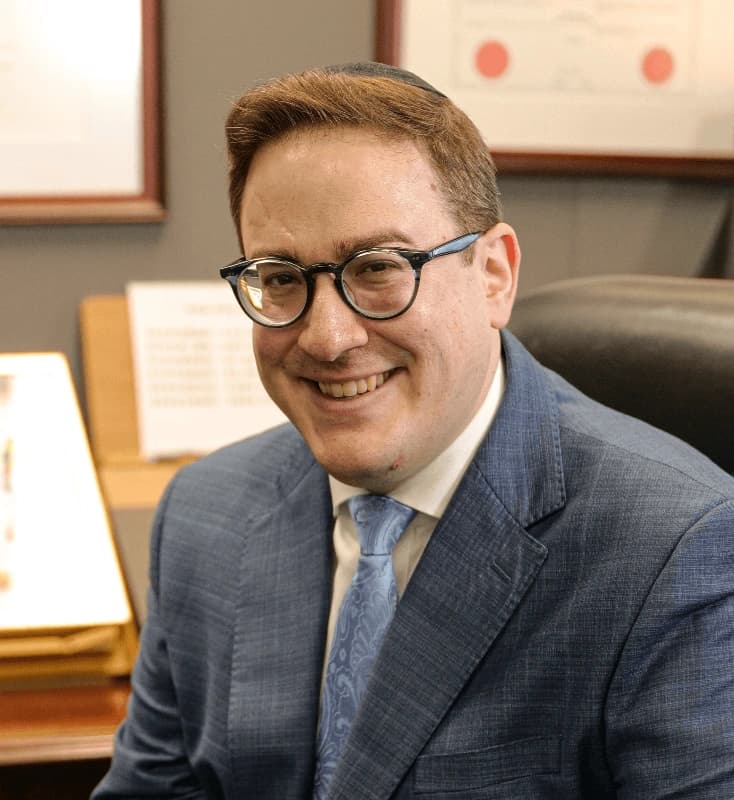
Our personal injury lawyers bring decades of combined experience in Ontario's accident benefits system: NEB applications, elections, IE responses, and LAT hearings for the students, parents, retirees, and job-seekers the system shortchanges most. Every client at VC Lawyers works directly with a dedicated North York non-earner benefits lawyer who builds the before-and-after record these claims are won on.

Senior Counsel

Partner

Co-Managing Partner

Lawyer
Lawyer
Who handles your file
You do not need the full story figured out before you call.
Key metrics

Talk to us
The first 30-minute consultation is free and confidential. Bring the denial letter and tell us about your weeks before the accident. The NEB test is a before-and-after comparison, and most denials collapse the moment the "before" is properly in evidence.
No fee unless we recover. Home, hospital, and video consultations across North York and the GTA.
Frequently asked questions
North York non-earner benefits lawyers
Service areas
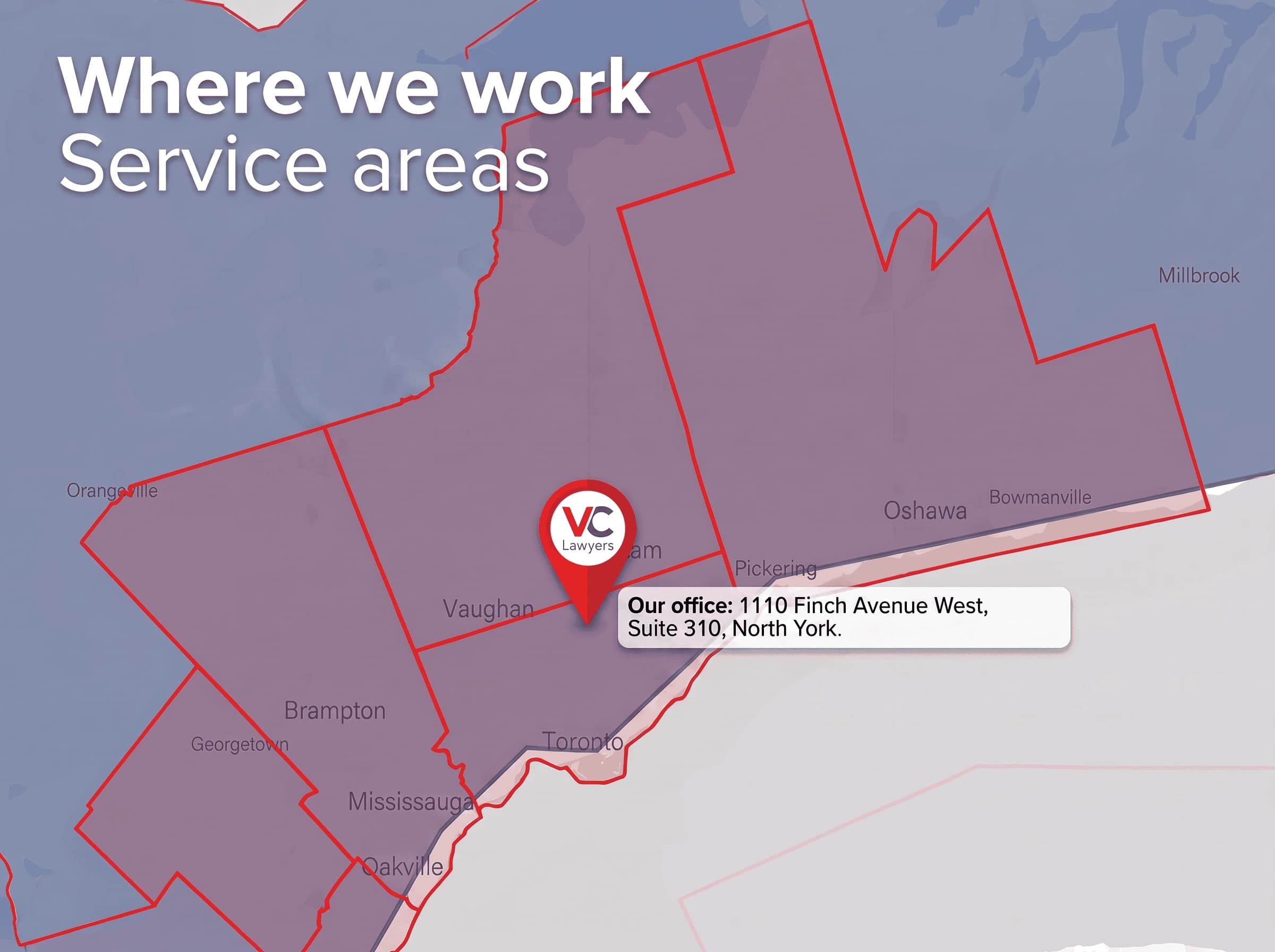
From our office at Finch Ave W and Keele, we represent NEB claimants across all of North York, including Willowdale, Don Mills, Downsview, York Mills, Bathurst Manor, Lansing, Newtonbrook, Bayview Village, Flemingdon Park, Jane and Finch, Yorkdale and Glen Park, Clanton Park, Parkwoods, and Victoria Village, plus neighbouring communities in Vaughan, Thornhill, Richmond Hill, Markham, Scarborough, Etobicoke, and Downtown Toronto.
Whether you're a student at York or Seneca, a parent running a Willowdale household, a Parkwoods retiree, or between jobs anywhere in the city, our North York non-earner benefits lawyers provide the experience your claim requires. Home and video consultations are available, with parking and TTC access (Finch West Station) at our office.
Our office is at 1110 Finch Ave W #310, near Finch and Keele, with parking on site. By transit, take the Finch West LRT or the bus network connecting from Finch West Station on Line 1. If your injuries or circumstances make travel difficult, we come to you at home or in hospital, anywhere in North York.
Related practice areas
The Toronto page for this practice area.
The North York hub for this category.
Also serving North York.
Also serving North York.
Also serving North York.