
Maurice Vaturi
Senior Counsel

Premises Liability




Trusted by drowning survivors and their families across Ontario
Overview
A backyard barbecue at a friend's home in Etobicoke. Adults are in the kitchen, talking and drinking. Children are playing in the backyard. The pool is fenced with a four-foot fence and a gate that latches. The fence has worked perfectly all summer, and the families have been over many times. This time, someone leaves the gate slightly ajar. A four-year-old, attracted by the water, walks through. By the time anyone notices the child is missing, several minutes have passed. The hosts find the child face-down in the deep end. CPR begins. Paramedics arrive within nine minutes. The child is transported to SickKids. He survives, but with profound anoxic brain injury that will affect him for the rest of his life. He will need 24-hour care. His parents' lives, his siblings' lives, and the family's economic future all changed because of a five-minute lapse in supervision and a gate that wasn't fully latched.
A summer day at a Muskoka cottage. A teenage boy, a guest of the family, dives off the dock as he has done all summer. The water level is lower than usual because of dry weather. He doesn't know about the rock just below the surface that his foot has cleared every other time he has dived. His head strikes the rock. He surfaces unable to feel his legs. Friends pull him from the water. The cottage is twenty minutes from the nearest ambulance station. He survives the immediate crisis but with a complete spinal cord injury. He will use a wheelchair for the rest of his life. The cottage owners knew about the rock. They had been there twenty years. They had never put up a sign or restricted diving from that side of the dock.
A condominium in midtown Toronto. The building has a pool. It is a Class B pool under Ontario Regulation 565/90. At more than 93 square metres of water surface, it is too large to fall within the exemption from the lifeguard requirements. The condo board, trying to control costs, has stopped employing a dedicated lifeguard. Pool users are warned that they swim “at their own risk.” A 73-year-old resident, an avid swimmer, has a cardiac event in the deep end. There is no one trained to recognize what is happening or to perform a rescue. By the time a fellow swimmer notices and calls for help, several minutes have passed. The resident is removed from the water but does not survive. The cause of death is the cardiac event combined with the drowning.
These scenarios, fictional but representative, illustrate the spectrum of drowning and water injury cases. Some involve children, some adults. Some happen at private homes, some at commercial pools, some on natural water bodies. Some result in immediate death, some in survival with profound long-term consequences. What unites them is that virtually all are preventable. Failures of supervision, design, maintenance, regulation, or warning allowed them to happen, and those failures often produce legal liability.
The statistics are sobering. Drowning is one of the leading causes of accidental death in Canada, and for young children it sits at or near the top of the list. The Canadian Red Cross documents that between 1991 and 2010, an average of 482 water-related fatalities occurred each year across Canada. The U.S. Centers for Disease Control reports approximately ten drowning deaths per day in the United States, with roughly 20% involving children under 14. For each fatal drowning, multiple non-fatal events occur, typically resulting in hospitalization for near-drowning, brain injury, or related medical consequences.
Ontario law provides a comprehensive framework for compensating victims and families when negligence contributes to drowning and water injury accidents. The Occupiers' Liability Act establishes property owner duties. Ontario Regulation 565/90, made under the Health Protection and Promotion Act, sets safety standards for public pools. Residential pool enclosures are governed by municipal by-law, which in Toronto is Chapter 447 of the Municipal Code. The federal Marine Liability Act governs boating-related drownings. Together, these and related legal frameworks support claims against the parties whose failures caused the harm.
VC Lawyers represents Toronto-area and Ontario-wide clients in drowning and water injury cases. The first 30-minute consultation is free. All drowning cases are handled on contingency, so there is no fee unless we recover. We work in English, Korean, and several other languages. For families dealing with serious water injuries or recent fatalities, we conduct video and home consultations. Call (416) 661-4529 at any point while reading this page if your situation requires immediate attention.
Talk to us
The first 30-minute consultation is free and confidential. We will tell you within that conversation what your realistic options are, and what to do next.
No fee unless we recover. Home and hospital visits available across the GTA.
Locations
The most common drowning context, particularly for children. A handful of patterns account for most of these cases. In backyard family pools the child is the homeowner's own or a visiting friend or relative, and a brief lapse in supervision is often all it takes. Fencing failures let a child reach the water when the fencing is inadequate, missing, or compromised. Gate failures do the same when the gate does not self-close, does not self-latch, has broken hardware, or has been propped open. Diving board accidents come from dives into shallow water, from inadequate clearances, and from equipment failures. Pool slide accidents were the subject of Walford v Jacuzzi Canada Ltd., the leading Ontario case on pool slide product liability. It addressed serious injuries from pool slides used in pools that were not deep enough. Drain entrapment happens when a pool drain catches a child's hair, clothing, or limbs. Electrical hazards come from faulty pool lighting and defective pool equipment, and they can cause electrocution in the water.
Liability in these cases normally rests with the homeowner under occupiers' liability principles, and each pattern points at a different failure. A fence that does not meet the municipal by-law is a specific, provable breach, and in Toronto the pool enclosure requirements are set out in Chapter 447 of the Municipal Code. A gate that no longer self-closes or self-latches is a maintenance failure the owner answers for directly. Diving boards carry a duty to warn or to restrict use. Where a slide was sold or installed for a pool too shallow for it, the claim reaches the pool store and the manufacturer as well as the owner. Faulty pool lighting and defective pool equipment are the owner's to find before anyone is in the water.
Hotel pool drownings produce particular legal complexity because of the commercial relationship between the hotel and its guests. Commercial pool operators owe heightened duties compared to residential owners. Most hotel pools require lifeguards, or safety procedures equivalent to lifeguard supervision. Where an Ontario resident drowns at a U.S. or international hotel, the claim engages the law of that jurisdiction as well as Ontario's. Commercial hotel insurance is typically substantial, so there is usually a meaningful source of compensation behind the claim. And the defendants are usually multiple: hotel owners, management companies, lifeguard services, equipment manufacturers, and pool maintenance contractors may all bear responsibility.
For Toronto's substantial condominium population, pool drownings raise their own set of issues. Pools are typically common elements, which means the condominium corporation maintains them. Some condominium boards reduce or eliminate lifeguard staffing to control costs, and where that decision contributes to a drowning, board liability may apply. Pool safety equipment has to be maintained, including rescue equipment, signage, depth markers, and emergency communication. Unit owners' children and their guests are different categories of pool user, each with its own supervision considerations. And many condominium drowning cases involve older residents who have a cardiac event while swimming. In those cases the presence or absence of trained personnel to respond can be decisive.
Ontario municipalities operate many public pools. City-operated pools, recreation centre pools, and other public facilities all engage municipal liability. The notice rules are widely misunderstood. The 10-day written notice in subsection 44 (10) of the Municipal Act, 2001 applies to claims that a road or bridge was left in non-repair. In Toronto the equivalent provision is section 42 of the City of Toronto Act, 2006. Neither one applies to a drowning inside a municipal pool. A pool claim runs on the ordinary two-year limitation period, and where snow or ice was involved it also requires the 60-day written notice in section 6.1 of the Occupiers' Liability Act. Do not assume you have two years to do nothing. Public pools typically have detailed lifeguard procedures, and a failure to follow them during a drowning event supports liability. Municipal pools must also comply with Ontario Regulation 565/90, and documented violations support liability claims.
Drownings in lakes, rivers, ponds, and other natural water bodies present specific legal considerations. Cottage owners and waterfront property owners owe occupiers' duties for the water access from their property, though section 4 of the Occupiers' Liability Act modifies those duties for recreational users. An owner who knows of a specific hazard, such as rocks, currents, drop-offs, or a dangerous diving spot, has a duty to warn or to restrict access. Schneider v St. Clair Region Conservation Authority is the leading case, and later decisions have developed the framework around it. Public water access points such as provincial parks, conservation areas, and municipal waterfront properties have their own regulatory frameworks. And where the drowning involved a boat, marine liability law applies in addition to occupiers' liability.
Public and private beaches raise four recurring issues. Some beaches have lifeguards and many do not. Both the presence of lifeguards and the staffing levels affect liability. Riptides, currents, drop-offs, and other hazards must be marked with appropriate warning signs. Rescue equipment, emergency communication, and emergency response procedures have to be in place. And the sand and the water can hide glass, debris, and other hazards that produce injuries.
Drownings from boats, ferries, and other vessels turn on a few recurring failures. Operator negligence covers inattentive or impaired operators who cause capsizings, collisions, or falls overboard. Equipment failures cover defective steering, propulsion, or safety equipment. Inadequate safety equipment covers the failure to carry required lifejackets, flares, and communication equipment. Lifejacket use matters on its own. Transport Canada requires an approved and properly fitting lifejacket or personal flotation device for every person on board a pleasure craft, and a failure to comply can affect both liability and the contributory negligence analysis.
Cruise ship drownings, both in the pool and overboard, engage maritime law. Jurisdiction is often U.S. federal in U.S. waters, and international convention frameworks govern in international waters. Many cruise tickets require arbitration rather than court litigation. Limitation periods are often dramatically shorter than provincial limitations, and one year is common in passenger contracts. Tickets also specify the forum where claims must be brought, which for U.S. cruise lines is usually Florida. For Ontarians injured in cruise ship drownings, the legal landscape is entirely different from a domestic drowning. Coordination with U.S. maritime counsel is essential.
Bathtub drownings most often involve older adults, people with seizure disorders, and people with mobility limitations. A hotel can be liable on premises principles for failing to provide grab bars, non-slip surfaces, and accessible features. A paid caregiver can be liable for failing to supervise a vulnerable person. Family members can be liable too where negligent supervision occurs, though that claim is rarely pursued.
Defendants
Drowning cases often involve multiple potentially responsible parties. Comprehensive defendant identification is part of building a strong case, because the compensation a family actually receives is limited by the insurance behind the defendants who were named, not by what the injury is worth in the abstract.
The most direct defendants are the property owners: homeowners, hotel operators, condominium corporations, municipal owners, commercial property owners, and anyone else who owns property where a drowning occurs.
Section 3(1) of the Occupiers' Liability Act requires an occupier to take such care as in all the circumstances is reasonable to see that people entering the premises are reasonably safe. On a property with water on it, that duty reaches the fencing, the gate, the rescue equipment, the warnings, the condition and clarity of the water itself, and supervision appropriate to the type of property. Where a private homeowner is the defendant, the compensation comes from their property insurance rather than from their personal assets. That is what allows these claims to be made between families who know each other.
Many properties are not run by the owner at all. Apartment buildings are managed by property management companies, hotel chains operate under franchise agreements, and recreational facilities are run by management companies. In each of those cases both the owner and the operator may bear liability.
Both are named because the division of responsibility between them is set by a contract the injured family has never seen. Until that contract and the operating records are produced, there is no way to know who was responsible for inspecting the enclosure, maintaining the equipment, or staffing the pool on the day it happened.
Some pool facilities contract with lifeguard service providers rather than employing lifeguards directly. The service provider may bear liability for inadequate staffing, training, or response.
Ontario Regulation 565/90 sets what is required at a public pool. Qualified lifeguards must be on duty during operating hours, except where the regulation specifically exempts the pool. Those lifeguards need National Lifeguard certification with current first aid and CPR training. Minimum staffing levels are tied to the capacity of the pool. Where a contractor supplied the guards, a shortfall against any of those requirements lands on the contractor as well as on the facility.
For drownings caused by structural defects (inadequate depth markings, dangerous design, defective drains), the pool construction contractor may bear liability.
Regulation 565/90 governs pool design as well as pool operation, including depth markings, depth changes, and drain covers. A pool built outside those standards carries a defect that predates whoever happened to be on duty the day of the drowning, and the builder answers for it.
Defective pool covers, drain covers, slides, diving boards, lifesaving equipment, or other products can produce manufacturer liability. The Walford v Jacuzzi Canada Ltd case established that pool slide manufacturers and pool stores selling equipment for inappropriate uses can bear liability.
Drain entrapment claims, where a child's hair, clothing, or a limb is caught by a pool drain, turn on the drain cover and the standard it was built to. Product claims are worth pursuing even where the occupier is clearly at fault, because a manufacturer brings its own insurance to the case.
Companies maintaining pool water quality, mechanical systems, and safety equipment may bear liability for maintenance failures contributing to drowning events.
Water clarity is a regulated standard under Regulation 565/90, alongside chemical balance and bacterial counts. It is a safety requirement, not a cosmetic one. A swimmer on the bottom of a cloudy pool is a swimmer nobody finds in time, and the company paid to keep the water clear is answerable for that.
For pools with design defects (inadequate depths, dangerous transitions, defective drainage), the architect or engineer who designed the facility may bear liability.
Sightlines belong in this category too. A pool laid out with areas that cannot be seen from the lifeguard positions creates a supervision blind spot that no amount of attentive guarding will fix. That is a design failure rather than a staffing failure.
For drownings at municipally-operated facilities or beaches, the municipality may bear liability, subject to the statutory limits on municipal liability and to any notice requirement that applies to the particular claim.
In Toronto the Parks, Forestry and Recreation division operates dozens of pools, all of them subject to Ontario Regulation 565/90 and to the City's own safety procedures. Documented violations of either are powerful evidence in the resulting claim. That is why health unit inspection records, lifeguard certification and training records, and the facility's own incident reports are obtained early.
For boat-related drownings, both the operator and the owner of the boat may bear liability under marine law principles.
The federal Marine Liability Act governs these claims and brings its own framework with it, including limitation of liability provisions for vessel operators and compulsory insurance requirements for certain commercial operators. Where alcohol was involved, impaired operation of a vessel is an offence under the Criminal Code, and civil liability for a drowning that follows is essentially automatic.
In group activities, a fellow participant may bear liability where their own negligence contributed to another's drowning. That can mean failing to provide an emergency response, failing to take reasonable rescue action, or contributing to dangerous behaviour.
Where more than one person is at fault for the same drowning, Ontario apportions responsibility among them under the Negligence Act. Naming a participant does not take anything away from the claim against the occupier. It adds another share of the fault, and often another policy.
Social hosts who provided alcohol and then permitted impaired guests to engage in water activities may bear liability under social host liability principles. Childs v Desormeaux (2006 SCC 18) addressed when social host liability arises.
The question is reasonable foreseeability: was it reasonably foreseeable that the host's conduct could lead to the drowning? Commercial alcohol providers such as restaurants and bars are held to stricter duties than social hosts. Where the drinking happened at a licensed establishment before the water activity, that establishment is looked at separately.
Stores selling pool products (slides, equipment, accessories) for uses inappropriate to the customer's pool can bear product liability. Walford v Jacuzzi established this principle.
Walford concerned a pool slide used with a pool that was not deep enough for it. The liability attaches to selling equipment that is wrong for the buyer's pool, whether or not there was anything defective about the product on its own.
For accidents involving minor operators or victims, adult supervisors who permitted unsafe activity may bear liability.
On the water this usually means the adult who let a minor take out a boat or a personal watercraft, or who allowed diving where the depth was unknown. Transport Canada requires an approved and properly fitting lifejacket or personal flotation device for every person on board a pleasure craft, and a failure to comply affects both the liability analysis and any argument about contributory negligence.
Identifying all viable defendants at the start of the case ensures all available compensation sources are pursued. The total available recovery in well-investigated drowning cases often substantially exceeds what any single defendant's coverage provides. This matters most in exactly the cases where the money matters most: a future care plan of $5,000,000 or more will exhaust a single homeowner's policy long before it is satisfied. The difference between an adequate recovery and an inadequate one is usually whether the manufacturer, the contractor, the maintenance company, and the operator were identified while the evidence was still there to find.
Compensation
Ontario compensates a drowning through several separate streams, each proved differently and each with its own limits. Which stream carries the case depends entirely on the outcome. A fatal drowning is valued mainly through the family's Family Law Act claims. A survivor left with permanent disability is valued mainly through the future cost of care and lost earning capacity, and those cases produce some of the largest awards in Canadian personal injury law. A survivor who recovers is valued mainly through general damages.
The sections that follow set out each stream in turn, with the ranges we see in drowning files. Read them together rather than one at a time. No single figure is the value of a case, and the total is what the streams add up to once every defendant and every available policy has been identified.
General damages are the award for pain, suffering, and the loss of enjoyment of life. In Canada this head of damages is capped by the Andrews v Grand & Toy trilogy ceiling, which in 2026 dollars sits at approximately $469,000 to $470,000. No matter how devastating the drowning, that is the most a court will award for the human cost of it.
The cap applies to pain and suffering alone. The cost of future care, lost earning capacity, out-of-pocket expenses, and the family's own claims all sit outside it, which is why general damages are rarely the largest number in a serious drowning file. They matter most where the survivor recovers physically but carries lasting consequences, because in those cases the pain and suffering award can be most of the claim.
For drowning cases, general damages typically reflect the severity of consequences:
$25,000-$75,000
This is the range for a survivor who was pulled from the water, resuscitated quickly, and recovered without lasting deficits. The award reflects the event itself and the treatment and fear that followed, not a permanent condition. Where the only lasting consequence is psychological, such as PTSD, anxiety, or a specific phobia about water, the case usually lands in this band.
$75,000-$200,000
The survivor came back, but not the same. This band covers mild to moderate brain injury. That can mean subtle but real problems with attention, mood, or processing speed. It can also mean more significant lasting deficits in memory, executive function, or motor control. The band covers pulmonary consequences too, because water aspiration can leave lasting lung damage: pneumonia, pulmonary fibrosis, and chronic respiratory problems long after the immediate event.
$200,000 to the Andrews ceiling
Irreversible anoxic brain damage begins after roughly four to six minutes without oxygen. Where the rescue took longer than that window, the survivor typically lives with profound cognitive, behavioural, and physical impairment. Awards in this band run from $200,000 up toward the cap, and in a case at this level the general damages figure is usually a small fraction of the total claim.
approaching the Andrews ceiling
Where the survivor is in a vegetative state or depends on others for every activity of daily living, general damages sit at or near the top of the cap. Drowning cases involving children with permanent severe brain injury frequently land here. The ceiling limits what can be awarded for the suffering. It does not limit the future cost of care in the same file, which is often measured in millions.
general damages for the deceased's pain and suffering between injury and death (typically modest unless the suffering was prolonged)
When the drowning is fatal, this head compensates only what the deceased experienced between the injury and death, so it is usually the smallest part of a fatal claim. The family's own losses are compensated separately under the Family Law Act, and in a fatal child drowning those Family Law Act components carry most of the value.
Drowning cases, particularly those involving children with permanent severe brain injury, frequently produce general damages awards near the Andrews ceiling.
For severe near-drowning cases producing permanent disability, future cost of care is typically the largest damages component. For a young child with severe anoxic brain injury requiring lifetime care, future cost of care projections frequently run into the $5,000,000 to $20,000,000+ range over the projected lifetime.
The future care plan typically includes:
Building this future care plan requires expert collaboration with life care planners, specialists in the relevant medical conditions, and economists for present-value calculations. The plan is evidence, not an estimate. A life care planner builds it from the treating specialists' prognosis, and an economist converts a lifetime of costs into the single present-value figure a court or an insurer can respond to. That work is the most valuable evidence in a serious drowning file, and it is also the reason the disbursements in these cases are substantial.
For working-age drowning victims with permanent disability, past and future income loss can be substantial. Past income loss covers the earnings lost from the date of the drowning through recovery and up to the resolution of the claim. Future income loss covers the earning capacity a permanent disability has taken away for good, which for a survivor injured in their thirties or forties can mean decades of working life.
For child victims, future earning capacity loss is calculated based on projections of what the child would have earned over their working lifetime absent the drowning. For severely disabled child victims, the loss of all future earning capacity over a 40+ year working life can total $2,000,000-$5,000,000 in present value.
A child has no employment history to work from, so this part of the claim is built by economists from the evidence about the child, the family, and the working life the child would reasonably have had. It is one of the heads of damages that makes expert evidence unavoidable in a serious drowning case.
All drowning-related expenses are recoverable, including medical costs not covered by OHIP, transportation to and from treatment, equipment, home and vehicle modifications, and the additional childcare a family has to arrange because of the injury. These are the costs families carry in the first months, while everything else in the claim is still being built. They are also the easiest part of a claim to lose, because a receipt nobody kept is a loss nobody can prove. Keep invoices, receipts, and a running record of travel from the day of the drowning forward.
Compensation for tasks the victim can no longer perform. A survivor left with deficits in memory, attention, executive function, or motor control often cannot run a household the way they did before, and the work does not disappear when they stop doing it. It moves onto a spouse, a parent, or a paid service. Ontario treats that as a compensable loss in its own right, separate from the pain and suffering award. The same principle that governs attendant care applies here. The loss is real whether the family absorbs the work or someone is paid to do it.
Spouses, children, parents, grandparents, grandchildren, siblings, and other family members can recover damages for “loss of guidance, care and companionship.”
These are the family's own claims, not the injured person's, and they are brought alongside the main action rather than out of it. Each qualifying family member is assessed separately, so a single fatal drowning can produce claims by both parents, by each sibling, and by each grandparent at the same time.
For wrongful death drowning cases involving children, parents' Family Law Act claims can be substantial:
$50,000-$200,000+ each
Each parent has a claim of their own, so a two-parent family brings two. The figure is not a valuation of the child. It compensates the guidance, care, and companionship the parents will not have for the rest of their lives, and where a case falls within the range depends on the specific facts.
$15,000-$50,000 each
Brothers and sisters are named claimants and each one is assessed individually. The grief of a drowning loss is unique, particularly where the deceased was a child and where family members witnessed the event. A sibling's claim recognizes a relationship that was expected to last a lifetime.
$15,000-$40,000 each
Grandparents can claim in their own right. Awards are typically smaller than a parent's. As with every other claimant, the amount turns on the relationship that actually existed rather than on the label.
For severe near-drowning cases where the victim survives but requires lifelong care, family members' losses for “loss of guidance, care and companionship” recognize the relationship that has been irrevocably changed. The ranges differ where the victim survives: spouses $100,000-$300,000+, dependent children $50,000-$150,000+ each, parents $75,000-$200,000 each, and siblings $25,000-$75,000 each. A parent who becomes the full-time attendant of a child with anoxic brain injury has lost the relationship they had with that child. The Family Law Act treats that as a compensable loss rather than an unfortunate side effect of the injury.
When family members provide care that would otherwise require paid attendant care, the value of this care is recoverable. For families providing 24-hour care to a severely disabled child or family member, this represents significant economic value. The care is valued at what it would have cost to buy. It is not discounted because a mother or a spouse provided it without invoicing anyone. Over a lifetime of round-the-clock care, that value can total millions of dollars. In practice, family care is often the only reason a severely disabled survivor is living at home at all, and the claim has to capture it before a settlement is finalized.
Aggravated and punitive damages may be available where the conduct was egregious. Operating a public pool without required lifeguards, knowingly maintaining dangerous conditions, and deliberately deferring critical safety maintenance are all examples of conduct that can support such a claim.
The 2002 Supreme Court decision in Whiten v Pilot Insurance Co. confirmed Canadian courts' willingness to award substantial punitive damages where defendant conduct merits punishment beyond compensation. For drowning cases involving demonstrable disregard for safety, the evidence can support a punitive damages claim.
Combining all compensation streams, the ranges below are what a drowning file is worth once general damages, future care, income loss, out-of-pocket costs, and the family's claims are added together. The stream that dominates changes completely from one band to the next, and that is the most useful thing these numbers tell you:
$50,000-$200,000
The survivor was resuscitated quickly and recovered. The total is mostly general damages, plus out-of-pocket costs and any income lost while off work. There is no future care plan driving the number, so the case is valued on what happened rather than on what is still to come.
$200,000-$1,000,000
The survivor is back, but carries lasting cognitive deficits, lung damage from aspiration, psychological consequences, or a combination. General damages are a larger share here, income loss appears wherever the deficits affect the ability to work, and there is a real but bounded future care component.
$1,000,000-$5,000,000+
Once the disability is permanent, the future cost of care and the lost earning capacity take over, and general damages become a small fraction of the total. From this point up, the value of the case depends far more on the strength of the care plan and the economic evidence than on the label attached to the injury.
$5,000,000-$20,000,000+
A child with severe anoxic brain injury needs lifetime care, and that lifetime runs decades longer than an adult's would. Future care alone frequently projects into the $5,000,000 to $20,000,000+ range, with lost earning capacity of $2,000,000-$5,000,000 on top of it, and Family Law Act claims for the parents and siblings beyond that. Settlements at this level involve a minor, so they require court approval and are usually structured rather than paid as a lump sum.
$200,000-$2,000,000+
The estate's general damages cover only the pain and suffering between injury and death, which is typically modest. Most of the value sits in the Family Law Act claims of the spouse, the children, and the parents, each assessed separately. Where the deceased was supporting a family, the total moves toward the upper end of the range.
$200,000-$1,500,000+ (substantial Family Law Act components)
In a fatal child drowning the Family Law Act components carry the claim. Each parent, each sibling, and each grandparent has a claim of their own for the loss of guidance, care and companionship, and those claims sit on top of the estate's general damages for the period between injury and death.
These ranges are general. Individual case values depend on the specific facts. What moves a case within its range is evidence. Technical proof of negligence comes from engineering analysis and documented regulatory violations. A properly built damages record comes from the future care plan and the economic analysis. The third factor is the insurance actually available from every defendant who has been identified. Two drownings with similar injuries can resolve very differently depending on how much of that work was done, and how early.
Local context
For near-drowning victims, Toronto's trauma and pediatric care network is exceptional. SickKids is one of the world's leading pediatric trauma centres for child near-drowning cases. Sunnybrook Health Sciences Centre has comprehensive trauma services. Toronto General Hospital (UHN) provides advanced critical care including ECMO (extracorporeal membrane oxygenation) for severe cases. Mount Sinai Hospital and St. Michael's Hospital both provide specialized care for serious cases.
For drowning legal claims, documentation from these institutions provides a strong evidentiary foundation. Specialist reports on neurological consequences, prognosis, and future care needs are essential to building the damages case. Our practice maintains working relationships with treating teams at major Toronto hospitals to coordinate medical evidence development for near-drowning cases.
Toronto and the surrounding GTA have one of North America's highest densities of swimming pools, including residential pools, condominium pools, hotel pools, public pools, and aquatic centres. With this density comes a corresponding incidence of pool-related injuries and drownings.
For Toronto specifically, the city operates a substantial network of public pools and aquatic centres. The City's Parks, Forestry and Recreation division operates dozens of pools across the city, all subject to Ontario Regulation 565/90 and the City's own safety procedures.
While our office is in Toronto (North York), our drowning practice extends across Ontario. Many of our cases involve cottage country accidents in Muskoka, Haliburton Highlands, Kawartha Lakes, the Algonquin region, Northern Ontario lakes, Eastern Ontario lakes, the Bruce Peninsula, and Georgian Bay.
For clients throughout Ontario, we conduct video consultations and travel to client locations when needed for serious cases. The legal work is conducted from our Toronto office regardless of where the drowning occurred.
Toronto's diversity is reflected in our practice. We handle drowning accident cases in English, Korean, and several other languages. For Korean-speaking clients, the Korean-language version of this page provides equivalent information, and Korean-speaking lawyers handle the file from intake through resolution.
We work with translators and bilingual staff for Mandarin, Cantonese, Hebrew, Hindi, Punjabi, Tagalog, Spanish, Portuguese, and other languages.
Our approach
Our practice is built on principles that apply consistently across every drowning accident file. These are the operational rules that determine how we handle your case from intake through resolution.
The first conversation sets the tone for everything that follows. We will tell you what we believe your case is worth, what timeline to expect, and whether litigation is warranted. We will not tell you what you want to hear. Drowning cases vary enormously based on the specific circumstances, the strength of evidence, and the available defendants. We tell you directly which category your case falls into.
Drowning cases involve some of the most painful circumstances we encounter: fatal drownings, severe permanent disability, and child victims. We approach these cases with appropriate sensitivity. The legal process can wait while families address immediate grief, funeral arrangements, and family needs. But we also help families understand that acting within a reasonable time produces better outcomes than waiting indefinitely.
In a single pool drowning the viable defendants can include the owner, the property manager or operator, the lifeguard service, the maintenance company, the builder, the designer, and the manufacturer of the equipment involved. Each one brings its own insurance. In a case with a multi-million dollar future care plan, the difference between one policy and several is the difference between a settlement that funds a lifetime of care and one that does not.
Drowning cases require expert analysis. We work routinely with pool design and engineering experts, lifeguarding standards experts, medical specialists in near-drowning consequences, life care planners for severe disability cases, economists for future care projections, and pool maintenance and chemistry experts.
This technical foundation produces settlement leverage, and it is what the case is built on if a trial becomes necessary.
These cases often involve multiple compensation streams: tort claims against multiple defendants, any insurance claims available under other policies, and any Family Law Act claims by family members. Coordinating these as an integrated strategy produces stronger outcomes.
All drowning cases are handled on contingency. There is no fee unless we recover. The contingency percentage is set in writing at the start of the engagement. Disbursements are advanced by the firm and recovered from settlement.
When you retain VC Lawyers, you deal with the lawyer handling your file, and you have that lawyer's direct contact from intake through resolution.
Language is not an add-on in these files. Where a family is more comfortable in Korean or another language, the intake, the medical evidence, and the settlement discussions happen in that language rather than in a summary afterward.
Key metrics
Senior Counsel

Partner
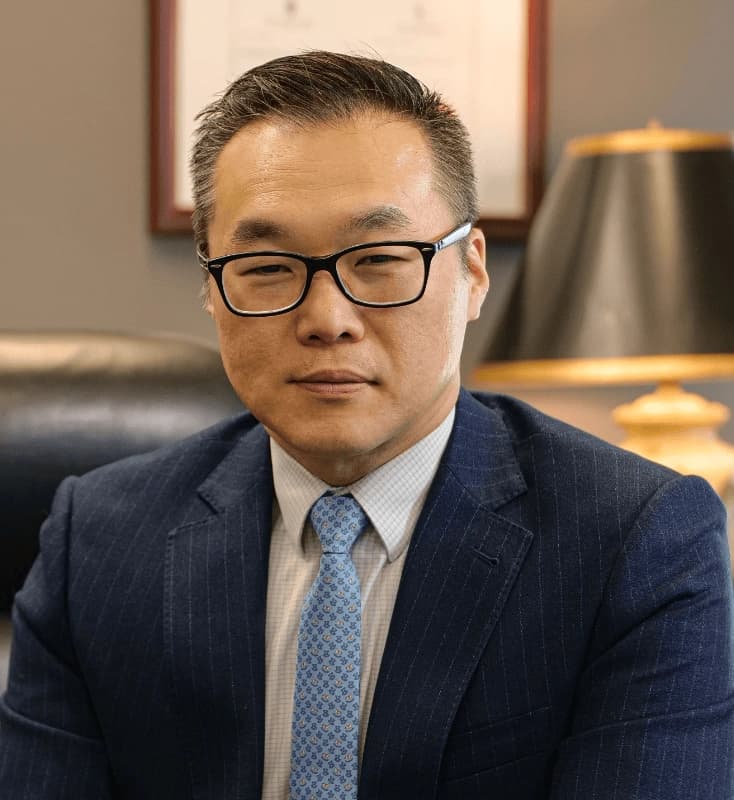
Co-Managing Partner
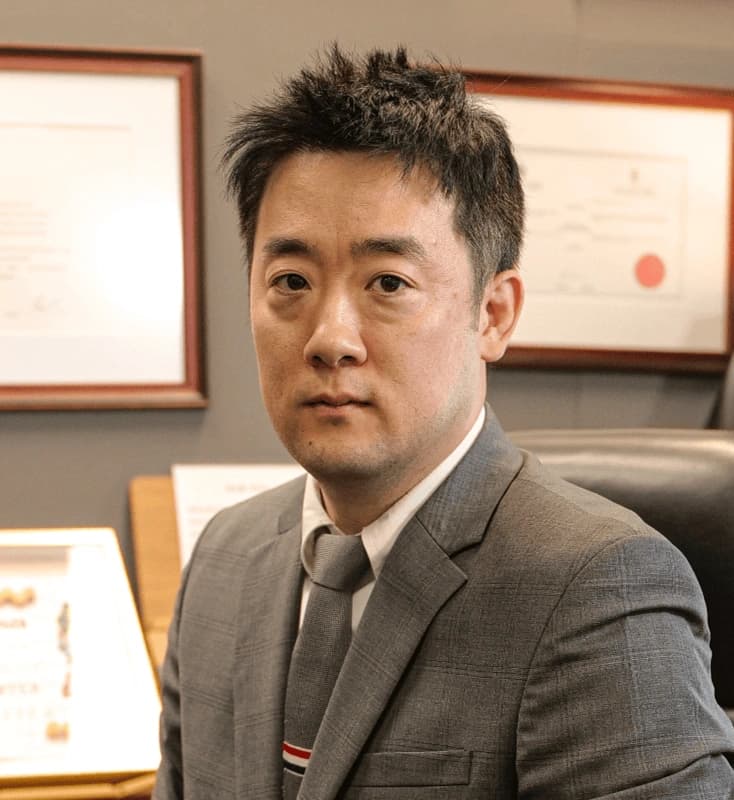
Lawyer
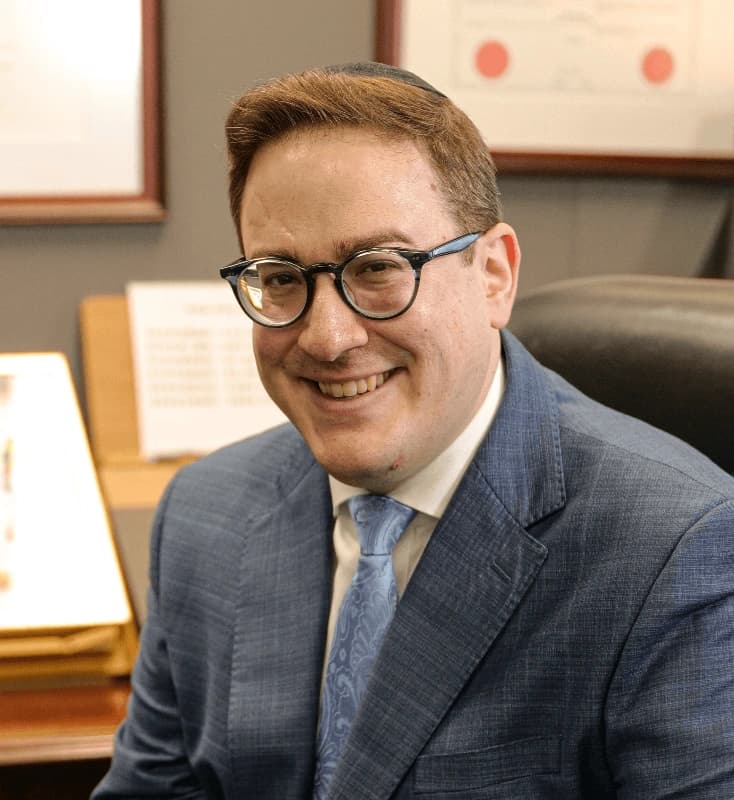
Lawyer
Immigration Consultant
RCIC R529664 · RQIC 11726
FAQs
Where we work
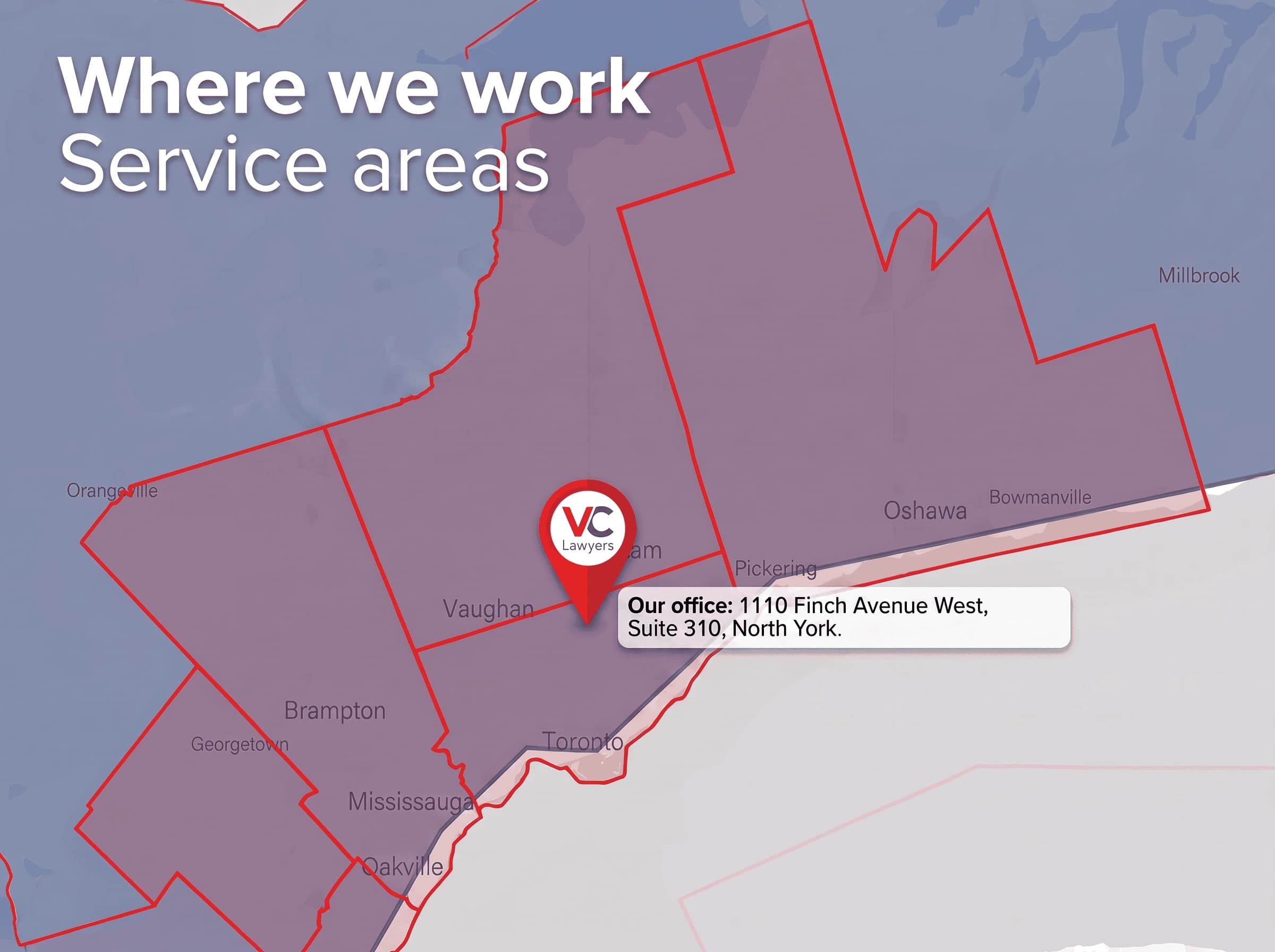
VC Lawyers serves clients throughout Ontario for drowning accident cases. While our office is in Toronto (North York), our practice extends across the GTA, cottage country, Northern Ontario, and other regions where these accidents occur. We conduct video consultations for clients in remote areas, and we visit clients at home or in hospital where mobility limitations or serious injuries make travel difficult.
For Toronto-area clients, our service area includes Toronto, North York, Scarborough, Etobicoke, Mississauga, Brampton, Oakville, Burlington, Vaughan, Richmond Hill, Pickering, Ajax, Whitby, Oshawa, Newmarket, and Aurora.
Languages spoken at the firm include English, Korean (한국어), Hebrew, Mandarin, and others depending on lawyer assignment.
Our office is located at 1110 Finch Avenue West, Suite 310, in North York, with parking and TTC access (Finch West subway and bus connections).
Why people choose VC Lawyers
Choosing the right personal injury law firm after an accident in Toronto can mean the difference between a lowball settlement and the full compensation you deserve.
Personal injury cases run on a contingency basis. You pay nothing upfront.
Speak with an injury lawyer today at zero cost. Other practice areas are quoted before we start.
We’re available around the clock when you need us most.
Too injured to come to us? We’ll come to you.
Services in 8 languages so nothing gets lost in translation.
You’re never just a case number. Get direct access to your lawyer.
Get in touch
Tell us what happened and a lawyer will personally review your case. Personal injury consultations are free and there are no fees unless we win. For all other practice areas, a consultation fee applies.
Prefer to call? (416) 661-4529
Drowning accidents
Related practice areas
The same practice, served from our office in North York.
For related premises liability cases.
For related premises liability cases.
Premises liability for animal attacks on the property.
Defective pool equipment and component manufacturer claims.
The broader Ontario premises liability framework.
Anoxic brain injury and traumatic brain injury claims after near-drowning.
For fatal drowning accidents.
Statutory accident benefits where motor vehicle coverage applies.