
Disability Claims
Toronto Non-Earner Benefits Lawyerfor SABS Section 12 NEB claims and denials



Trusted by accident victims and businesses across Ontario
Overview
When you were hurt and not working the benefit most people don't know exists
A young university student on the way to class is hit by a driver running a red light. A retired grandmother on a fixed income is rear-ended driving home from her grandchild's birthday party. A new graduate, still job-hunting after convocation, is struck by a car while crossing King Street. A stay-at-home parent of two young children is hurt in a serious collision on the way to the grocery store. None of these people had income coming in from a job at the time of the crash. None of them, in the conventional sense, “earn” anything that an insurance company has to replace.
The story most car accident lawyers tell focuses on Income Replacement Benefits (IRBs). That is the accident benefits provision for people who were working when they were injured. It pays 70% of pre-accident income to a maximum of $400 per week, and only where the policy purchased the optional coverage. But what about everyone else? What about the people whose lives were shattered by a motor vehicle accident, who can no longer go to school, who can no longer care for their grandchildren, who can no longer paint or garden or hike or do the activities that filled their days before the crash? The only difference is that they happened not to have a paying job at the moment of the collision.
For these accident victims, Ontario law provides a separate, narrower benefit: Non-Earner Benefits (NEBs) under Section 12 of the Statutory Accident Benefits Schedule (SABS). The SABS is the regulation that governs no-fault auto insurance in Ontario. Under the standard option NEBs pay $185 per week for up to 104 weeks (2 years) after a four-week waiting period. The amounts are modest, but they can still be the difference between financial collapse and the ability to focus on recovery. Since July 1, 2026 there is a threshold question before any of that. The non-earner benefit is now an optional purchase, so it is payable only where the policy bought it. It reaches only the named insured, that person's spouse, dependants of either, and drivers listed on the policy.
Subsection 12(1) reaches two groups of people. The first is anyone who suffers a complete inability to carry on a normal life within 104 weeks of the accident and does not qualify for an income replacement benefit. In practice that means retirees, unemployed adults, stay-at-home parents, people on disability or social assistance, and self-employed people whose business was never generating the kind of income an IRB is built around. The second group is students who were enrolled full time in elementary, secondary, or post-secondary education at the time of the accident. That group also covers graduates who finished their education less than a year before the accident and were not yet working in a job that reflected their education and training. That second group exists because a student has no income history to replace and everything to lose when a collision derails their education and the career it was leading to.
There is always a catch, and here it is. NEBs require a far higher threshold of disability than Income Replacement Benefits. To qualify, you must demonstrate a “complete inability to carry on a normal life.” The phrase sounds clear on the surface. In fact it is one of the most heavily litigated tests in Ontario auto insurance law. Insurers deny NEB claims routinely, often citing this exact threshold. Behind every denial is a person who was hurt, who is suffering, and who is now being told by their own auto insurer that their life has not been disrupted “completely enough” to qualify for $185 a week.
Courts read that phrase more generously than insurers do. Heath v Economical Mutual Insurance Company (2009 ONCA) is the leading case, and it rejected the narrow interpretation that would confine non-earner benefits to people who are effectively bedridden. Under Heath the comparison is between your life before the accident and your life after it, taken as a whole and over a meaningful period rather than as a snapshot of the week the crash happened. The measure is your own normal life, not what an average person of your age is assumed to do. Quality counts as much as quantity, so being able to do something briefly, badly, or in constant pain is not the same as being able to do it. And “substantially all” has never meant every single one. What the insurer can properly insist on is continuity. The impairment has to be persistent rather than intermittent, and that is the element denials press hardest.
This page is a comprehensive guide to Non-Earner Benefits in Ontario. It explains who qualifies, what the legal test actually means in practice, why insurers deny so many claims, and what your options are when your NEB application is rejected. It is written for accident victims who were not earning at the time of the crash: students, retirees, stay-at-home parents, recent graduates, and anyone else whose life looked different from a 9-to-5 job at the moment everything changed.
VC Lawyers represents Toronto-area accident victims in NEB disputes alongside other SABS claims and tort claims. Most NEB matters are handled on contingency (no fee unless we recover), the first 30-minute consultation is free, and we work in English, Korean, and several other languages. You do not have to read to the end. If your situation is urgent, call (416) 661-4529 now.
The SABS menu
What Ontario's no-fault insurance actually pays for after a crash
Ontario operates a no-fault auto insurance system. Every policy must carry medical, rehabilitation, and attendant care benefits, so if you are injured in a motor vehicle accident your own insurance company pays for those no matter who caused the collision. Since July 1, 2026 the rest of the list below is optional coverage. It is payable only where the policy purchased it, and only to the named insured, that person's spouse, dependants of either, and drivers listed on the policy. All of it is spelled out in the Statutory Accident Benefits Schedule (SABS, O. Reg. 34/10).
Income Replacement Benefits (IRBs)
For people who were employed or self-employed and have lost income (Sections 6 to 11 of SABS). An optional purchase since July 1, 2026. It is payable only where the policy bought it. Under the standard option an IRB pays 70% of pre-accident gross income to a maximum of $400 per week. Someone earning about $769 a week before the crash receives the $400 cap, not the $539 that 70% of their income would otherwise produce.
The IRB disability test asks whether the accident leaves you unable to perform the essential duties of the employment you held before it. That is a different question from the one Section 12 puts to non-earners. The difference is why the choice between the two benefits is rarely just a matter of which number is larger.
Non-Earner Benefits (NEBs)
For people who were not earning income at the time of the crash but whose lives have been completely disrupted by it (Section 12). Also an optional purchase since July 1, 2026. The benefit exists because Income Replacement Benefits assume there was a wage to replace. A retiree, a full-time student, a stay-at-home parent, or a recent graduate has no wage for the insurer to restore.
The trade-off is a far higher threshold. An income replacement benefit turns on whether you can still do your old job. A non-earner benefit turns on the test in Section 3(7)(a): a complete inability to carry on a normal life. That test is one of the most heavily litigated in Ontario auto insurance law, and it is the ground insurers cite most often when they refuse to pay.
Caregiver Benefits
For people who were the primary caregiver of a family member (Section 13). Optional. It pays $250 per week for the first person in need of care, plus $50 per week for each additional dependant.
It matters to a non-earner claim because of the election rule. Anyone eligible for both a caregiver benefit and a non-earner benefit has to choose one. For a stay-at-home parent whose injuries reach both thresholds, that choice is a live question. Compare the two before the election form is signed, because the choice is generally final.
Medical and Rehabilitation Benefits
For treatment, therapy, assistive devices, and recovery support. Mandatory in every policy. The auto insurer now pays first, ahead of any extended health or workplace plan you also hold.
It is not part of the election. You can receive medical and rehabilitation benefits and a non-earner benefit at the same time, and getting treatment does not put your NEB eligibility at risk. The clinical record that treatment produces is also the evidence a non-earner claim lives or dies on. Insurers deny on medical grounds far more often than on any other ground.
Attendant Care Benefits
For personal care services during recovery. Mandatory in every policy. Like medical and rehabilitation benefits, attendant care sits outside the election, so it runs alongside a non-earner benefit rather than against it.
The assessments behind an attendant care claim also document the things a non-earner claim has to prove. The complete inability test counts independent personal care such as cooking, cleaning, dressing, and bathing, so the record built for one claim usually supports the other.
Housekeeping and Home Maintenance Benefits
For help with household tasks. Optional, and historically available mostly in catastrophic cases.
Where a policy carries it, housekeeping coverage is worth claiming alongside a non-earner benefit. It compensates a specific expense rather than replacing income, so it is not part of the election and claiming it does not cost you the weekly non-earner payment.
Death and Funeral Benefits
Payable to families of fatal accident victims. Optional. Like every optional benefit, it reaches only the named insured, that person's spouse, dependants of either, and drivers listed on the policy. Who appears on the policy decides who is able to claim.
A fatal collision usually also produces a tort claim in civil court against the at-fault driver, and that claim covers categories of loss the SABS does not. The two are best handled together as a single file.
Other expense benefits
For lost educational expenses, damage to clothing and eyewear, expenses of visitors, and dependant care. Each is an optional purchase under Sections 20.1 and 28. Transportation to and from treatment stays inside the mandatory medical benefit.
These are the benefits claimants most often leave unclaimed, because each one is small on its own and none of them are paid automatically. Every benefit on this list has to be claimed, documented, and approved by your insurer. Every one carries its own eligibility test, evidentiary requirements, and procedural rules.
Section 12 NEB
Where Non-Earner Benefits fit in the SABS framework
Section 12 of the SABS fills a specific gap. Income Replacement Benefits assume you were earning a wage. NEBs cover the people whose lives have been devastated by an accident even though they had no wage to lose. Subsection 12(1) sets out the eligibility criteria. Subsection 12(2) sets the amount, which is $185 per week under the standard option. Since July 1, 2026 it is payable only where the policy purchased the optional non-earner benefit. Section 3(7)(a) defines the threshold concept of complete inability to carry on a normal life.
Amount
Since July 1, 2026 the amount is set by the optional non-earner benefit the policy bought. Under the standard option that is $185 per week, less the total of any other “income replacement assistance” received for the same week.
Set beside an income replacement benefit at $400 per week, $185 sounds modest, and it is. Twenty-six weeks of payments add up to roughly $4,800. The full two-year maximum is about $19,200.
For the people this benefit was built for, that money still does real work. A retired grandmother living on Old Age Security and the Guaranteed Income Supplement may rely on it for transportation, basic personal expenses, and modest support while she recovers. A student who can no longer attend classes may use it to bridge the gap until their education resumes. A stay-at-home parent may use it to offset childcare they can no longer provide themselves.
The benefit is also rarely claimed on its own. Non-earner benefits are normally claimed alongside medical, rehabilitation, and attendant care benefits, and alongside a tort claim against the at-fault driver. The weekly payment is one piece of a broader package rather than a standalone solution.
Waiting period
4 weeks after the onset of the complete inability to carry on a normal life. Nothing is payable for those first four weeks. The clock runs from the onset of the inability rather than from the accident, so for some claimants it starts on the day of the crash. For others it starts later, once the full extent of an injury becomes clear.
That makes the OCF-3 Disability Certificate the most important document in the early file. Your family physician completes it, and it is the document that shows you meet the test. A certificate written in a hurry is one of the most common reasons a claim comes back denied as insufficiently documented. If it does not set out your functional limitations in detail, that denial can arrive even where the underlying medical situation is substantial.
Maximum duration
104 weeks (2 years) from the date of the accident, for accidents on or after June 1, 2016.
That same 104-week period is also an eligibility window. The complete inability has to arise within 104 weeks of the accident. An impairment that only becomes disabling after that window closes falls outside Section 12 altogether, no matter how severe it turns out to be.
For accidents before June 1, 2016 the rules were different and more generous. Benefits could be paid for life while the claimant continued to qualify, with elevated rates for student claimants after the two-year mark. Those older rules still govern those claims.
Election rule
If you are eligible for both NEBs and IRBs, or for both NEBs and Caregiver Benefits, you must elect one. The choice is made under Section 35, on the OCF-10 Election form, within 30 days of receiving the insurer's election notice. It is generally irrevocable.
The arithmetic usually favours the income replacement benefit. Under the standard option it pays 70% of pre-accident income to a maximum of $400 per week, against $185 per week under the standard non-earner option. But the numbers are not the whole answer. If your pre-accident income was low or your hours were limited, the two can be close. An IRB is also reduced by other income replacement such as CPP disability, EI sickness benefits, and employer plans.
The two benefits also run on different disability tests. An IRB asks whether you can perform the essential duties of the employment you held before the accident. A non-earner benefit asks whether you have been continuously prevented from doing substantially all of the things that made up your normal life. The medical evidence already in your file may support one of those far better than the other. That is why the election is worth legal advice before you sign, not after. The wrong election can cost thousands of dollars.
Courts have looked at the edges of this choice. Galdamez v Allstate (2012 ONCA) and the cases after it deal with claimants whose employment was so marginal that they did not meaningfully qualify for an income replacement benefit. For those claimants the non-earner benefit was the appropriate claim.
Where we work
Service areas
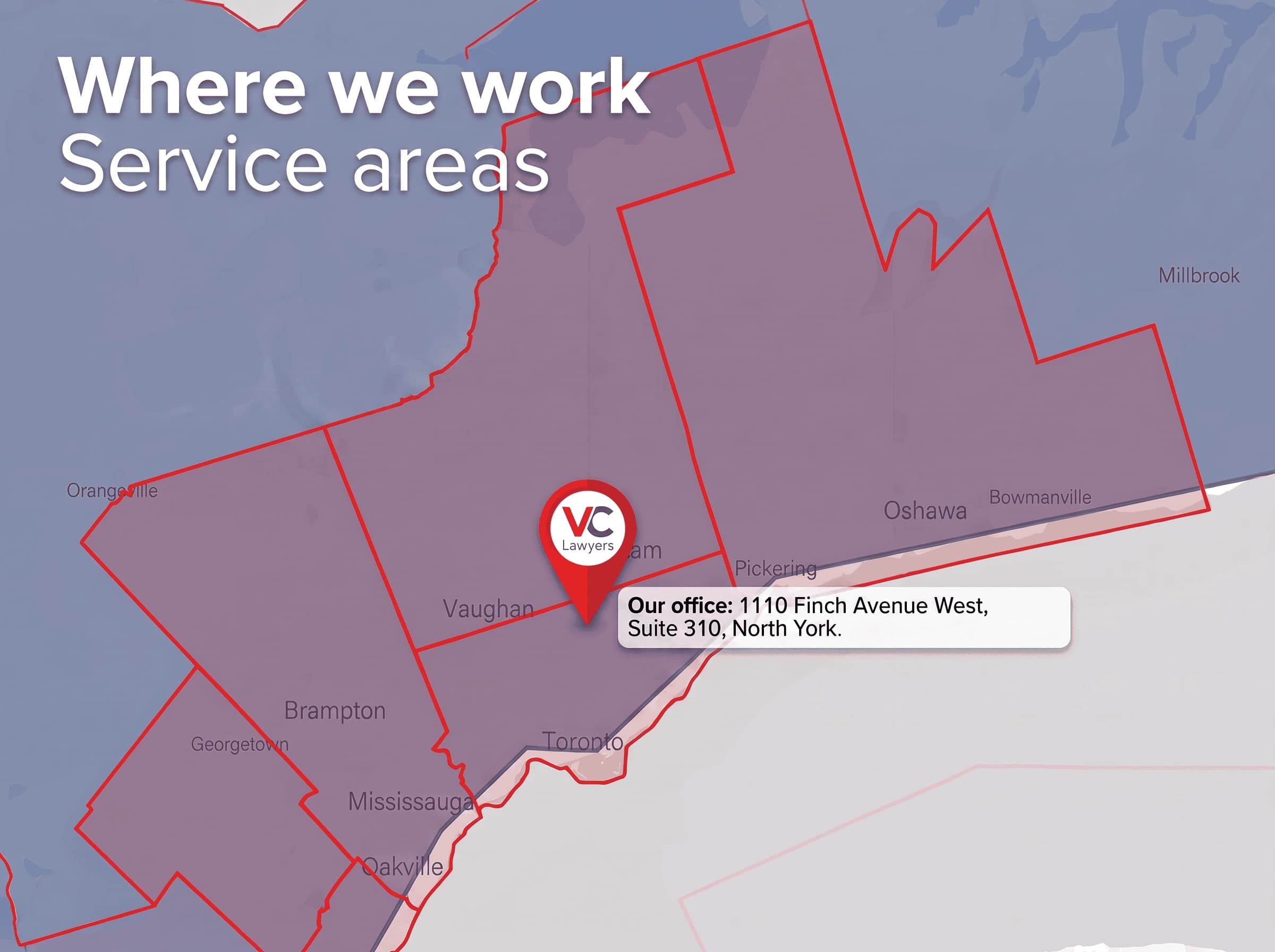
VC Lawyers serves clients throughout the Greater Toronto Area, including Toronto, North York, Scarborough, Etobicoke, Mississauga, Brampton, Oakville, Burlington, Vaughan, Richmond Hill, Pickering, Ajax, Whitby, Oshawa, Newmarket, and Aurora. We also represent clients across Ontario through video consultations and home/hospital visits when needed.
Languages spoken at the firm include English, Korean (한국어), Hebrew, Mandarin, and others depending on lawyer assignment.
Our office is located at 1110 Finch Avenue West, Suite 310, in North York, with parking and TTC access (Finch West subway and bus connections).
Frequently Asked Questions
We answered all
I was not working when I had my car accident. Can I claim non-earner benefits?
There are now three questions rather than two. First, does the policy include the optional non-earner benefit, and are you within the class it reaches (the named insured, that person's spouse, dependants of either, or a driver listed on the policy)? Since July 1, 2026 a non-earner benefit exists only where it was purchased. Second, do you fit one of the eligible categories (unemployed, retired, full-time student, recent graduate within one year, or other non-earning status) so that IRBs do not apply to you instead? Third, did the accident cause a “complete inability to carry on a normal life” within 104 weeks? Bring us the policy and the denial letter and we will work through all three.How much do non-earner benefits pay?
Where the policy purchased the optional non-earner benefit, it pays $185 per week under the standard option. Payments start after a 4-week waiting period and run for a maximum of 104 weeks (2 years) after the accident. The amount is reduced by any other “income replacement assistance” received for the same week. Since July 1, 2026 subsection 12(2) fixes the amount by reference to the optional benefit the policy bought rather than naming a figure. The first step is always to read the policy. The $185 figure is well below Income Replacement Benefits, which pay up to $400 per week under the standard option. For someone who had no income to replace, it is still the benefit that applies. For accidents before June 1, 2016, different rules applied, including the possibility of lifetime NEBs and elevated rates for student claimants.What does “complete inability to carry on a normal life” actually mean?
The test comes from Section 3(7)(a) of the SABS: an impairment that “continuously prevents the person from engaging in substantially all of the activities in which the person ordinarily engaged before the accident.” Courts have rejected narrow interpretations. The leading case is Heath v Economical Mutual Insurance Company (2009 ONCA). Under Heath the analysis compares your pre-accident and post-accident life as a whole. It looks at your own normal life, not a generic standard. “Substantially all” does not mean “every single one.” It means most of the meaningful activities. The impairment must be continuous, but not necessarily 24/7. And the quality of the activities matters, not only the number of them. You do not need to be bedridden or unable to communicate to qualify. The activities that count reach well beyond work. Courts have recognized childcare and parenting, caring for elderly parents, sport and hobbies, time with family and friends, religious or community involvement, study, volunteer work, and travel. They have also recognized independent personal care such as cooking, cleaning, dressing, and bathing, along with sleep and your cognitive and emotional engagement with daily life. The comparison is holistic. Someone who can no longer ride their motorcycle, care for their dog, attend their church, sleep through a night, or eat with any interest may well have suffered a complete inability. The fact that they can still walk to the bathroom and feed themselves does not settle the question.My insurance company denied my NEB claim. What can I do?
A denial is not the end of the road. Most NEB denials are contestable, often successfully, and the right response depends on which ground the letter actually cites. If the denial says the medical evidence does not establish a complete inability, the answer is usually to strengthen that evidence. That starts with a narrative report from your family physician that goes beyond the OCF-3. It should address your pre-accident function, your current impairment, the specific activities you can no longer perform, expected duration, and prognosis. Strengthening the evidence can also mean specialist reports from a physiatrist, neurologist, psychiatrist, or pain specialist. A functional capacity evaluation by an occupational therapist or kinesiologist helps. So does a psychological assessment where depression, anxiety, PTSD, or cognitive deficits are part of the picture. If the denial leans on surveillance or on your social media, the answer is context. A few minutes of footage of you carrying groceries, or one photograph taken at a wedding, does not capture the days of preparation, medication, and recovery behind it. Courts have repeatedly recognized that disability varies from day to day. If the denial points to a pre-existing condition, the answer is causation evidence. The question is whether you would have these limitations but for the accident, and the thin skull rule means an insurer takes you as it finds you. Alongside all of that, you can file an application with the Licence Appeal Tribunal (LAT), which decides SABS disputes and has jurisdiction over NEB denials. You can also negotiate, which is how most NEB disputes actually end. The strongest position is usually both at once: file to preserve your rights and your timelines while you keep talking. The first step in every case is a legal review, so you know whether the denial is contestable and what evidence would be needed to overturn it.How long do I have to apply for non-earner benefits or to dispute a denial?
Several deadlines apply. The initial application for accident benefits is typically required within 30 days of the accident, though late applications are sometimes accepted with a reasonable explanation. The election between IRBs and NEBs is due 30 days after you receive the insurer's election notice. The medical certificate (OCF-3) should be obtained promptly. And the limitation period for a LAT application against a denial is generally 2 years from the date of denial under the Limitations Act, 2002. That 2-year limitation is the hardest deadline. Missing it generally extinguishes the right to dispute the denial at all, whatever the merits of the claim underneath it. Earlier action is better for a practical reason too. The limitation period assumes you arrive at the tribunal with professionally prepared materials and a strategy in place. It does not assume you are starting your research from scratch with a month left on the clock. Most procedural deficiencies, such as a late form or missing documentation, can be cured, but only if you or your counsel respond promptly.Do I have to pay for a lawyer up front to handle my non-earner benefits claim?
No. NEB matters are typically handled on contingency, which means no fee unless we recover. The contingency percentage is set in writing at the start of the engagement and typically ranges from 25% to 33% depending on complexity and the stage at which the matter resolves. Disbursements (LAT filing fees, expert reports, examination transcripts) are advanced by the firm and recovered from the settlement at the end. The first 30-minute consultation is free with no obligation. For NEB matters that are part of a broader SABS and tort claim file, the contingency typically applies to the total recovery.Can I receive non-earner benefits if I am also receiving ODSP?
You can apply for and receive NEBs while on ODSP, but the NEBs may reduce or eliminate your ODSP benefits during the NEB payment period. NEBs are considered income for ODSP purposes. The strategic question is whether pursuing NEBs produces a net financial gain. For some claimants on ODSP, the NEB is mostly absorbed by ODSP reductions, leaving only marginal additional income. For others, particularly those who can structure how the money is received in ways that preserve ODSP eligibility, NEBs add meaningful resources. This calculation is fact-specific and benefits from legal and financial planning advice.What happens if I am eligible for both NEBs and IRBs?
You must elect one under Section 35 of the SABS, within 30 days of receiving the insurer's election notice. The election is generally final and irreversible. The decision typically favours IRBs because they pay more (70% of pre-accident income to a maximum of $400 per week under the standard option, against $185 per week under the standard non-earner option). But the analysis can be more complex. If your IRB calculation produces a low amount, NEBs may be comparable. IRBs are also subject to deductions for other income replacement such as CPP disability, EI sickness benefits, and employer plans. And the disability tests for IRBs and NEBs are different, so the medical evidence available may better support one test than the other. Get legal advice before signing the OCF-10.Are non-earner benefits taxable income?
No. NEBs are tax-exempt under the Income Tax Act as personal injury damages. The Canada Revenue Agency treats benefits paid under the SABS as compensation for personal injury, which is excluded from taxable income. NEBs do not need to be reported as income on your tax return, and you do not pay income tax on them. Note: while not taxable, NEBs are still considered “income” for ODSP purposes. Those are two different concepts.What if my accident was years ago? Am I too late to claim non-earner benefits?
It depends. The 2-year limitation period under the Limitations Act, 2002 generally runs from the date of the formal denial of benefits, not from the date of the accident. So if you have not yet applied for NEBs or have not received a formal denial, the limitation may not have started. However, several timing rules in the SABS itself may affect older claims. The 4-week waiting period and the 104-week maximum benefit duration are tied to the accident date. Late initial applications can sometimes be accepted with a reasonable explanation, but the further you are from the accident, the harder this becomes. And for accidents before June 1, 2016, different and more generous rules applied, though the practical work of proving a claim gets harder as records age and memories fade. If your accident is more than a few years old and you have never pursued NEBs, the answer is genuinely fact-specific. A free consultation is the fastest way to find out where you stand. Older claims are not automatically lost, but they require more careful analysis.
Why people choose VC Lawyers
The right firm handles everything so you can focus on recovery
Choosing the right personal injury law firm after an accident in Toronto can mean the difference between a lowball settlement and the full compensation you deserve.
No Fees Unless We Win
Personal injury cases run on a contingency basis. You pay nothing upfront.
Free Personal Injury Consultation
Speak with an injury lawyer today at zero cost. Other practice areas are quoted before we start.
24/7 Emergency Hotline
We’re available around the clock when you need us most.
Home & Hospital Visits
Too injured to come to us? We’ll come to you.
Multilingual Legal Team
Services in 8 languages so nothing gets lost in translation.
Boutique Firm, Big Results
You’re never just a case number. Get direct access to your lawyer.
Get in touch
Looking for legal help? Speak directly with a lawyer
Tell us what happened and a lawyer will personally review your case. Personal injury consultations are free and there are no fees unless we win. For all other practice areas, a consultation fee applies.
- $30M+ recovered for injury clients
- Available 24/7, including weekends
- Service in English, Korean, and 6+ more languages
Prefer to call? (416) 661-4529
Take the next step
A motor vehicle accident that disrupts a life not built around a paycheque is no less devastating.
Related practice areas
Continue exploring
Non-Earner Benefits Lawyer in North York
The same practice, served from our office in North York.
Personal Injury Lawyer Toronto
For the broader personal injury and SABS framework.
Toronto Short-Term Disability Lawyer
For STD insurance disputes (separate from SABS).
Toronto Critical Illness Lawyer
For critical illness insurance claim denials.
Toronto Car Accident Lawyer
For the tort claim against the at-fault driver.