
Catastrophic Injuries
Toronto Chronic Pain Lawyerfor fibromyalgia, CRPS, and the battle to be believed




Trusted by accident victims and businesses across Ontario
Overview
If we can't see it on the MRI it doesn't exist, the legal battle behind invisible disability
The MRI comes back clean. The X-ray shows nothing. The bloodwork is unremarkable. The patient sits in the doctor's office hearing the words that millions of chronic pain sufferers have heard before them: “We can't find anything wrong.” Then comes the harder part. The look. The slight hesitation. The implicit suggestion that maybe the pain is not as bad as it seems, that maybe the patient is exaggerating, that maybe this is “all in your head.”
Now imagine that same patient months later, sitting across the desk from an insurance claims adjuster. The pain is worse. The patient has not slept properly in weeks. They have not been able to work. The savings are running out. They have completed every form requested. Their family physician has confirmed the diagnosis: fibromyalgia, complex regional pain syndrome, myofascial pain syndrome, or post-traumatic chronic pain. The treating specialist has produced detailed reports. Everything points to a real, disabling condition. The insurance company denies the claim.
The denial letter cites “insufficient objective medical evidence.” It refers to the absence of “imaging findings consistent with the level of disability claimed.” It notes that the claimant's reported symptoms exceed what the documented injuries would normally produce. It questions whether the patient is genuinely unable to work, whether they have followed treatment recommendations, and whether there is “secondary gain” motivation. It is a polite letter, written in measured legal language, that means in plain English: we don't believe you.
This is the reality of chronic pain claims in Ontario. The medical condition is real. Canadian courts have repeatedly confirmed it. The Supreme Court of Canada itself ruled, in its landmark 2003 decision in Nova Scotia (Workers' Compensation Board) v Martin, that chronic pain disability is “real and disabling.” The Court held that excluding chronic pain sufferers from compensation systems violates section 15 of the Canadian Charter of Rights and Freedoms. Yet despite this clear legal recognition, insurance companies routinely deny chronic pain claims based on the absence of “objective medical evidence.” The medical literature, the case law, and basic biology all reject that standard as inappropriate for chronic pain conditions.
The result: thousands of Ontarians with disabling chronic pain face the legal system alone, fighting for benefits they have paid premiums for years to receive. The underlying condition makes the fight itself exhausting and demoralizing. This page is a comprehensive guide to chronic pain law in Ontario. It explains how chronic pain is recognized in Canadian law, why insurers deny chronic pain claims so frequently, what evidence actually wins these cases, and what your options are when your STD, LTD, SABS, or other claim is rejected.
VC Lawyers represents Toronto-area chronic pain clients in disability claim disputes, SABS proceedings, and tort claims arising from accidents that caused chronic pain conditions. The first 30-minute consultation is free, most chronic pain matters are handled on contingency (no fee unless we recover), and we work in English, Korean, and several other languages. Call (416) 661-4529 at any point in this article if your situation requires immediate attention.
The medical reality
The neurobiology of chronic pain
Current medical literature defines chronic pain as pain that persists or recurs for longer than three months. That is the definition used by the International Association for the Study of Pain, and the World Health Organization adopted it in its ICD-11 classification. After an initial injury, whether serious or apparently minor, the nervous system can undergo persistent changes that keep pain signals firing long after the original tissue has healed. The result is pain that is genuinely real, neurologically grounded, and often disabling, even though it does not show up on standard imaging studies.
Peripheral sensitization
Nerve endings near the original injury site become hypersensitive, responding to stimuli that would not normally cause pain. Pressure that no one else would notice, such as sitting for an hour or the weight of a sleeve, registers as pain because the receptors themselves have been left over-reactive.
This is one of the persistent nervous system changes that can follow an injury, whether that injury was serious or apparently minor. It is also invisible to the tests an insurer relies on. An MRI can show structural injury. It cannot show a nerve ending that has stopped behaving normally.
Central sensitization
The spinal cord and brain become hyper-responsive to pain signals, amplifying input that would normally be ignored. The amplification happens inside the nervous system rather than at the injury site, so the pain a claimant reports can genuinely exceed what the original documented injury would be expected to produce.
That mismatch is precisely what denial letters seize on when they say reported symptoms exceed what the documented injuries would normally produce. Read as a credibility problem, it looks like exaggeration. Read as pain medicine, it is the condition doing exactly what the literature says it does.
Neuroplasticity changes
The brain's pain-processing networks reorganize in ways that can make pain self-sustaining. The pain stops depending on the injury that started it and begins maintaining itself.
This is the change that matters most to a disability claim. Once pain is self-sustaining, waiting for the tissue to finish healing is not a plan, because the tissue has already healed and the pain has continued anyway. It is also why current medical literature treats chronic pain as a distinct condition rather than a prolonged version of acute pain.
Glial cell involvement
Non-neuronal cells in the nervous system become involved in maintaining the pain. These are support cells rather than nerve cells, and nothing in a standard imaging study or blood panel is looking for them.
Bloodwork can detect inflammation, but it cannot detect altered nervous system signalling. A clean set of labs is therefore not evidence that your pain is absent. It is evidence that the tests ordered were not tests for pain.
Descending modulation dysfunction
The brain's normal pain-suppressing pathways can become impaired. Everyone has a system that dampens incoming pain signals before they reach full volume, and in chronic pain conditions that system can stop doing its job.
No imaging study shows that failure, and that is where insurance denials go wrong. The legal and insurance framework historically assumed that a real injury must be visible on imaging. Chronic pain conditions challenge that assumption, and the system's response to the challenge has too often been denial rather than adaptation.
Conditions
Common chronic pain conditions we represent
Several distinct medical conditions fall within the broader chronic pain category. Understanding the differences matters because insurers may treat them differently. For legal purposes, the specific diagnosis matters less than the documented impact on the claimant's life and ability to function.
Fibromyalgia
A widespread musculoskeletal pain condition that affects 1% to 4% of the population, most of them women. The diagnostic criteria were developed by the American College of Rheumatology and have been refined since 1990. They require widespread pain present for more than three months, plus tender points. The newer criteria replace the tender points with the Widespread Pain Index combined with the Symptom Severity Scale.
Fibromyalgia commonly involves fatigue, sleep disturbance, “fibro fog” cognitive symptoms, and frequent comorbidities including IBS, migraine, depression, and anxiety. For a disability claim, who makes the diagnosis matters. A rheumatologist applying the accepted criteria carries significant weight, while a family physician diagnosis without specialist confirmation tends to draw additional scrutiny from the insurer.
Complex Regional Pain Syndrome (CRPS)
Formerly called Reflex Sympathetic Dystrophy (RSD). CRPS is a severe pain condition that typically affects one limb after an injury. The pain is disproportionate to the original injury, and it comes with changes in skin temperature and color, swelling, and loss of motor function. There are two types. Type I involves no identifiable nerve damage. Type II, formerly called causalgia, involves definable nerve damage.
The Budapest Criteria are now the standard diagnostic framework, and the diagnosis is clinical rather than imaging-based. A neurologist or pain medicine physician applying those criteria carries weight, and documentation of the functional impact on the affected limb is critical. CRPS can be devastatingly painful, is increasingly recognized in legal and disability contexts, and often produces substantial damage awards.
Myofascial Pain Syndrome
Chronic pain involving “trigger points” in muscle and fascia. It often follows an injury or a period of overuse, and it can persist long after the precipitating cause has resolved.
Trigger points are palpable on physical examination by a trained clinician and are not visible on imaging. The evidence that establishes this condition is therefore the examination record rather than a scan. That puts a comprehensive treating physician report at the centre of the file, along with a pain medicine assessment where one is available.
Chronic Post-Traumatic Pain
Pain persisting after motor vehicle accidents, falls, surgical interventions, or other trauma. The pain may be musculoskeletal, neuropathic, or mixed. Whiplash-Associated Disorders (WAD) following motor vehicle accidents are a common subset.
These are the files most likely to run on two tracks at once: a SABS claim with your own auto insurer and a tort claim against the at-fault driver. The label attached to the pain matters less than people expect. A claimant with chronic post-traumatic pain and a claimant with a clear fibromyalgia diagnosis face similar insurance challenges and need similar evidence to overcome them.
Chronic Headache and Migraine Disorders
Including chronic tension-type headache, post-traumatic headache, and chronic migraine. Chronic migraine means 15 or more headache days per month.
These conditions are severely disabling for many sufferers and are routinely underestimated, partly because they leave nothing to see between attacks. Fifteen headache days a month means roughly half of every month passes without reliable working capacity. A disability assessment turns on that functional consequence, not on an imaging finding.
Chronic Back and Neck Pain
Including failed back surgery syndrome, chronic radiculopathy, and persistent post-traumatic spinal pain. These conditions may or may not have visible structural correlates on imaging.
Claimants are often surprised that their medical history can be turned against them. Any pre-accident note about back pain gets used to argue that the current symptoms predate the accident and were not caused by it. Ontario's thin skull rule answers that argument. Defendants take their plaintiffs as they find them, so a pre-existing vulnerability does not reduce liability for the disability that follows.
Chronic Pelvic Pain
Including endometriosis-related pain, chronic prostatitis, vulvodynia, and other pelvic pain conditions.
These conditions are often profoundly disabling. Clinicians and insurers alike still dismiss them regularly. Claimants commonly arrive with years of medical history and still no accepted diagnosis. The claim is built on a specialist report that confirms the diagnosis using accepted criteria, documents the clinical history and examination findings, and addresses functional impact in specific terms.
Chronic Neuropathic Pain
Including post-herpetic neuralgia, diabetic neuropathy, post-surgical neuropathic pain, and others. These conditions are often severe and treatment-resistant.
Treatment resistance creates a second problem with the insurer. When one treatment after another fails, the file starts to look like non-compliance to an adjuster reading it for gaps. The record itself is the answer. Chronic pain treatment is iterative and proceeds by trial and error. Many medications fail, and some produce side effects worse than the underlying pain. The duty to mitigate requires reasonable steps, not every possible treatment.
Chronic Visceral Pain
Including chronic pancreatitis, irritable bowel syndrome, chronic gastritis, and other internal organ pain conditions.
Irritable bowel syndrome is also one of the recognized comorbidities of fibromyalgia, so visceral pain frequently appears alongside a wider chronic pain diagnosis rather than on its own. Where conditions overlap, presenting them together produces a stronger file. What carries legal weight is the documented impact on your life and your ability to function, not which diagnosis sits at the top of the chart.
Functional reality
What chronic pain actually does to a working life
The medical literature documents the profound functional consequences of chronic pain, and for a working person they typically add up to an inability to maintain regular employment. That is what a disability claim is really about: the legal recognition that the condition produces consequences severe enough to prevent normal functioning, and that the insurance you paid premiums for must respond accordingly.
Sleep disturbance
Chronic pain almost universally disrupts sleep, and the lost sleep then worsens pain perception, mood, and cognitive function. The loop is why the condition rarely holds still at one level, and why a good week is so often followed by one that undoes it.
Sleep deprivation produces functional impairment that no amount of professional motivation can overcome. Sleep study results are worth obtaining, particularly in fibromyalgia claims, where sleep disturbance is a core feature of the condition rather than a side issue.
Cognitive impairment
The cognitive symptoms are “fibro fog,” difficulty concentrating, memory problems, and slowed processing. For knowledge work they are frequently more disabling than the pain itself, because cognitive symptoms make focused work impossible even on days when the physical pain is tolerable.
If cognitive symptoms are part of why you cannot work, they need to be documented as carefully as the pain. A formal cognitive assessment belongs in the evidence package, so that the claim rests on measured impairment rather than on your description of a bad day.
Mood disturbance
Depression and anxiety occur in 30% to 50% of chronic pain patients, most often as consequences of the pain rather than causes of it. Insurers regularly try to run that backwards, arguing that the mental health condition is the real cause of the disability, or that the physical pain is psychological in origin.
The physical and psychological dimensions of chronic pain are intertwined. Persistent pain causes mood disturbance, mood disturbance amplifies pain perception, and treating both is part of comprehensive pain management. A psychiatric or psychological assessment that confirms the comorbid condition and establishes its connection to the pain strengthens the claim rather than undermining it.
Reduced physical capacity
Limited tolerance for sitting, standing, walking, lifting, and repetitive motion. The nine-to-five office job becomes impossible when sustained sitting causes severe pain, and the same limits rule out most physical work as an alternative.
This is the category a Functional Capacity Evaluation is built to measure. An occupational therapist or kinesiologist records how long you can sit, stand and walk. The evaluation also measures your capacity for lifting, carrying, pushing and pulling, your reaching and grasping, and your endurance over time. The result translates your experience into measurements that insurers and tribunals can engage with.
Social withdrawal
Reduced participation in family activities, work, and recreation. The withdrawal is rarely a choice, and it compounds the isolation that makes chronic pain harder to live with.
It is also where surveillance does the most damage. A photograph at a family event gets used to challenge the claim without capturing the days of preparation, medication, pain management, and recovery it took to attend. Statements from a spouse, children, parents, friends, or colleagues carry real weight here. They describe what you did before and what you can no longer do, which is the lifestyle evidence medical records never contain.
Sexual dysfunction
Chronic pain affects both physiological response and relationship satisfaction. It is the consequence claimants are least likely to raise on their own, which is why it is so often missing from the medical record entirely.
Raise it with your treating physician anyway. A disability claim is assessed on the documented impact of the condition on your life, and a consequence that never reaches the chart cannot be weighed by anyone deciding your file.
Medication side effects
Opioids, gabapentinoids, antidepressants, and other pain medications carry significant cognitive and physical side effects. Treatment can therefore add to the impairment instead of relieving it. A claimant on the medication that controls the pain can end up less functional than the pain alone would suggest.
Side effects are also why patients decline particular drugs. When an insurer builds a non-compliance argument out of a refused prescription, the answer is the treatment record: what was tried, what failed, and what produced side effects worse than the underlying pain.
Suicide risk
Chronic pain doubles or triples the risk of suicide compared to the general population.
That figure is the plainest measure of how serious this condition is, and it sits badly next to a denial letter that treats the whole question as a matter of imaging findings. If you are in crisis, get medical help first. The claim will still be there afterward, and the treatment record it produces will support it.
Legal recognition
Nova Scotia (WCB) v Martin the constitutional foundation behind chronic pain law
The single most important Canadian legal decision on chronic pain is the Supreme Court of Canada's 2003 ruling in Nova Scotia (Workers' Compensation Board) v Martin and Nova Scotia (Workers' Compensation Board) v Laseur (2003 SCC 54). The Court held that legislation excluding chronic pain from workers' compensation imposed differential treatment that violated section 15(1) of the Canadian Charter of Rights and Freedoms.
The facts are worth knowing, because they explain how far the argument went before it was stopped. Donald Martin and Ruth Laseur were injured workers in Nova Scotia who developed chronic pain after workplace injuries. The province's Workers' Compensation Act and its accompanying regulations had been amended to take chronic pain out of the regular compensation system altogether. Workers with chronic pain were entitled to a four-week Functional Restoration Program and nothing more: no permanent impairment benefits, no long-term income replacement, no ongoing medical coverage. The legislative theory, in essence, was that chronic pain was different from a “real” workplace injury and required a much more limited compensation framework. Martin and Laseur challenged that under section 15(1) of the Charter, which prohibits discrimination based on physical or mental disability.
The ruling, written by Justice Gonthier for a unanimous bench, was sweeping. The challenged provisions of the Workers' Compensation Act and the Functional Restoration Program Regulations were declared unconstitutional. The Court held that the legislation imposed differential treatment on injured workers suffering from chronic pain, on the basis of the nature of their physical disability. Physical disability is an enumerated ground under section 15(1), and the differential treatment was discriminatory. The provisions were struck down, with the declaration suspended for six months so the legislature could respond.
Four statements from the decision matter most. Chronic pain disability is real and disabling. Chronic pain sufferers are entitled to individualized assessment of their needs and circumstances, not categorical exclusion. The differential treatment violated the essential human dignity of injured workers with chronic pain. And the fact that chronic pain does not have a defining objectively diagnosable cause does not justify exclusion from compensation systems.
The significance of Martin reaches well beyond Nova Scotia workers' compensation. It settled, at the highest court in the country, that chronic pain disability is a legally recognized disability and that categorical denial of compensation for chronic pain conditions is constitutionally suspect. It settled too that every chronic pain claimant is entitled to individualized assessment, that the absence of objective imaging findings does not justify dismissing a chronic pain claim, and that administrative tribunals have jurisdiction to apply the Charter. If you are pursuing a claim in Ontario under SABS, an LTD or STD policy, CPP Disability, or WSIB, that is your foundational authority. Chronic pain is a legitimate disability owed full and fair consideration.
Ontario courts and tribunals have applied and developed the Martin framework in numerous chronic pain decisions. Treating physician opinions carry significant weight in establishing chronic pain conditions, even in the absence of confirmatory imaging. The absence of objective imaging findings is not, by itself, grounds for denying chronic pain claims. Functional impact, meaning what the claimant can no longer do, counts for more in a disability assessment than diagnostic imaging does. Surveillance evidence of brief activities does not establish capacity for sustained work. Mental health comorbidities such as depression and anxiety commonly accompany chronic pain and should be addressed alongside the pain condition rather than used to discredit it. The Bardal factors are the common law factors that set the length of reasonable notice. They apply to wrongful dismissal damages where an employee with a chronic pain condition is terminated for absence.
Health Quality Ontario has issued a Quality Standard for chronic pain care in the province. It sets evidence-based expectations for comprehensive pain assessment, multi-modal treatment approaches, self-management support, pharmacological management, non-pharmacological interventions, specialist referral when needed, mental health integration, and coordination of care. That matters to a denied claim. Insurance denials premised on the absence of “objective” findings are inconsistent with the standard of care that Ontario's own health system has officially adopted.
The province also operates a network of chronic pain clinics, including specialized clinics at Toronto General, Sunnybrook, Mount Sinai, Women's College Hospital, and other major Toronto institutions. Chronic pain is therefore recognized as a legitimate medical condition requiring specialized care at the highest levels of Ontario healthcare administration. For a claim, treatment at those centres does double duty: it is the best care available, and it produces the strongest documentation. Specialist consultations from chronic pain physicians, multidisciplinary assessments, treatment plans, and follow-up notes from these institutions carry substantial weight in disability proceedings.
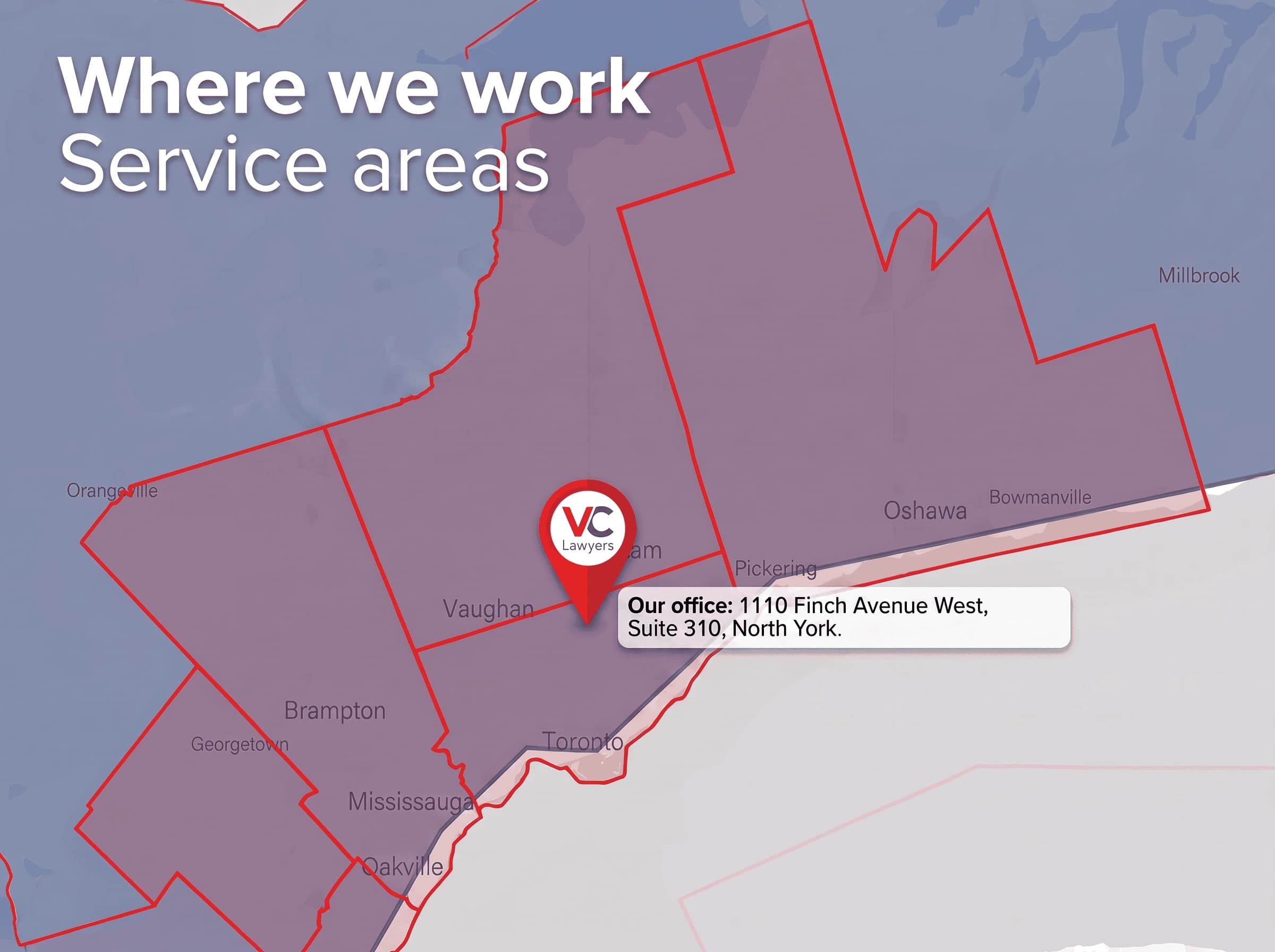
Where we work
Service areas
VC Lawyers serves clients throughout the Greater Toronto Area, including Toronto, North York, Scarborough, Etobicoke, Mississauga, Brampton, Oakville, Burlington, Vaughan, Richmond Hill, Pickering, Ajax, Whitby, Oshawa, Newmarket, and Aurora. We also represent clients across Ontario through video consultations and home/hospital visits when needed.
Languages spoken at the firm include English, Korean (한국어), Hebrew, Mandarin, and others depending on lawyer assignment.
Our office is located at 1110 Finch Avenue West, Suite 310, in North York, with parking and TTC access (Finch West subway and bus connections).
Frequently Asked Questions: Chronic Pain Claims
We answered all
My LTD insurer denied my fibromyalgia claim because they said there's no objective medical evidence. What can I do?
This denial pattern is legally vulnerable. The Supreme Court of Canada in Nova Scotia (WCB) v Martin (2003 SCC 54) confirmed that chronic pain disability is real and disabling. The Court also held that the absence of objective imaging findings does not justify excluding chronic pain sufferers from disability systems. The strategic response starts with stronger medical evidence: comprehensive specialist reports, a functional capacity evaluation, a detailed family physician narrative, and a multidisciplinary chronic pain clinic assessment. From there it means addressing functional impact specifically, countering “objective evidence” arguments with medical literature, and considering legal action. The Ontario Court of Appeal has upheld substantial punitive damages against disability insurers that deny in bad faith. In Baker v Blue Cross Life Insurance Company of Canada, 2023 ONCA 842, it upheld a jury award of $1.5 million in punitive damages against an insurer that cut off long-term disability benefits three times, denying first and asking for documents afterward. The two-year limitation period under the Limitations Act, 2002 generally starts running at the date of formal denial.How long does my chronic pain need to last before I can claim disability benefits?
The medical definition of “chronic pain” is pain persisting for three months or more. That is the threshold used by the International Association for the Study of Pain, and the World Health Organization adopted it in its ICD-11 classification. Most disability policies then add a waiting period of their own. STD claims can typically be filed once you have been off work for several days to a week. LTD claims typically require 90 to 180 days of continuous disability before benefits begin, and the policy calls that stretch the elimination or qualifying period. CPP Disability requires that the disability be “severe and prolonged,” generally meaning expected to last at least 12 months. SABS has a 4-week waiting period for some benefits, and WSIB has its own specific procedures. In practice, the typical chronic pain disability claim is filed once the condition has been present for several months, treatment has been attempted, and the impact on work capacity has become clear. Filing too early, before the condition is well documented, can result in denial, and waiting too long can compromise the claim. The first consultation with a chronic pain lawyer will assess timing for your specific situation.I have CRPS in my arm after a workplace injury. Should I file a WSIB claim or try to sue?
For workplace injuries in Ontario, the WSIB system is generally mandatory for covered workers. Section 26 of the Workplace Safety and Insurance Act generally precludes lawsuits against employers and co-workers, because WSIB benefits replace the right to sue. However, third-party tort claims may still be available against equipment manufacturers (product liability), contractors on multi-employer construction sites, non-employer drivers in vehicle-related workplace incidents, and third-party property owners. If your CRPS resulted from defective equipment or the negligence of someone other than your employer, a tort claim may be available alongside the WSIB claim. For the WSIB claim itself, report the injury to your employer immediately and file a Form 6 with WSIB. Pursue medical treatment and document everything. Get specialist confirmation of the CRPS diagnosis using the Budapest Criteria. Consider legal representation for permanent impairment determinations and benefit disputes. CRPS claims at WSIB face many of the same evidentiary challenges as LTD chronic pain claims. Martin decided that workers' compensation systems cannot categorically exclude chronic pain, but individual claims still face disputes about causation and severity, about whether maximum medical recovery has been reached, and about whether ongoing benefits are warranted.My doctor says I have fibromyalgia but the insurer won't accept this. What kind of medical evidence do I need?
The 2010 American College of Rheumatology (ACR) diagnostic criteria, updated in 2016, are the current standard for fibromyalgia diagnosis. They use two measures. The Widespread Pain Index counts the number of body areas with pain. The Symptom Severity Scale rates fatigue, sleep disturbance, cognitive symptoms and somatic complaints. A combined WPI and SSS threshold must be reached for at least three months, and other diagnoses that would explain the symptoms must be excluded. A diagnosis from a rheumatologist using these criteria carries significant weight, while a diagnosis from a family physician without specialist confirmation may face additional scrutiny. Beyond the diagnostic criteria, comprehensive evidence should include specialist confirmation, documentation of the WPI and SSS scores, a functional capacity evaluation, sleep study results, and treatment trials recording the medications and therapies attempted. It should also include a cognitive assessment where “fibro fog” is part of the claim, and a mental health assessment where depression or anxiety is comorbid. Statements from family and friends about how you functioned before the condition belong in the package too, along with a pain diary. Strong evidence on multiple dimensions provides defensive depth that withstands insurer challenges.Can I sue the at-fault driver if my chronic pain came from a car accident?
Yes, in most cases. Two parallel claim streams typically apply: a SABS claim with your own auto insurer (no-fault) and a tort claim against the at-fault driver. The tort claim can recover damages substantially exceeding SABS limits, including general damages, future cost of care, lost income beyond the income replacement benefit (IRB) caps, and other damages. For motor vehicle tort claims involving chronic pain, two specific Ontario barriers apply. The verbal threshold requires you to show a permanent serious impairment of an important physical, mental or psychological function. For 2026, the statutory deductible takes $47,913.01 off any general damages award below $159,708.71. Awards above that figure are not reduced. These barriers do not prevent successful chronic pain claims, but they do make experienced representation valuable, because the case has to be structured from the start to clear the verbal threshold.What is “chronic regional pain syndrome” or CRPS, and how is it different from regular chronic pain?
CRPS (Complex Regional Pain Syndrome), formerly known as RSD (Reflex Sympathetic Dystrophy), is a specific chronic pain syndrome. It produces severe pain, typically in one limb, that is disproportionate to the original injury. The other features are changes in skin temperature, color and texture, swelling, changes in sweating, changes in hair and nail growth, and motor impairment. CRPS is diagnosed using the Budapest Criteria, clinical criteria developed in 2003 and refined since. Type I, formerly RSD, involves no identifiable nerve damage. Type II, formerly causalgia, involves identifiable nerve damage. For CRPS claims, a diagnosis from a neurologist or pain medicine physician using the Budapest Criteria carries weight. Bone scans, thermography, and other tests can sometimes provide supporting evidence. Documentation of the functional impact on the affected limb is critical, and treatment trials demonstrate ongoing engagement with the medical system. CRPS cases often produce substantial damage awards.What does a chronic pain lawyer actually cost?
Chronic pain disability cases are typically handled on contingency, meaning no fee unless we recover compensation for you. The contingency percentage is set in writing at the start of the engagement and typically ranges from 25% to 33%. The exact figure depends on the complexity of the matter and on whether it resolves at negotiation, mediation, or trial. Disbursements are the out-of-pocket costs of running the case: court filing fees, expert reports, medical records requests, examination transcripts, and mediation fees. These are typically advanced by the firm and recovered from the eventual settlement, so you are not funding the litigation while you are unable to work. For a serious LTD chronic pain case, total disbursements can run $20,000 to $50,000 or more over the course of the litigation. The first 30-minute consultation is free with no obligation, and you will get a candid assessment of your case in that conversation, including realistic compensation expectations and the recommended legal strategy. For tort claims arising from accidents that caused chronic pain, contingency arrangements are similar.My employer is pressuring me to come back to work but my chronic pain hasn't resolved. What can I do?
Multiple legal frameworks apply. Under the Ontario Human Rights Code, disability is a protected ground, and employers have a duty to accommodate disability to the point of undue hardship. Under the ESA Long-Term Illness Leave in place since June 19, 2025, employees with at least 13 weeks of service are entitled to up to 27 weeks of unpaid, job-protected leave for serious medical conditions. If the employer terminates you while you remain disabled, a wrongful dismissal claim may follow, and with it common law reasonable notice (substantially exceeding ESA minimums) and human rights damages. If the employer instead makes the workplace untenable through hostile conduct, denial of accommodation, or unilateral changes, you may have a constructive dismissal claim. Document employer communications, preserve evidence of the disability, engage in the accommodation process formally (in writing), and get legal advice early.How long does a chronic pain LTD lawsuit typically take?
Chronic pain LTD cases follow the general pattern of disability insurance litigation in Ontario. Initial review and a formal demand letter take 1 to 3 months from intake. Negotiation typically runs 3 to 9 months from the demand, and many cases settle in that phase. If negotiation fails, a Statement of Claim is usually filed 6 to 12 months from intake. Pleadings, discovery and examinations take 12 to 24 months. Mediation follows at roughly 18 to 30 months from filing. A trial, if one is necessary, comes at 24 to 36 months from filing, and occasionally later. Most chronic pain LTD cases settle before trial, and many settle during discovery, when the strength of the medical evidence becomes clear to both sides. Three things create leverage for settlement: strong medical evidence, vulnerability in the insurer's position (especially where its conduct has been in bad faith), and the looming cost of trial preparation. For STD and SABS chronic pain claims the timeline is usually shorter, because the benefit period itself is shorter, but the same general phases apply.I've been told I have “psychogenic pain” or “somatic symptom disorder.” Does this mean I can't make a claim?
These diagnostic labels, particularly when they come from insurer-arranged examiners, are often deployed as a way to discredit chronic pain claims. The legal reality is more nuanced. Psychological pain is real pain. The International Association for the Study of Pain (IASP) definition explicitly covers pain associated with actual or potential tissue damage, and pain that resembles it. Psychological disability is recognized disability under the Ontario Human Rights Code, SABS, LTD policies, and CPP Disability. The DSM-5 frameworks have evolved. The older “somatoform disorder” concept has been replaced by “somatic symptom and related disorders,” which explicitly recognize that physical symptoms producing distress and functional impairment qualify as a disorder, whether or not a “medical explanation” can be identified. The strategic response is to meet the diagnosis directly with comprehensive medical evidence. That means a psychiatric or psychological assessment that establishes the disability as legitimate, documentation of the functional impact, and medical literature that answers the implicit suggestion that the pain is “not real.”
Why people choose VC Lawyers
The right firm handles everything so you can focus on recovery
Choosing the right personal injury law firm after an accident in Toronto can mean the difference between a lowball settlement and the full compensation you deserve.
No Fees Unless We Win
Personal injury cases run on a contingency basis. You pay nothing upfront.
Free Personal Injury Consultation
Speak with an injury lawyer today at zero cost. Other practice areas are quoted before we start.
24/7 Emergency Hotline
We’re available around the clock when you need us most.
Home & Hospital Visits
Too injured to come to us? We’ll come to you.
Multilingual Legal Team
Services in 8 languages so nothing gets lost in translation.
Boutique Firm, Big Results
You’re never just a case number. Get direct access to your lawyer.
Get in touch
Looking for legal help? Speak directly with a lawyer
Tell us what happened and a lawyer will personally review your case. Personal injury consultations are free and there are no fees unless we win. For all other practice areas, a consultation fee applies.
- $30M+ recovered for injury clients
- Available 24/7, including weekends
- Service in English, Korean, and 6+ more languages
Prefer to call? (416) 661-4529
Take the next step
Chronic pain is exhausting on its own. A fight with an insurer makes it harder.
Related practice areas
Continue exploring
Chronic Pain Lawyer in North York
The same practice, served from our office in North York.
Personal Injury Lawyer Toronto
For the broader personal injury framework.
Toronto Long-Term Disability Lawyers
For LTD claim disputes, where most chronic pain disability claims end up.
Toronto Short-Term Disability Lawyer
For STD claim disputes.
Toronto Critical Illness Lawyer
For critical illness insurance claims.
Toronto Non-Earner Benefits Lawyer
For SABS NEB claims.
Toronto Amputation Lawyer
For amputation cases that often involve chronic pain (CRPS).