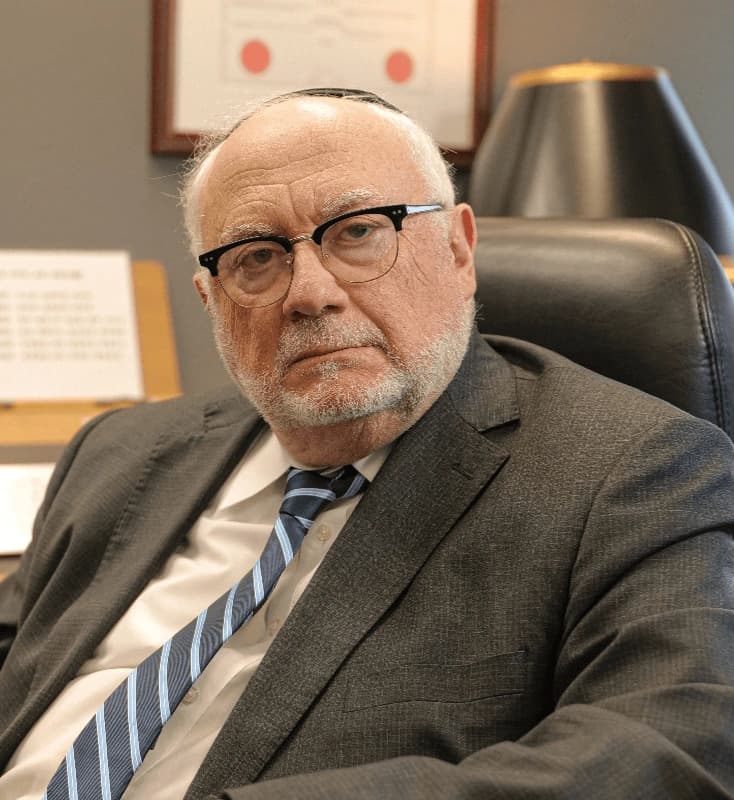
Maurice Vaturi
Senior Counsel

Vehicle Accidents


Trusted by off-road riders across Ontario
Overview
It's the second weekend of February, the last good cold of the winter. A group of four sleds heads out from a cottage near Bracebridge onto the Trans Ontario Provincial network. The snow is fast, the trails are groomed, and the riders are experienced. Two hours in, on a cross-country section, the lead rider crests a hill and disappears. By the time the second rider reaches the crest, he sees the lead sled at the bottom of the hill, on its side, partially buried in snow. The rider is thrown ten metres clear, helmet off, not moving. Cell service is patchy. The closest hospital is forty-five minutes away by ground ambulance. The closest trauma centre is in Toronto. By the time the air ambulance lifts off from Wasaga Beach, two hours have passed.
It's the May long weekend. A teenager, sixteen years old, is operating an ATV on a friend's family property north of Peterborough. The machine is a 700cc adult-sized ATV, much larger than what manufacturers recommend for a sixteen-year-old without extensive experience. The ATV rolls on a slope. The teen is pinned underneath. Crush injuries to the chest. The friend's father, watching from the cottage, sees what's happened and runs to the scene. By the time emergency services arrive, the boy has been unconscious for twenty minutes.
It's a clear afternoon in late January. A snowmobile crosses what the rider believes is a thoroughly frozen section of Lake Simcoe. The ice gives way. The rider goes through. The sled goes through. By the time other riders nearby hear the cries and reach the spot, the rider has been in the water for several minutes. He survives, barely, with severe hypothermia, a fractured skull from the initial fall, and the long-term medical and legal questions that follow any near-drowning.
These are real Ontario snowmobile and ATV accidents. The settings distinguish them from urban motor vehicle accidents in important ways: wilderness, cottage country, frozen lakes, family property. The injuries tend to be severe because the speeds are high (modern snowmobiles exceed 180 km/h), the protection is minimal, and the locations are remote. The legal frameworks are specific to off-road recreational vehicles and combine elements of motor vehicle law, occupiers' liability, product liability, and (in the most serious cases) criminal negligence.
Many Ontario snowmobile and ATV operators, and their families, do not realize that Ontario law treats snowmobiles and ATVs as automobiles for insurance and SABS purposes. The same Statutory Accident Benefits Schedule (SABS) that applies to automobile accidents applies to snowmobile and ATV accidents. That includes the 1 July 2026 split, which kept medical, rehabilitation and attendant care benefits mandatory and made the rest optional purchases. The same tort claim framework applies. The same Motor Vehicle Accident Claims Fund covers uninsured situations. This is good news for accident victims because it means a substantial legal infrastructure exists to compensate them. It's important news for operators because it means insurance is generally mandatory and the consequences of being uninsured at the time of an accident can be financially catastrophic.
Three statutes do the work. The Motorized Snow Vehicles Act, RSO 1990, c M.44 governs snowmobiles, which it defines as self-propelled vehicles designed to be driven primarily on snow. It sets registration, operator licensing, insurance, equipment standards, age limits, and the rules about where a sled may legally be ridden. The Off-Road Vehicles Act, RSO 1990, c O.4 does the same job for ATVs, dirt bikes, side-by-sides and similar machines built primarily for off-road use. The Compulsory Automobile Insurance Act requires insurance for vehicles operated on a highway in Ontario. Read together, the three create a framework that treats recreational off-road machines as motor vehicles for legal and insurance purposes.
Treating a sled or an ATV as an automobile is what opens the door to compensation. It means the Statutory Accident Benefits Schedule applies, so the medical, rehabilitation and attendant care benefits available after a car crash are available after a trail crash. It means the Motor Vehicle Accident Claims Fund is available as a last resort when nobody involved carried insurance. And it means the tort claim proceeds inside the standard motor vehicle framework. That framework includes the verbal threshold under O. Reg. 461/96, which requires a permanent serious impairment of an important physical, mental or psychological function, or a permanent serious disfigurement, before general damages can be recovered. It also includes the statutory deductible that now exceeds $40,000 on general damages awards below the specified thresholds. The leading authority for treating these machines as automobiles is Theriault v General Accident Assurance Company of Canada (1990 CanLII 11415, NB CA). There the New Brunswick Court of Appeal held that ATVs fall within the Insurance Act definition of automobile.
Insurance is mandatory more often than riders assume. The Motorized Snow Vehicles Act requires a motor vehicle liability policy for a snowmobile, and section 15 of the Off-Road Vehicles Act requires one for an ATV. In both cases the requirement applies as soon as the machine leaves land that its owner owns or occupies. The exemption for the owner's own land is narrow. Riding around a friend's farm, riding on Crown land, or riding any public trail without coverage is a breach of the requirement rather than a permitted exception. An uninsured crash is financially punishing for the operator as well as for the person who was hurt.
The operating rules matter to a claim, because breaking one of them is evidence of negligence. Snowmobile operators must be at least 12 years old. Riders aged 12 to 15 need a Motorized Snow Vehicle Operator's Licence, and riders 16 and over may use a regular Ontario driver's licence instead. ATV operators must also be at least 12, unless an adult is directly supervising them on private property. To cross or ride on a public road, an ATV operator must be at least 16 and licensed. Helmets meeting the standards set out in the two Acts are mandatory for operators and passengers alike. Snowmobiles and ATVs may cross highways only at designated crossing points. Ontario Federation of Snowmobile Clubs (OFSC) trails typically post a 50 km/h limit, even though a modern sled can exceed 180 km/h. Riding an OFSC trail also requires a trail permit.
This page is a comprehensive guide to snowmobile and ATV accident law in Ontario. It explains the legal framework, the compensation available, the specific challenges of off-road accident cases, and what victims and their families should do when these accidents happen.
VC Lawyers represents Toronto-area and Ontario-wide clients in snowmobile and ATV accident cases. The first 30-minute consultation is free, all snowmobile and ATV cases are handled on contingency (no fee unless we recover), and we work in English, Korean, and several other languages. For accidents in remote areas, we conduct video and home consultations. Call (416) 661-4529 at any point in this article if your situation requires immediate attention.
Talk to us
The first 30-minute consultation is free and confidential. We will tell you within that conversation what your realistic options are, and what to do next.
No fee unless we recover. Home and hospital visits available across the GTA.
Toronto-specific considerations
Toronto's trauma care network handles many of the most serious snowmobile and ATV accident cases from across Ontario. St. Michael's Hospital is the regional trauma centre. Sunnybrook Health Sciences Centre provides extensive trauma services. University Health Network (Toronto General, Toronto Western), Mount Sinai Hospital, and SickKids all handle severe accident cases. Patients from northern and central Ontario are frequently airlifted to Toronto trauma centres for definitive care.
For snowmobile and ATV accident claims, documentation from these institutions provides a strong evidentiary foundation. Even when the accident occurred far from Toronto, the medical care often happens at Toronto's leading trauma centres. Our practice maintains working relationships with treating teams at major Toronto hospitals to coordinate medical evidence development for off-road vehicle accident cases.
Those records also decide the most valuable question in a serious off-road file, which is whether the impairment is catastrophic. Off-road crashes produce traumatic brain injury, spinal cord injury, amputation, multiple severe fractures and severe burns, and every one of those can meet the SABS catastrophic criteria. The designation is the difference between a combined medical, rehabilitation and attendant care limit of $65,000 and one of $1,000,000. Imaging, operative notes, consult reports and rehabilitation assessments from the treating hospital are the evidence that supports it. That is why the full hospital chart is one of the first things we request, rather than something we wait for the insurer to assemble.
While our office is in Toronto (North York), our snowmobile and ATV accident practice extends across Ontario. Many of our cases come from cottage country (Muskoka, Haliburton, the Kawarthas), Northern Ontario (Sudbury, Sault Ste. Marie, the Thunder Bay area), Eastern Ontario (the Ottawa Valley, the Algonquin region), and Southwestern Ontario (the Bruce Peninsula, the Grey-Bruce area).
For clients throughout Ontario, we conduct video consultations and travel to client locations when needed for serious cases. The legal work of investigation, expert coordination, settlement negotiation and litigation is conducted from our Toronto office regardless of where the accident occurred.
Distance changes the investigation more than it changes the law. A scene on a remote trail, a frozen lake or a wilderness lot may have to be reached by snowmobile, ATV or aircraft, and weather can transform it within days. The photographs, the trail conditions and the resting positions of the machines have to be captured before the thaw takes them. That work usually runs through the OPP investigation file, conservation authority records, and the club or OFSC trail management responsible for the section where the crash happened. All of it is coordinated with an accident reconstruction expert who can speak to trail conditions, vehicle dynamics and impact forces. In most off-road files, nobody with a camera was standing at the scene when it happened.
Snowmobile and ATV accidents affect people from all communities. For Korean-Canadian, Chinese-Canadian, South Asian and other communities, legal representation in a first language matters a great deal. It shapes how well a client can tell their story and follow a complex legal process.
VC Lawyers handles snowmobile and ATV accident cases in English, Korean, and several other languages depending on lawyer assignment. For Korean-speaking clients, the Korean-language version of this page provides equivalent information, and Korean-speaking lawyers handle the file from intake through resolution. We also work with translators and bilingual staff for Mandarin, Cantonese, Hebrew, Hindi, Punjabi, Tagalog, Spanish, Portuguese, and other languages.
First-language service matters most in the parts of a claim nobody can do for you. Describing how the crash unfolded, describing pain and function to an insurer's assessor, and answering questions under oath at an examination for discovery all turn on precision. Precision comes easiest in the language a person actually thinks in. Family members are inside the file, not watching it from outside. Spouses, children and parents carry their own Family Law Act claims for loss of guidance, care and companionship, and they are entitled to understand the case in their own language as well.
How we approach the work
Our practice is built on principles that apply consistently across every off-road vehicle accident file. These are the operational rules that determine how we handle your case from intake through resolution.
The first conversation tells the rest of the story. We will tell you what we believe your case is worth, what timeline to expect, and whether litigation is warranted. We will not tell you what you would like to hear. Snowmobile and ATV cases vary enormously based on injury severity, the specific accident circumstances, available insurance, and other factors. We tell you directly which category your case falls into.
Being direct about an off-road file means naming the obstacles at the outset. General damages for pain and suffering are capped by the Andrews trilogy ceiling, currently around $470,000 indexed for inflation. They are reachable only if the injury clears the verbal threshold and then survives a statutory deductible that now exceeds $40,000. For most young and severely injured riders, the real value of the claim sits somewhere else: in past and future income loss, and in the future cost of care. We say so early, because those heads of damages are built with vocational and life care evidence rather than with sympathy.
We will also tell you where the defence has a real argument. Insurers routinely say an injured rider accepted the inherent risks of the activity. The answer is to separate two things. A rider does accept the risks that come with properly conducted riding. Nobody accepts negligent operation, defective equipment or dangerous trail conditions by climbing onto a sled. Knowing which side of that line your accident falls on is most of the case.
Snowmobile and ATV cases often involve multiple potential defendants: the operator, the owner, the manufacturer, the trail operator, the property owner, a supervising adult, an alcohol provider, and others. Identifying every viable defendant at the start of the case ensures that all available compensation sources are pursued.
The operator is the obvious defendant. The owner of the machine is the one people forget. Owners carry liability for damage caused by someone driving their vehicle with permission. The Ontario Court of Appeal worked that principle through in Fernandes v Araujo (2015 ONCA 571). Lending a sled or an ATV to a friend or a nephew does not end the owner's exposure. Manufacturers, distributors, retailers and the shop that last serviced the machine come into play where a brake, throttle, steering or stability failure contributed to the crash. Clubs, the OFSC, conservation authorities and private landowners owe occupiers' duties for the trails they maintain. For accidents on Crown land the Province may bear some responsibility, although it holds statutory protections that reduce its exposure.
Two further defendants matter in the cases that involve young riders and cottage weekends. The adult who permitted or supervised a minor's operation of an adult-sized machine can face a negligent supervision claim, and so can the property owner who allowed it. Where alcohol was in the picture, the social host principles from Childs v Desormeaux (2006 SCC 18) can reach the person who supplied it. We map every potential defendant and the insurance available from each, because the total recovery across several policies regularly exceeds what any single defendant's coverage would have paid.
Snowmobile and ATV cases often involve multiple compensation streams: SABS, tort claims against several defendants, possibly long-term disability (LTD) benefits, possibly Family Law Act claims by family members, and the Motor Vehicle Accident Claims Fund where nobody was insured. Coordinating these as an integrated strategy produces stronger outcomes than handling them separately.
The streams do different jobs. SABS pays for treatment and rehabilitation without anyone having to prove fault. Where the policy purchased the optional coverage, it replaces income as well. The tort claim is where the rest of the loss lives. It covers general damages, past and future income loss, the lifetime cost of medical care, rehabilitation, attendant care and equipment, out-of-pocket expenses, lost housekeeping and homemaking capacity, and Family Law Act damages for a family's loss of guidance, care and companionship. Product liability against a manufacturer and occupiers' liability against a trail operator or landowner sit inside the tort claim as separate theories, each with its own evidence.
Finding the coverage is itself part of the legal work. A single off-road accident can engage the operator's snowmobile or ATV policy, the operator's auto policy, the vehicle owner's policy, your own auto policy for SABS purposes, your private health plan, a trail operator's liability policy, and a homeowner's policy. Clients regularly discover that a policy they had forgotten about carries meaningful coverage. Where nobody was insured, the Motor Vehicle Accident Claims Fund is the last resort. It carries procedural requirements you have to follow to stay eligible.
Off-road vehicle accident cases frequently require accident reconstruction analysis to establish what happened. We work with experienced reconstruction experts who can analyze trail conditions, vehicle dynamics, impact forces, and other technical elements.
For medical evidence, we coordinate with treating physicians and specialists at Toronto trauma centres and elsewhere to develop the comprehensive documentation that serious accident cases require.
Evidence in these files disappears quickly, so preservation is part of the work from day one. The machine itself is the entire product liability case. It must not be repaired, sold or handed to an insurer or a manufacturer before an engineer has examined it and documented the failure mode. Witnesses are often recreational riders who travelled a long way for the weekend, and they are difficult to locate a month later. The witnesses who are easy to find are usually the victim's own riding group, and some of them may end up as defendants. We identify riders and take statements early, and we secure the vehicle, the helmet and the trail records before anyone else has a reason to move them.
Our snowmobile and ATV practice extends across Ontario. We conduct video consultations for clients in remote areas and travel to client locations when needed. The legal work is conducted from our Toronto office, but the practice is province-wide.
In practice that means four regions: cottage country (Muskoka, Haliburton, the Kawarthas), the north (Sudbury, Sault Ste. Marie, Thunder Bay), the Ottawa Valley and Algonquin region, and the Bruce Peninsula and Grey-Bruce area. Many of those clients end up in Toronto anyway, because patients from northern and central Ontario are frequently airlifted to Toronto trauma centres for definitive care. The medical file and the legal file often land in the same city even when the accident did not happen anywhere near it.
Where travel is difficult, we come to you at home or in hospital, and we run consultations by video for clients who are too far away or too badly injured to make the trip. Distance should decide nothing about a claim except how we meet.
All snowmobile and ATV cases are handled on contingency, so there is no fee unless we recover. The contingency percentage is set in writing at the start of the engagement, typically between 25% and 33% depending on complexity and the stage at which the matter resolves. Disbursements are advanced by the firm and recovered from settlement.
Off-road files carry real disbursement costs, because they are proved with experts rather than with argument. On a serious case, court filing fees, accident reconstruction analysis, medical records requests, specialist reports, examination transcripts and mediation fees can total $20,000 to $75,000 or more over the life of the litigation. The firm pays those as the case runs and is reimbursed only when the matter resolves. The cost of the evidence is never the reason a case stops moving forward.
When you retain VC Lawyers, you deal with the lawyer handling your file, and you have that lawyer's direct contact. The same lawyer stays responsible from intake through resolution.
That matters more in an off-road file than in an ordinary rear-end collision, because the decisions come constantly and most of them are time-sensitive. Which defendants to add before the limitation period runs. Whether to press for a catastrophic impairment designation. When to secure and examine the machine. Whether written notice has to go out within 10 days because a municipality left a road or bridge in non-repair. Those are calls the lawyer running your file should be making with you, not relaying to you after the fact.
Toronto's diversity is reflected in our practice. We handle files in English, Korean, and several other languages. For Korean-speaking clients, the Korean-language version of this page provides equivalent information.
Beyond Korean, we work with translators and bilingual staff for Mandarin, Cantonese, Hebrew, Hindi, Punjabi, Tagalog, Spanish, Portuguese and other languages. This is not translation for its own sake. Accident benefits forms, disability certificates, assessor interviews and discovery all turn on how precisely a person can describe what they can no longer do. A client who is fighting the language at the same time as the injury gives a weaker account of both.
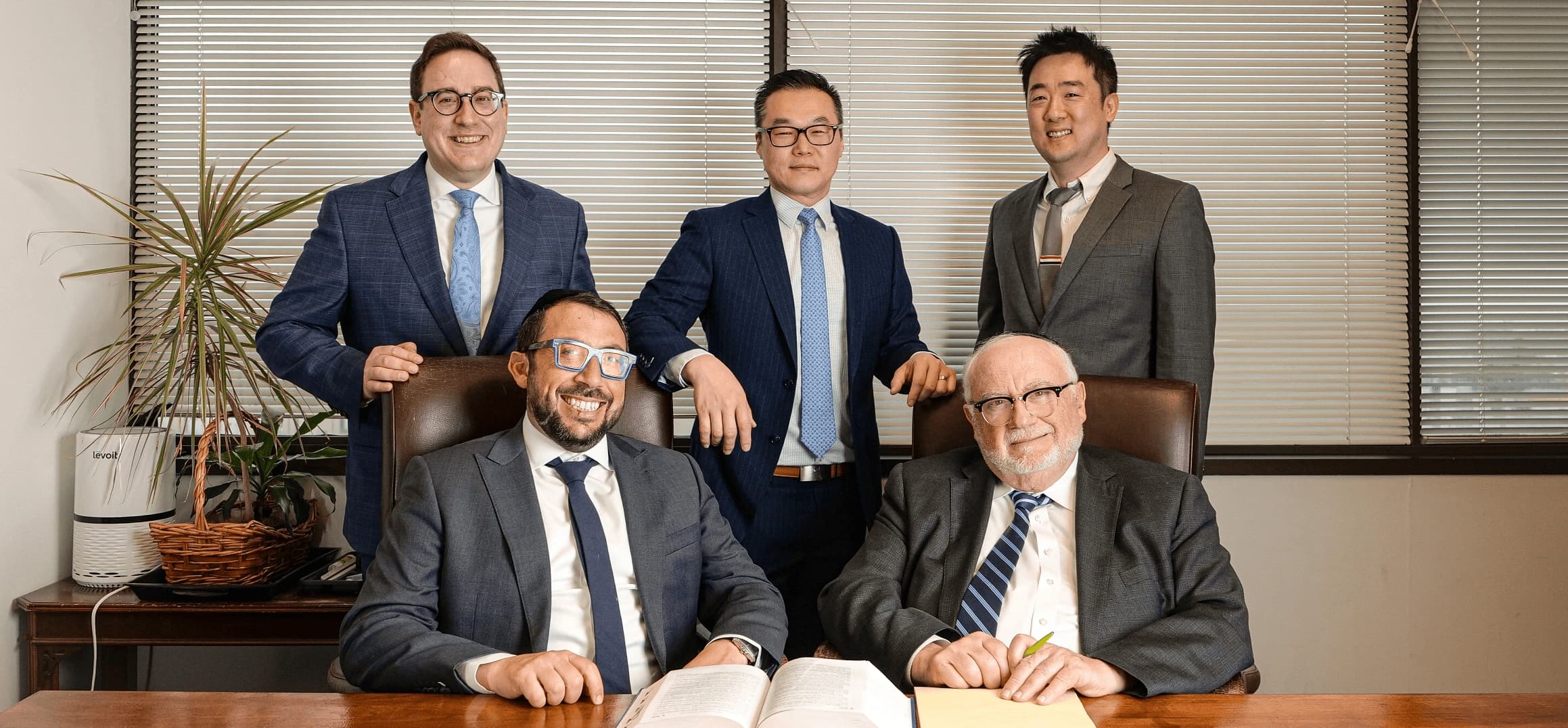
Our team
Senior Counsel
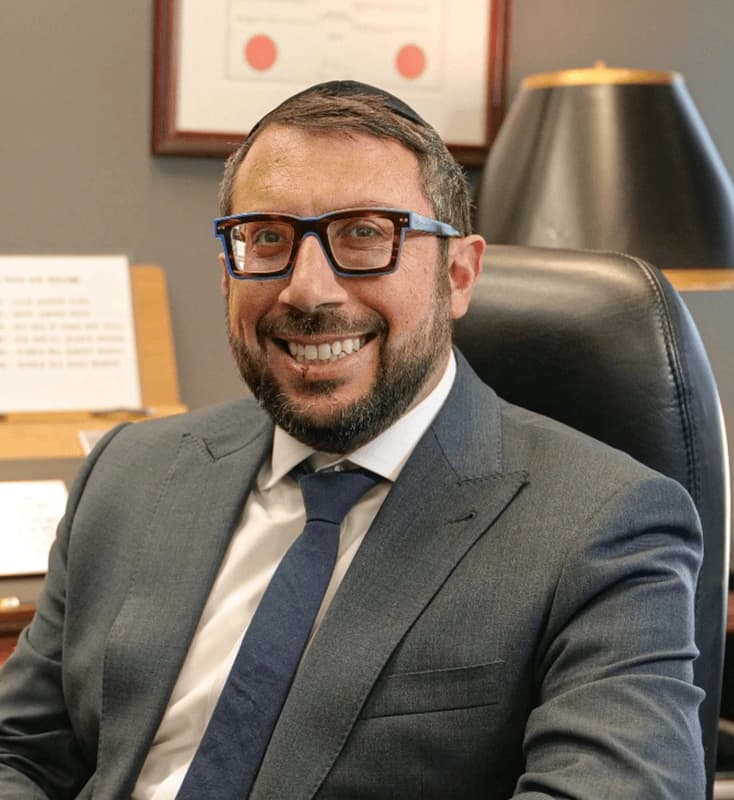
Partner
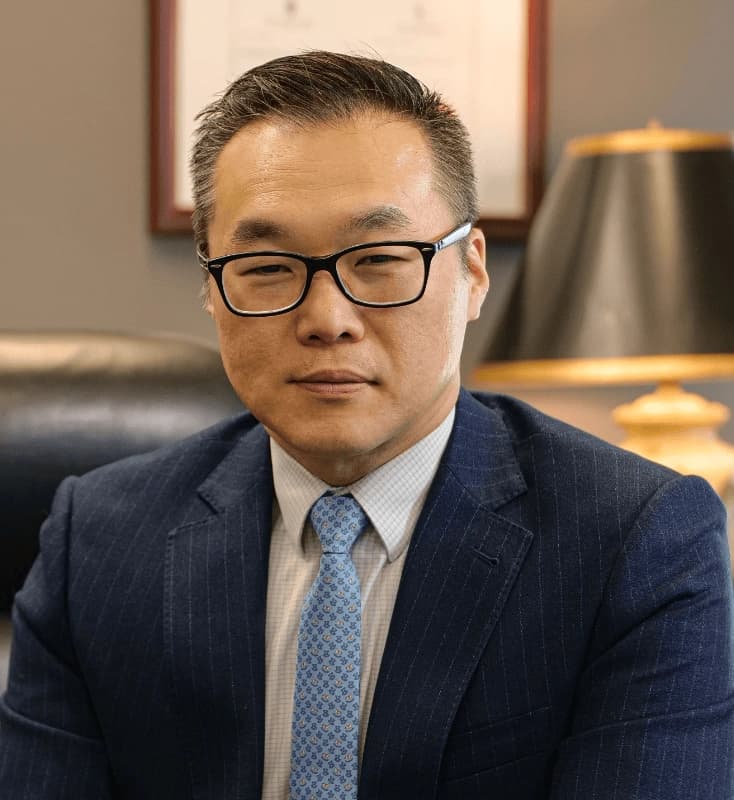
Co-Managing Partner
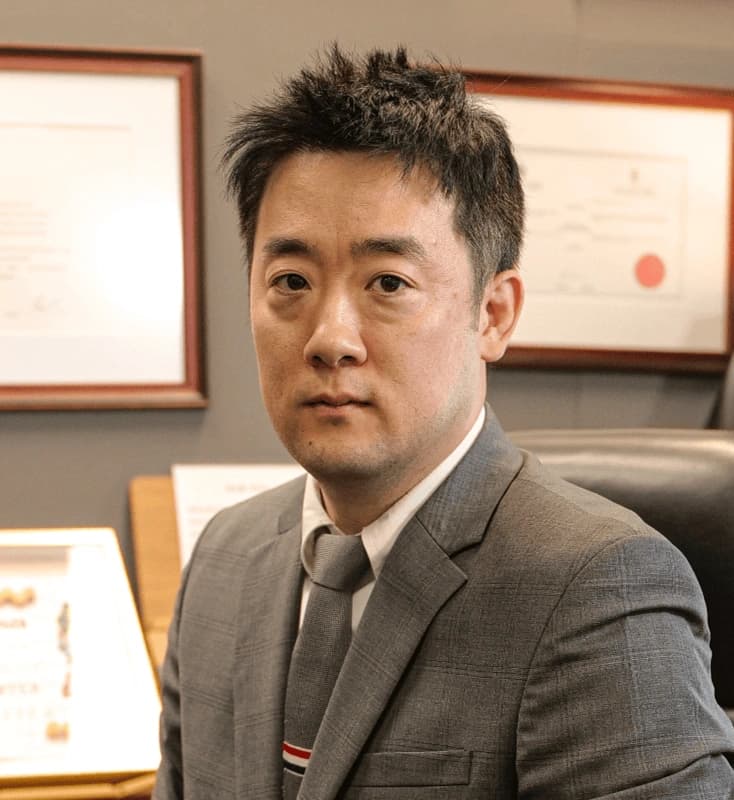
Lawyer
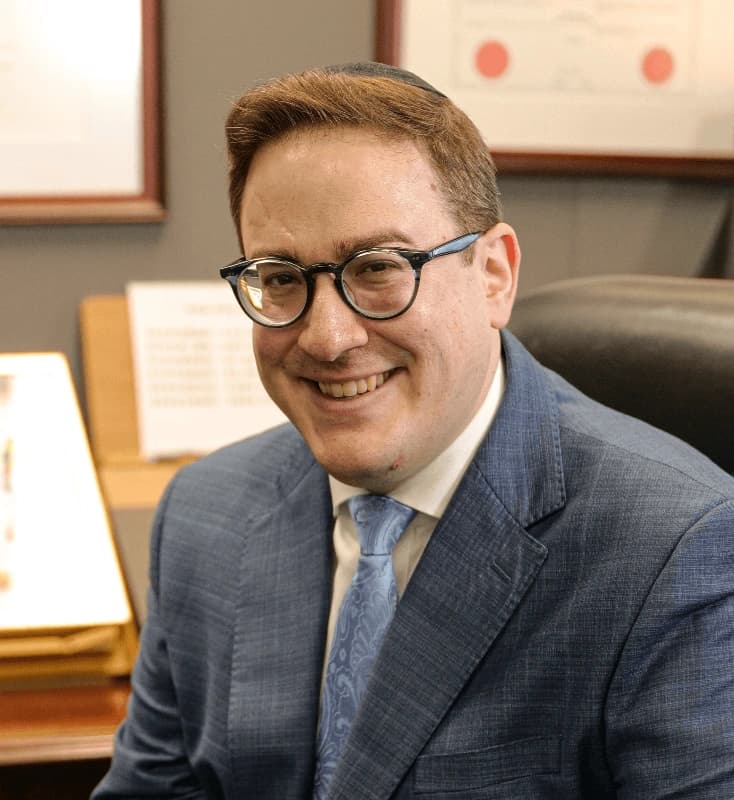
Lawyer

Immigration Consultant
RCIC R529664 · RQIC 11726
FAQs
Snowmobile and ATV cases combine motor vehicle law, occupiers' liability, product liability, and SABS in ways that surprise most accident victims. The most common questions we hear are below.
Where we work
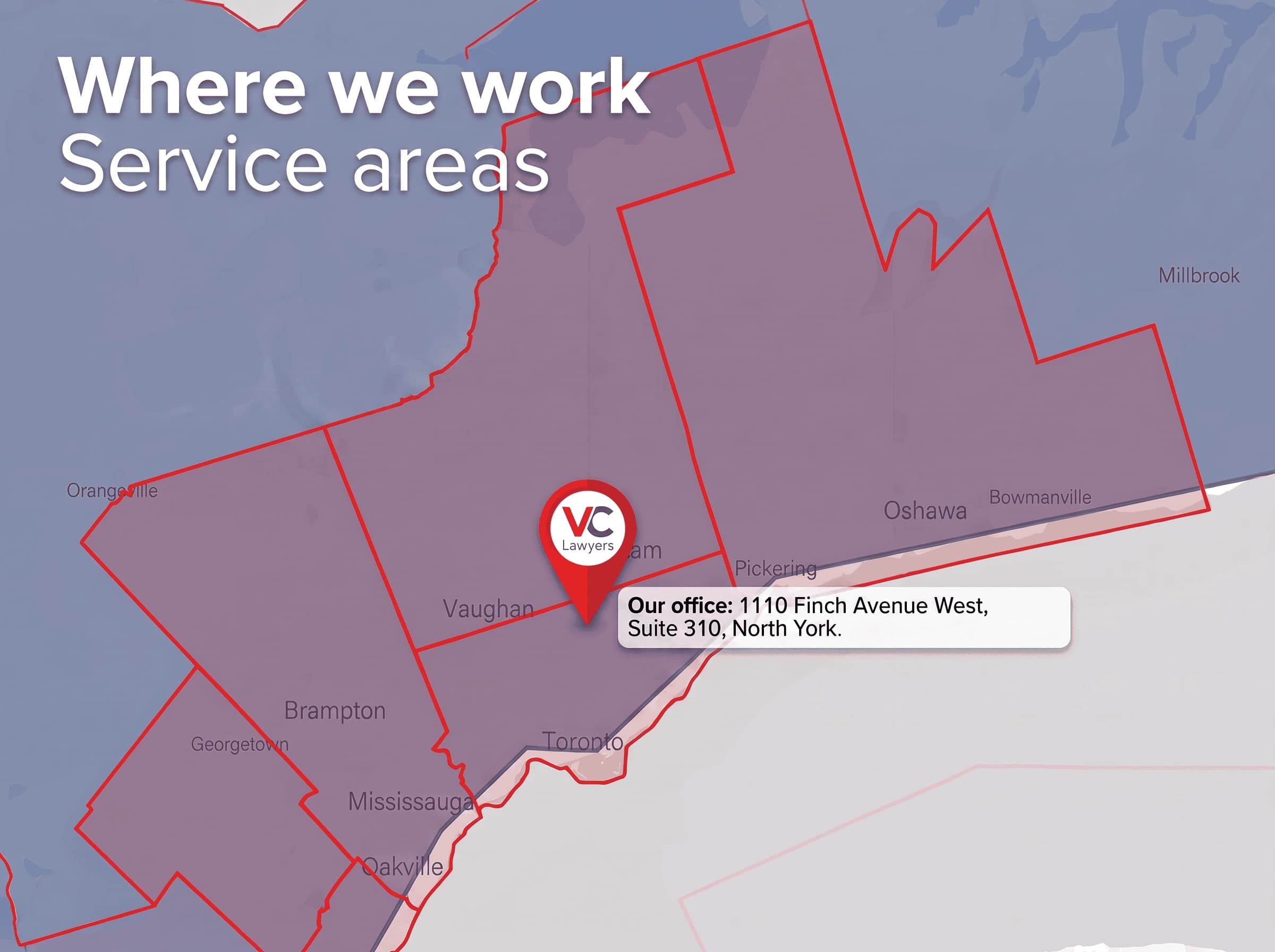
VC Lawyers serves clients throughout Ontario for snowmobile and ATV accident cases. While our office is in Toronto (North York), our practice extends to Muskoka, the Kawarthas, Haliburton, the Ottawa Valley, Northern Ontario, and other regions where these accidents occur. We hold video consultations for clients in remote areas, and we visit clients at home or in hospital where mobility is limited.
Off-road accidents rarely happen where the injured person lives. A Toronto family’s weekend crash happens in Muskoka, and a rider from the GTA goes through the ice on a lake two hours north. That split matters procedurally. Every institution the claim touches is local to the accident rather than to you: the club or conservation authority that manages the trail, the OPP detachment that responded, the hospital that received the patient, and any municipality that maintained the road crossing. We deal with each of them from Toronto. Where a municipality is in the picture we move quickly, because a claim that a road or bridge was left in non-repair requires written notice within 10 days.
For Toronto-area clients, our service area includes Toronto, North York, Scarborough, Etobicoke, Mississauga, Brampton, Oakville, Burlington, Vaughan, Richmond Hill, Pickering, Ajax, Whitby, Oshawa, Newmarket, and Aurora. Languages spoken at the firm include English, Korean (한국어), Hebrew, Mandarin, and others depending on lawyer assignment. Our office is located at 1110 Finch Avenue West, Suite 310, in North York, with parking and TTC access (Finch West subway and bus connections).
Why people choose VC Lawyers
Choosing the right personal injury law firm after an accident in Toronto can mean the difference between a lowball settlement and the full compensation you deserve.
Personal injury cases run on a contingency basis. You pay nothing upfront.
Speak with an injury lawyer today at zero cost. Other practice areas are quoted before we start.
We’re available around the clock when you need us most.
Too injured to come to us? We’ll come to you.
Services in 8 languages so nothing gets lost in translation.
You’re never just a case number. Get direct access to your lawyer.
Get in touch
Tell us what happened and a lawyer will personally review your case. Personal injury consultations are free and there are no fees unless we win. For all other practice areas, a consultation fee applies.
Prefer to call? (416) 661-4529
Take the next step
Related practice areas
The same practice, served from our office in North York.
The underlying motor vehicle accident framework.
Catastrophic injuries from commercial truck and tractor-trailer collisions.
Riders struck by negligent drivers across the GTA.
Reverse onus advocacy for injured pedestrians.
Dooring and bike lane crash claims for injured cyclists.
TTC, GO Transit, and bus accident claims.
Recovery against uninsured and unidentified drivers.
E-scooter and micromobility crash claims.
Liability and damages where the at-fault driver was distracted.
Ontario residents injured in U.S. or out-of-province collisions.
Traumatic brain injury claims for catastrophic head trauma.
Paralysis and severe spinal trauma claims.
Statutory accident benefits for every motor vehicle accident victim.