VC·Lawyers®
North York occupier's liability lawyer, VC Lawyers

North York

North York Occupier’s Liability Lawyer

Toronto Lawyers Association
Ontario Trial Lawyers Association (OTLA)
The Canadian Bar Association
Love Toronto
Consulate General of the Republic of Korea in Toronto
Korean Legal Clinic
Ontario Bar Association
Toronto Lawyers Association
Ontario Trial Lawyers Association (OTLA)
The Canadian Bar Association
Love Toronto
Consulate General of the Republic of Korea in Toronto
Korean Legal Clinic
Ontario Bar Association
Toronto Lawyers Association
Ontario Trial Lawyers Association (OTLA)
The Canadian Bar Association
Love Toronto
Consulate General of the Republic of Korea in Toronto
Korean Legal Clinic
Ontario Bar Association

Trusted by accident victims and businesses across Ontario

Overview

Occupier's liability claims in North York

Injured on someone else's property in North York? Our experienced occupier's liability lawyers in North York represent victims of every kind of premises injury across the GTA. Slip and falls on icy, wet, and hazardous surfaces. Trip and falls on broken stairs, uneven floors, and cluttered walkways. Injuries in dark, unlit stairwells and parking garages. Pool, hot tub, and waterfront drownings and near-drownings. Balcony, deck, and railing failures. Falling objects and structural hazards. Escalator and elevator malfunctions. Injuries from inadequate security at bars, events, and buildings. And dog attacks and hazards on private property. Our team has recovered over $30M+ for accident victims across North York, Ontario and the GTA. That includes the client who suffered a traumatic brain injury when an unmaintained sign fell in a Toronto shopping plaza, and the tenant injured in a dark, unlit stairway after a landlord ignored repair requests for over a month. Occupier's liability is the law running through all of it: one statute governing every injury on every property in the province.

That statute is Ontario's Occupiers' Liability Act, and understanding how it works is understanding your rights. The duty is this: under section 3(1), every occupier must take such care as is reasonable in all the circumstances to see that people entering the premises, and their property, are reasonably safe while there.

North York Occupier’s Liability Lawyer, VC Lawyers

One duty, many occupiers, and the Act's edges

The occupier is deliberately defined in the plural. It means anyone in physical possession of premises, or with responsibility for and control over their condition, activities, or entry. Owners, landlords, tenants, businesses, property managers, condo corporations, event operators, and the maintenance, cleaning, security, and winter contractors working the property can all be occupiers of the same premises at the same time. Each owes the duty, and each carries insurance.

The standard is reasonableness, not perfection, and it is not strict liability, which would mean the occupier is liable no matter how carefully it acted. So a fall on its own proves nothing. But as our premises practice proves file after file, you do not have to show that the occupier knew about the specific hazard. If there was no reasonable system of inspection and maintenance, that failure is itself the breach of the duty, and we prove it from the occupier's own logs, records and contracts, or from the fact that no such records exist.

The Act's edges matter just as much, because insurers live in them. Warning signs are not automatic defences. A sign poorly placed, inadequate to communicate the real risk, or deployed where the hazard demanded actual repair does not satisfy the duty, and we assess and counter every sign defence with evidence.

Partial fault reduces, never eliminates. Under Ontario's comparative negligence principles (where fault is divided between the parties), your award is reduced in proportion to any share of responsibility that is yours, whether the insurer blames your footwear, blames your phone, or says "you should have seen it." A share of fault lowers what you receive. It never wipes it out.

Trespassers are not automatically without rights. On most urban premises, a trespasser is still owed the full reasonable care standard. The reduced "reckless disregard" duty applies only to persons who enter while committing a criminal act (section 4(1)-(2)) and to entrants on specific rural and recreational premises the Act enumerates (section 4(3)-(4)). Children drawn onto property are judged by a child's standards, with the law's full protection. Risks that a visitor "willingly assumed" narrow the occupier's duty, but only in a narrow set of cases. Ontario law reads that phrase strictly: knowing a hazard was there is not enough, because the person must have accepted both the physical risk and the legal risk of it. The court runs its own separate analysis before that reduced duty applies.

Then there is the independent contractor defence under section 6, where the occupier points at the winter or cleaning company it hired. It protects only an occupier who was reasonable in hiring the contractor and who took reasonable steps to check that the contractor was competent, and that is precisely why we sue the contractor too. Whichever way that defence goes, one of them is responsible, and Ontario's Negligence Act (a statute that lets courts divide fault among multiple parties) splits the responsibility among them.

This page is the hub of our premises practice. It is the framework behind our dedicated slip and fall, swimming pool and drowning, balcony and deck, and dog bite practices, and the home of the categories beyond them: negligent security and assault-on-premises claims, falling objects, escalators and elevators, retail and restaurant injuries, event and venue claims, and the municipal claims with their unforgiving notice rules.

Based right here in North York at 1110 Finch Ave W, VC Lawyers brings 70+ years of combined experience to every premises file, with a legal team available around the clock to begin evidence preservation. In this practice area, the case is decided in its first days.

We act on a written contingency fee agreement, so there are no upfront legal fees. You get a free consultation, and no legal fee is payable unless the claim succeeds.

Get in touch

Looking for legal help? Speak directly with a lawyer

Tell us what happened and a lawyer will personally review your case. Personal injury consultations are free and there are no fees unless we win. For all other practice areas, a consultation fee applies.

  • $30M+ recovered for injury clients
  • Available 24/7, including weekends
  • Service in English, Korean, and 6+ more languages

Prefer to call? (416) 661-4529

A VC Lawyers lawyer in consultation with a client at the North York office

Background

Occupier's liability in North York: what you need to know

Every square metre of North York has an occupier. The plazas and big-box lots along Finch, Sheppard, Steeles, and Keele. The condo towers and walk-up apartments of a vertical part of the city, with their lobbies, garages, stairwells, balconies, and pools. The malls, grocery stores, restaurants, and bars. The gyms, arenas, and event venues. The schools, places of worship, and community spaces. The construction hoarding and the City sidewalks threading it all together.

The Act follows you through all of it, and our cases map onto exactly that geography, category by category.

The duty, who owes it, and the exceptions the Act allows

The duty is the core: reasonable care, in all the circumstances, for the safety of people and their property on the premises. It covers the premises' condition, meaning the ice, the stair, the lighting. It covers the activities conducted on them, meaning the event, the construction, the service of alcohol. And it covers the conduct of third parties the occupier should reasonably control, meaning the foreseeable assault inadequate security invited.

Who answers: usually more than one party. Possession or control defines the occupier, and control is divisible. The landlord controls the structure, the tenant the unit, the manager the operations, the contractor the snow. Disputes between the owner and the contractor over whose failure it was are routine, and irrelevant to you, because we sue everyone with control and let the Negligence Act apportion.

The independent-contractor defence protects only the occupier who hired competently and reasonably. It is tested rather than assumed, and it never protects the contractor itself.

The edges are where insurers live. Warning signs: a sign is evidence of reasonableness, never proof of it, and placement, adequacy, and whether the hazard demanded repair rather than a warning all get litigated. Willing assumption of risk is narrow, genuine, and informed, not stretched over everyone who entered a rink, a trail, or a bar.

Recreational premises, meaning trails and rural lands, carry a statutorily reduced duty with its own analysis: reduced, but not erased. On most urban premises, trespassers are still owed the full reasonable care standard; the reduced "reckless disregard" duty applies only to persons committing crimes on the premises and to entrants on the Act's enumerated rural and recreational lands. Child trespassers, drawn by pools, structures, and curiosity, are owed far more regardless. Waivers and tickets: the fine print on entry is real law and a real battleground, read by us before it's sprung by them.

Not sure where you stand? One conversation will tell you.

A VC Lawyers lawyer meeting a client at the North York office

The kinds of premises claim, and where our dedicated practices take over

Slip, trip, and fall claims over ice, spills, stairs, lighting, and clutter. This is the volume heart of premises law, with the 60-day and 10-day notice rules, covered in depth by our slip and fall practice.

Pool, hot tub, and waterfront claims. Drownings and near-drownings fall under the supervision and enclosure duties our swimming pool and drowning practice maps, at catastrophic depth.

Structural failures. Balcony and deck collapses, railing failures, and falling glass and objects, including our falling-sign TBI recovery. These are the engineering files of our balcony and deck practice, plus the falling-object and ceiling/fixture cases that share their methodology.

Negligent security and assault on premises. This is the category beyond the falls. Bars over-serving and under-staffing. Venues, lots, and buildings with known violence histories and absent cameras, lighting, or guards. Landlords ignoring broken locks and access control. The occupier doesn't answer for every crime. But where third-party violence was foreseeable and reasonable security would have prevented it, the Act reaches it, and the venue's incident history, staffing records, and security contracts are the case.

Escalators, elevators, and equipment. Malfunctions, entrapments, and falls, with occupier duties layered over maintenance-contractor liability and regulatory inspection records.

Retail, restaurant, and venue claims. Falling merchandise, hot-liquid burns, crowd and event injuries, and amusement and sports-venue claims, each with its waivers, its incident-report trails, and its insurers.

Dog and animal hazards on premises. Here occupiers' liability runs alongside the strict liability of our dedicated dog bite practice, including landlords who harboured known dangerous dogs.

Municipal premises. Sidewalks carry the 10-day notice and gross-negligence standard, and parks, facilities, and City property follow: the government claims with the shortest deadlines and the most decisive records.

By the numbers

Occupier's liability facts every North York victim should know

The Act's structure, its limits, and the evidence rules that decide every premises claim.

  • One duty governs every property in Ontario

    Reasonable care, in all the circumstances, that people on the premises are reasonably safe. The standard is flexible by design. A grocery store's spill response, a landlord's stairwell lighting, a bar's security, and a plaza's salting are each judged against what reasonableness demanded there.
  • A single property usually has several occupiers at once

    The Act defines an occupier by possession or control: over a property's condition, over the activities on it, or over who is allowed to enter. That covers owners, landlords, tenants, managers, condo corporations, businesses, event operators, and their maintenance, cleaning, security, and winter contractors, each separately insured and each pointing at the others.
  • Knowledge of the hazard is not required, but a reasonable system is

    The winning question is whether reasonable inspection and maintenance existed at all. It is answered by the occupier's own salting logs, inspection records, maintenance contracts, and incident files, which we demand early, while they still exist and the people who kept them are still working the property.
  • Warning signs are not an automatic defence

    A sign that was badly placed, understated the risk, or substituted for the repair the hazard actually demanded does not discharge the duty. Sign defences are assessed and countered with evidence, not accepted.
  • Partial fault reduces, never bars

    Comparative negligence adjusts awards in proportion. It does not eliminate the negligent occupier's responsibility, whatever the adjuster implies about your shoes, your attention, or your route.
  • Trespassers still have rights

    On most urban premises, trespassers are owed the full reasonable care standard. The reduced "reckless disregard" duty is reserved for persons committing crimes on the premises and for entrants on enumerated rural and recreational lands. Children drawn onto premises are judged by a child's standards with heightened protection.
  • The contractor defence has limits

    Occupiers who reasonably hired competent independent contractors may deflect liability for the contractor's failures. That is exactly why the contractor is sued too, the hiring's reasonableness is tested, and the Negligence Act apportions among everyone who failed.
  • The notice traps are real and layered

    10-day written notice for City of Toronto sidewalk claims, with a gross-negligence standard on top. 60-day written notice for snow-and-ice falls on private property, served on the occupier or winter contractor. Behind them runs the general 2-year Limitations Act clock, with evidence that disappears faster than any of it.
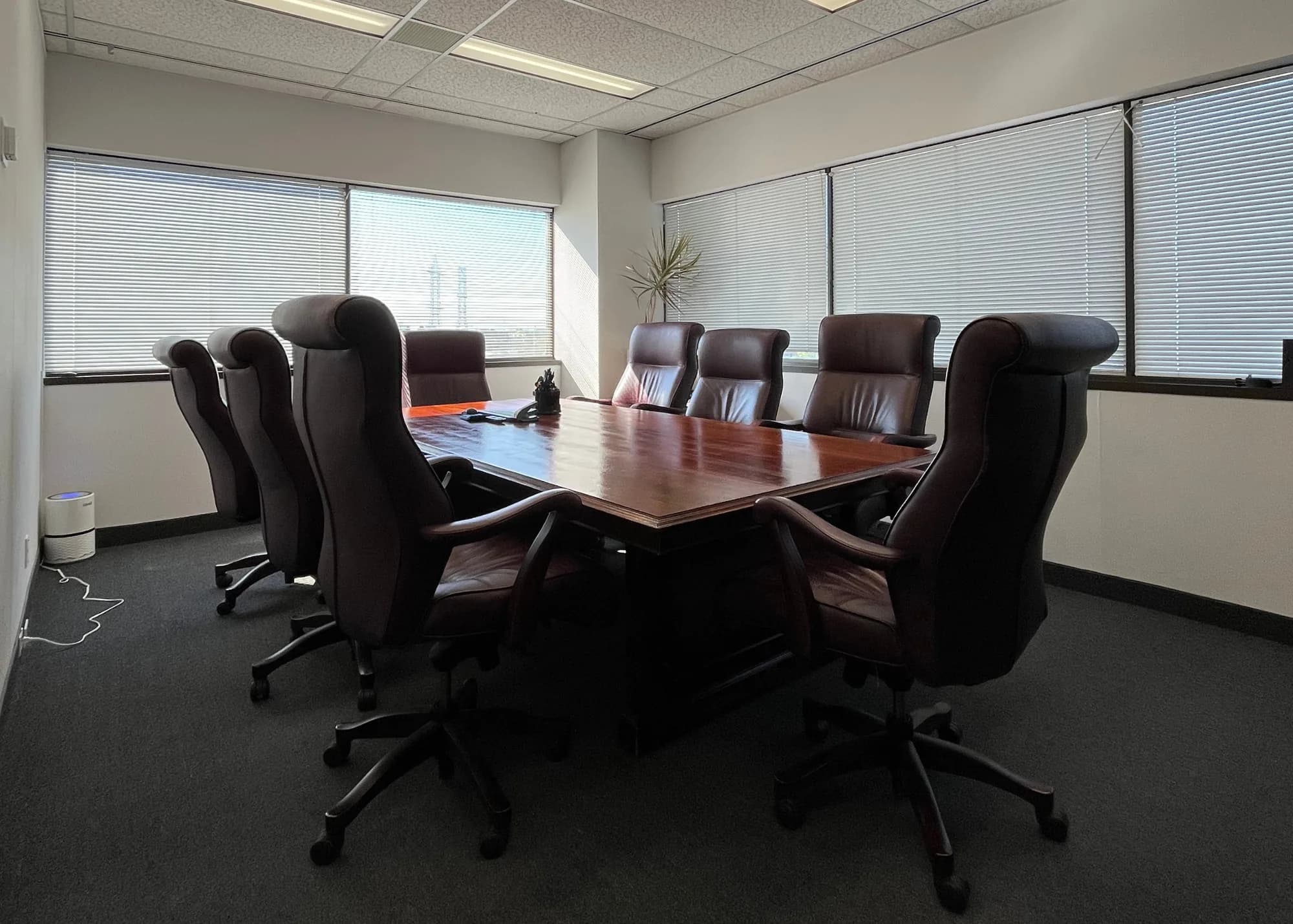
Boardroom at VC Lawyers, 1110 Finch Avenue West, North York

A community of occupiers

Every property owes you something

Walk a single North York errand, out of a condo lobby, across a plaza lot, into a grocery store, down a City sidewalk, past a construction hoarding, and up a friend's porch steps, and you pass through half a dozen occupiers' duties before lunch. Each one owes you reasonable safety, and each one is insured for the moment it fails.

That is the Act's quiet promise to everyone here: you are owed care on every property you lawfully enter, by everyone with a hand on its condition. Our practice exists for the moments the promise breaks, with the urgency the evidence demands, the documents doctrine that proves the breach, and the injury depth that prices what it cost you.

The deadlines here are shorter than most people expect.

Step by step

What to do after a premises injury in North York

  1. 01

    Photograph the hazard immediately, from every angle, with scale

    Before it is salted, repaired, replaced, or relit. The single most valuable act in the claim.
  2. 02

    Get witness names and numbers on the spot

    And note any staff who responded and what they said.
  3. 03

    Report before you leave

    To the manager, owner, landlord, or security, and request the incident report in writing.
  4. 04

    Seek medical attention the same day

    Reporting the mechanism precisely so the clinical record anchors causation.
  5. 05

    Preserve what you wore and what failed

    Footwear in fall cases, the object in falling-object cases, clothing in burn cases.
  6. 06

    Keep the ticket, waiver, receipt, or entry pass

    The documents that prove you were there and reveal what the defence will argue.
  7. 07

    Note the conditions

    Time, weather, lighting, and crowding, all matched later to official records.
  8. 08

    Give no recorded statements and sign nothing

    And never speculate about fault at the scene; "I should have watched my step" outlives every fact.
  9. 09

    Move on the notices now

    10 days for City sidewalks, 60 days for private snow-and-ice, and short municipal windows generally. This is the step that cannot be repaired later, and the first thing we do.
  10. 10

    Contact a North York occupier's liability lawyer this week

    While the footage exists, the hazard is provable, and every window is open.

Our process

How our North York occupier's liability lawyers handle your case

  1. 01

    Free consultation and same-week protection

    Contact us as soon as you can. Our North York occupier's liability lawyer team will identify every occupier, whether owner, tenant, manager, corporation, or contractor. We confirm which notice regimes apply and serve them properly, and we begin evidence preservation immediately, at zero obligation and zero cost, around the clock.
  2. 02

    Capture the perishable, demand the documentary

    The perishable comes first. The hazard is photographed before repair. Surveillance footage is preserved by demand before retention cycles overwrite it. Witnesses are named and interviewed, weather records matched, the scene measured, and incident reports obtained. In structural and equipment cases, the failed object is preserved unaltered for forensic engineering. Then the documentary: the occupier's inspection logs, maintenance and salting records, contracts with winter, cleaning, and security companies, prior incident and complaint files, and, in municipal cases, the City's patrol records against its own minimum standards. We retain forensic engineers and experts to examine premises where the file demands it. And we obtain the tickets, waivers, and entry agreements whose fine print the defence will otherwise spring later.
  3. 03

    Build the injury at full depth, answer every defence, resolve it properly

    Premises injuries are built through our practice's full methodology: fractures assessed on how far you actually recovered rather than on whether the bone healed, head strikes treated with the seriousness a traumatic brain injury (TBI) deserves, drowning and structural cases built at catastrophic depth, and scarring documented with careful photographs over time. Premises claims carry no statutory deductible, threshold, or MIG (the Minor Injury Guideline, which caps the medical and rehabilitation benefits an auto insurer pays for injuries classified as minor), so damages run at common law (assessed by court principles without the statutory caps that apply in car accident cases). We answer the standard defences, including the warning sign, the contractor deflection, the contributory percentages, and the waiver, with the record. We negotiate from documented strength, and we litigate in the Ontario Superior Court of Justice where fair value is refused.
  4. 04

    Resolution, and how the fee is accounted for

    When the claim resolves by settlement or judgment, the recovery is paid to you. Our fee is then taken out of it at the percentage agreed in the written contingency fee agreement before the file opened, and no legal fee is charged if the claim does not succeed. The disbursements, including the engineering and medical reports, are set out for you before you sign.

Important

Premises deadlines are the harshest in personal injury law. City of Toronto sidewalk claims require written notice within 10 days. Snow-and-ice falls on private property require written notice within 60 days, served on the occupier or their winter contractor. Short notice rules apply wherever municipalities are involved, and hazard evidence is measured in hours, not months. The 2-year lawsuit deadline means nothing if the notice windows close or the footage overwrites first. Contact an occupier's liability lawyer in North York today.

Every situation is different. Yours deserves a specific answer.

Know their playbook

Insurer tactics in occupier's liability claims

  • The sign shield

    "There was a wet-floor sign," wherever it was, whatever it said, however inadequate to the hazard. Answered with the sign's placement, adequacy, and the repair the hazard actually demanded. A sign is evidence, never absolution.
  • The contractor handoff

    The occupier points at the winter, cleaning, or security company it hired: the section 6 deflection. Answered by suing the contractor too, testing the hiring's reasonableness, and letting apportionment sort the pointing.
  • The system mirage

    "We had inspections," until the logs show gaps, the records show nobody walked the floor, and the contract shows corners cut. Answered by reading every line. The paperwork wins these cases in both directions.
  • The contributory squeeze

    Footwear, phones, and "open and obvious": reduction arguments dressed as complete answers. Answered with scene evidence and the comparative-negligence reality. Partial fault adjusts, never erases.
  • The waiver spring

    The fine print on the ticket or sign-in, produced at month six. Answered by obtaining and analyzing every entry document at week one. Waivers have legal limits, and we litigate them.
  • The notice ambush and the vanished hazard

    Silence until day 61; repairs the morning after. Answered the only way they can be: notices served early on every occupier, photographs taken in hour one, and spoliation consequences (legal penalties for destroying or losing evidence) where evidence was destroyed.

In the news

A province of premises and the law that keeps score

Premises liability never leaves the public record. Every winter brings a fall-injury surge in emergency departments. The notice reform that compressed snow-and-ice claims into a 60-day window continues to extinguish unwary victims' rights each season. An aging, vertical GTA produces recurring structural and falling-glass stories, and negligent-security litigation follows violence at venues whose risks were documented before the night in question.

Through all of it, the Occupiers' Liability Act holds its shape: a reasonableness standard flexible enough to govern every property and every hazard, scored against records that occupiers keep, or tellingly don't.

For victims, the throughline is the one this entire practice teaches: premises cases are decided by documents and days. The standards are public, the records exist, and the windows are short. The claimant who photographs, reports, and calls in the first week converts the Act's promise into an enforceable claim. The one who waits converts it into a story an adjuster gets to doubt.

Rather ask someone who handles these matters every week?

Why VC Lawyers

Why hire an occupier's liability lawyer in North York at VC Lawyers

  • Premises law is a core practice, not a sideline

    The slip and fall, pool and drowning, balcony and deck, and dog bite claims of our dedicated practices all run on this statute, and the experience compounds across every one.
  • We build these cases from the occupier's own paperwork

    The inspection-system doctrine, built on logs, contracts, records, and their absence. It is proven file after file, including against landlords who ignored written repair requests for months.
  • We answer the edge defences with evidence

    Warning signs assessed and countered. Contractor deflections met by suing the contractor. Waivers and tickets read before the defence springs them, and contributory theories deflated at the scene.
  • Contingency fee basis

    No upfront legal fees and a free consultation. The fee is an agreed percentage of the recovery, recorded in writing, and no legal fee is payable unless the claim succeeds.
  • Around-the-clock evidence response

    Dangerous properties are vanishing exhibits. Our team begins preservation, from photographs to footage demands to engineering, the day you call.
  • We build injuries at our practice's full depth

    Fractures, TBI, drowning, structural, scarring, and fatality claims through the corresponding practices, with no deductible or threshold discounting any of it.
  • Multilingual service

    English, Korean (한국어), Hebrew, Mandarin, and more, 8+ languages reflecting the communities of North York.

Choosing wisely

How to choose the right occupier's liability lawyer in North York

Before hiring any firm, ask a few questions. Do they run premises law as a core practice, covering falls, drownings, structural failures, and negligent security, or as an occasional file? Will they serve every notice on every occupier this week, and begin evidence preservation today? Do they win with the occupier's own records, through the inspection-system doctrine, rather than hoping on sympathy? Will they answer the sign, contractor, waiver, and contributory defences with evidence? Do they build injuries at genuine depth, with no deductible discounting any of it? And are they genuinely prepared to try the case?

At VC Lawyers, the answer to each is yes, from an office in the heart of North York, on a contingency fee set out in a written agreement, in your language.

Still weighing what to do next? That is what a first conversation is for.

Testimonials

What our North York clients say

4.8★★★★★·140 on Google
After my car accident, I went through an incredibly challenging time. Thanks to Lawyer Jun Lee and his exceptional team, I received tremendous support and strength.

Jay Kim

Personal Injury Client

When my mother suffered a serious head injury, I was devastated. After meeting Lawyer Jae Hyon Cho, my family was able to receive substantial compensation.

Minkyung Park

Personal Injury Client

Avi Vaturi was professional, responsive, and thorough. When the transaction became complex, his calm communication and practical solutions navigated us to a smooth close.

Jordan Glaser

Real Estate Co-Counsel

Mr. Avi Vaturi did a fantastic job. The whole process was seamless — timely, detailed, and professional from start to finish.

Howard Huang

Real Estate Client

He helped me with both my car accident case and the buying and selling of my home. Everything was handled professionally and efficiently.

Yoon Jung

Personal Injury & Real Estate Client

Jae Cho was great to deal with and very attentive to my case. His associate Sunny was also very helpful. I would highly recommend.

Jordan Ungerman

Personal Injury Client

Their professionalism, attention to detail, and commitment to clients truly stand out. Whether handling urgent matters or guiding me through complex issues, the team delivered.

Charles Hong

Long-time Client

It has been my pleasure to work with Jae Cho and his team. Knowledgeable, clear in their explanations, and the process was smooth and stress-free.

Joanne Jeong

Real Estate Client

Vaturi & Cho LLP is an outstanding law firm. They explain even complex matters clearly, and their dedication to achieving the best outcomes is truly impressive.

Jong Ko

Client

The team was not only knowledgeable but also very kind and attentive throughout the entire process. Highly recommended.

Tobi

Client

After my car accident, I went through an incredibly challenging time. Thanks to Lawyer Jun Lee and his exceptional team, I received tremendous support and strength.

Jay Kim

Personal Injury Client

When my mother suffered a serious head injury, I was devastated. After meeting Lawyer Jae Hyon Cho, my family was able to receive substantial compensation.

Minkyung Park

Personal Injury Client

Avi Vaturi was professional, responsive, and thorough. When the transaction became complex, his calm communication and practical solutions navigated us to a smooth close.

Jordan Glaser

Real Estate Co-Counsel

Mr. Avi Vaturi did a fantastic job. The whole process was seamless — timely, detailed, and professional from start to finish.

Howard Huang

Real Estate Client

He helped me with both my car accident case and the buying and selling of my home. Everything was handled professionally and efficiently.

Yoon Jung

Personal Injury & Real Estate Client

Jae Cho was great to deal with and very attentive to my case. His associate Sunny was also very helpful. I would highly recommend.

Jordan Ungerman

Personal Injury Client

Their professionalism, attention to detail, and commitment to clients truly stand out. Whether handling urgent matters or guiding me through complex issues, the team delivered.

Charles Hong

Long-time Client

It has been my pleasure to work with Jae Cho and his team. Knowledgeable, clear in their explanations, and the process was smooth and stress-free.

Joanne Jeong

Real Estate Client

Vaturi & Cho LLP is an outstanding law firm. They explain even complex matters clearly, and their dedication to achieving the best outcomes is truly impressive.

Jong Ko

Client

The team was not only knowledgeable but also very kind and attentive throughout the entire process. Highly recommended.

Tobi

Client

After my car accident, I went through an incredibly challenging time. Thanks to Lawyer Jun Lee and his exceptional team, I received tremendous support and strength.

Jay Kim

Personal Injury Client

When my mother suffered a serious head injury, I was devastated. After meeting Lawyer Jae Hyon Cho, my family was able to receive substantial compensation.

Minkyung Park

Personal Injury Client

Avi Vaturi was professional, responsive, and thorough. When the transaction became complex, his calm communication and practical solutions navigated us to a smooth close.

Jordan Glaser

Real Estate Co-Counsel

Mr. Avi Vaturi did a fantastic job. The whole process was seamless — timely, detailed, and professional from start to finish.

Howard Huang

Real Estate Client

He helped me with both my car accident case and the buying and selling of my home. Everything was handled professionally and efficiently.

Yoon Jung

Personal Injury & Real Estate Client

Jae Cho was great to deal with and very attentive to my case. His associate Sunny was also very helpful. I would highly recommend.

Jordan Ungerman

Personal Injury Client

Their professionalism, attention to detail, and commitment to clients truly stand out. Whether handling urgent matters or guiding me through complex issues, the team delivered.

Charles Hong

Long-time Client

It has been my pleasure to work with Jae Cho and his team. Knowledgeable, clear in their explanations, and the process was smooth and stress-free.

Joanne Jeong

Real Estate Client

Vaturi & Cho LLP is an outstanding law firm. They explain even complex matters clearly, and their dedication to achieving the best outcomes is truly impressive.

Jong Ko

Client

The team was not only knowledgeable but also very kind and attentive throughout the entire process. Highly recommended.

Tobi

Client

After my car accident, I went through an incredibly challenging time. Thanks to Lawyer Jun Lee and his exceptional team, I received tremendous support and strength.

Jay Kim

Personal Injury Client

When my mother suffered a serious head injury, I was devastated. After meeting Lawyer Jae Hyon Cho, my family was able to receive substantial compensation.

Minkyung Park

Personal Injury Client

Avi Vaturi was professional, responsive, and thorough. When the transaction became complex, his calm communication and practical solutions navigated us to a smooth close.

Jordan Glaser

Real Estate Co-Counsel

Mr. Avi Vaturi did a fantastic job. The whole process was seamless — timely, detailed, and professional from start to finish.

Howard Huang

Real Estate Client

He helped me with both my car accident case and the buying and selling of my home. Everything was handled professionally and efficiently.

Yoon Jung

Personal Injury & Real Estate Client

Jae Cho was great to deal with and very attentive to my case. His associate Sunny was also very helpful. I would highly recommend.

Jordan Ungerman

Personal Injury Client

Their professionalism, attention to detail, and commitment to clients truly stand out. Whether handling urgent matters or guiding me through complex issues, the team delivered.

Charles Hong

Long-time Client

It has been my pleasure to work with Jae Cho and his team. Knowledgeable, clear in their explanations, and the process was smooth and stress-free.

Joanne Jeong

Real Estate Client

Vaturi & Cho LLP is an outstanding law firm. They explain even complex matters clearly, and their dedication to achieving the best outcomes is truly impressive.

Jong Ko

Client

The team was not only knowledgeable but also very kind and attentive throughout the entire process. Highly recommended.

Tobi

Client

Our team

Meet your North York legal team

Our personal injury lawyers bring decades of combined experience in premises litigation across North York and Ontario: falls, drownings, structural failures, negligent security, and every category between. Every client at VC Lawyers works directly with a dedicated North York occupier's liability lawyer who moves on the evidence and the notices the week you call.

Who handles your file

The people on your matter

  • Avi Vaturi, Partner

    Senior personal injury lawyer with extensive experience in multi-occupier premises litigation and documentary-evidence strategy.
  • Jae Hyon Cho, Co-Managing Partner

    Experienced injury lawyer focused on serious premises injuries, including TBI, fractures, drowning, and structural files.
  • Jun Ki Lee, Associate

    Dedicated personal injury associate handling notices, records demands, contractor claims, and litigation across North York and the GTA.
  • Allan Weiss, Associate

    Veteran legal counsel providing strategic guidance on high-value premises lawsuits and appeals.

Not sure where you stand? One conversation will tell you.

Key metrics

In the numbers

Recovered for accident victims
$30M+
Personal injury cases handled
4,000+
Years combined experience
70+
No fee, contingency basis
No Win
VC Lawyers Toronto legal team, Vaturi & Cho LLP

Talk to us

Every premises injury deserves a careful look and urgent evidence work

The first 30-minute consultation is free and confidential. A dangerous property is an immediate threat and a vanishing exhibit: hazards get repaired, footage gets overwritten, and notice clocks, some as short as 10 and 60 days, are already running. Call now and we begin preservation today.

No fee unless we recover. Home and hospital visits across North York and the GTA, including at Sunnybrook, North York General, and Humber River. We serve injury victims in 8+ languages.

Book Free Consultation

Frequently asked questions

We answered all

  • What exactly is "occupier's liability," and is it the same as a slip and fall claim?
    Occupier's liability is the umbrella, and slip and falls are its largest category, not its limit. Ontario's Occupiers' Liability Act imposes a duty on everyone who possesses or controls property to take reasonable care that visitors are reasonably safe. The same Act governs pool drownings, balcony collapses, falling objects, escalator injuries, negligent security, and every other harm a property's condition or activities cause. If you were hurt on someone else's premises, this is almost certainly your statute, and our practice.
  • Is the property owner automatically liable because I was hurt on their property?
    No. The Act is not strict liability, and "I fell, therefore they pay" loses. But the standard your claim must meet is more favourable than victims assume. You needn't prove the occupier knew about your specific hazard, because the absence of a reasonable inspection and maintenance system is itself the breach, proven from their own logs, records, and contracts. The fall proves nothing; the paperwork proves everything.
  • There was a warning sign. Does that end my claim?
    No. A warning sign is not an automatic defence. If it was poorly placed, insufficient to communicate the actual risk, or deployed where the hazard was serious enough to demand repair rather than a placard, the duty was not satisfied. We assess every sign defence, including placement, wording, visibility, and adequacy, and counter it with evidence. Signs are one factor in reasonableness, never a substitute for it.
  • Who do I actually sue: the owner, the tenant, the management company, or the contractor?
    Often several at once. "Occupier" includes everyone with possession or control, so a single fall in a plaza can implicate the owner, the anchor tenant, the property manager, and the winter contractor, each insured, each pointing at the others. The independent-contractor defence protects only occupiers who hired competently and reasonably, and never protects the contractor. So we sue every occupier, serve notice on everyone the rules require, and let the Negligence Act apportion. Identifying everyone involved early is among the first things we do.
  • The insurer says I was partly at fault, wrong shoes, looking at my phone. Is my claim dead?
    No. Ontario applies comparative negligence: partial fault reduces your award in proportion, and it never eliminates the negligent occupier's responsibility. Contributory theories are reflexive, negotiable, and routinely deflated by scene evidence; an un-salted lot fails pedestrians in any footwear. Don't let an adjuster's percentage talk you out of a claim a court would value very differently.
  • I was hurt at a bar, event, or parking lot by another person, not by the property. Can the occupier still be liable?
    Potentially, yes. This is negligent security. Occupiers must take reasonable care regarding activities and foreseeable third-party conduct on their premises: the bar that over-served and under-staffed, the venue or lot with a documented violence history and no cameras, lighting, or guards, the landlord who ignored broken locks. The occupier doesn't answer for every crime. But where the risk was foreseeable and reasonable security would have prevented it, the Act reaches it, and the venue's own incident history and security records are the case.
  • I signed a waiver, or it was printed on my ticket. Am I out of luck?
    Not automatically. Waivers and ticket conditions are real law and a real battleground, but they have limits. Scope, notice, the circumstances of signing, and the conduct they purport to excuse all get litigated, and they bind differently across contexts and claimants. Never assume a waiver ends the analysis. Bring it to us with everything else, at week one rather than month six.
  • I was technically trespassing or taking a shortcut. Do I have any rights?
    Yes. On most urban premises, even a trespasser is owed the full reasonable care standard under the Act. The reduced "reckless disregard" duty is narrower than people assume: it applies only to persons committing crimes on the premises and to entrants on specific rural and recreational lands the Act enumerates. Child trespassers, drawn by pools, structures, and curiosity, are owed considerably more and judged by a child's standards. Shortcut and trespass cases are harder, not hopeless, and turn on facts worth assessing before assuming anything.
  • What are the deadlines? I've heard everything from 10 days to 2 years.
    All of them are real, layered by property type. City of Toronto sidewalk claims require written notice within 10 days, with a gross-negligence standard on top. Snow-and-ice falls on private property require written notice within 60 days, served on the occupier or winter contractor. Short notice rules apply to municipal premises generally, and the 2-year Limitations Act clock runs behind everything, paused for child victims. The evidence deadline is shorter than all of it, at hours and days for hazards and footage. Call this week.
  • What is my premises claim worth?
    Usually more than a comparable car accident claim, and for a structural reason: premises claims carry no statutory deductible, no threshold, and no MIG (the Minor Injury Guideline, which caps the treatment funding available after a car accident), so your damages are assessed at common law, without those limits. We build them through our practice's full depth. That means fractures valued on how well you actually recovered and not just on whether the bone healed, head strikes treated with the seriousness a traumatic brain injury (TBI) deserves, drowning and structural injuries built at catastrophic scale, scarring valued on how permanent it is, lost income and the cost of past and future care, and Family Law Act claims (the separate claims a spouse, children, grandchildren, parents, grandparents, and siblings can bring) in fatal cases, reduced only by any genuine share of fault that is truly yours. We give realistic, evidence-based assessments, and we never price a serious premises injury at nuisance value.
  • The hazard was fixed the day after I was hurt. Did they destroy my case?
    No. Repairs can't erase your hour-one photographs, the maintenance records from before, the witnesses, or the incident report, and post-incident repairs rarely help the defence the way they hope. Where evidence was actually destroyed after a claim was foreseeable, spoliation consequences can turn the destruction against the destroyer. The lesson is urgency, not despair.
  • How much does an occupier's liability lawyer cost in North York?
    Nothing upfront. VC Lawyers works on a contingency fee basis: no win, no fee, including investigation, engineering, and medical expert costs. The initial consultation is always free, and given the notice windows, it should happen this week.

North York occupier's liability lawyers
You were owed reasonable safety. You got an injury instead. Claim the difference, free.

On every property you lawfully entered, someone owed you care. Somewhere in their filing cabinet is the inspection log with the gap, the contract with the corner cut, or the complaint they ignored, while the hazard that hurt you gets repaired and the footage counts down to overwrite. Ontario's Occupiers' Liability Act makes the duty enforceable. The first week makes it provable. And the first conversation costs nothing. The first consultation is free, and you pay no legal fees unless we win your case.

Toronto Office

Vaturi & Cho LLP

1110 Finch Ave W #310
North York, ON M3J 2T2
info@vclawyers.ca
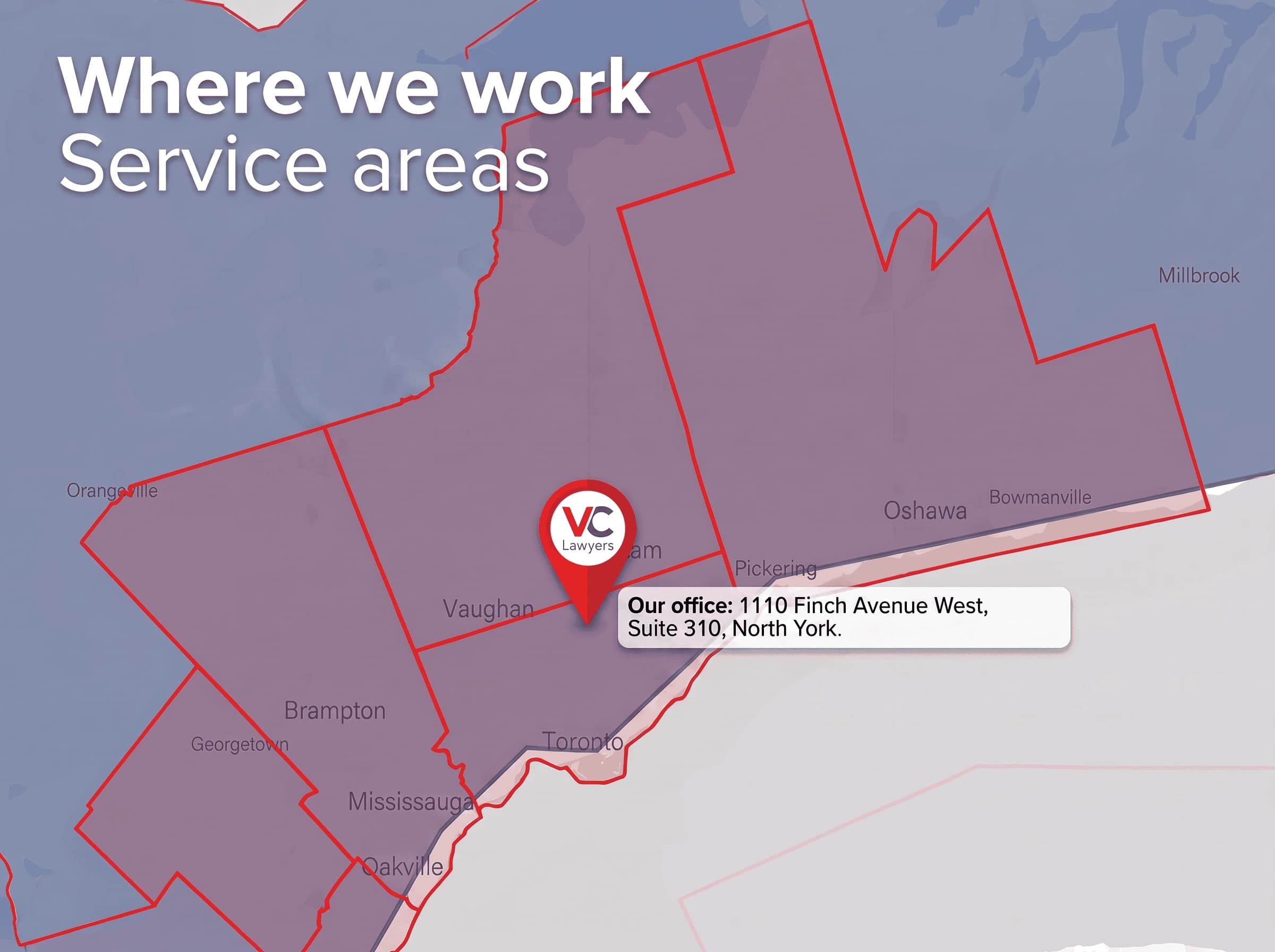
VC Lawyers service area map, Toronto and the Greater Toronto Area, with our North York office marked

Service areas

North York occupier's liability lawyers serving every neighbourhood

From our office at Finch Ave W and Keele, we represent premises injury victims across all of North York, including Willowdale, Don Mills, Downsview, York Mills, Bathurst Manor, Lansing, Newtonbrook, Bayview Village, Flemingdon Park, Jane and Finch, Yorkdale and Glen Park, Clanton Park, Parkwoods, and Victoria Village, plus neighbouring communities in Vaughan, Thornhill, Richmond Hill, Markham, Scarborough, Etobicoke, and Downtown Toronto.

Whether you were hurt in a plaza lot on Finch, a condo stairwell in Willowdale, a grocery store on Sheppard, a bar on Yonge, a City sidewalk anywhere in the area, or any premises in between, our North York occupier's liability lawyers know the local ground. Home and hospital visits are available, with parking and TTC access (Finch West Station) at our office.

Our office is at 1110 Finch Ave W #310, near Finch and Keele, with parking on site. By transit, take the Finch West LRT or the bus network connecting from Finch West Station on Line 1. If your injuries or circumstances make travel difficult, we come to you at home or in hospital, anywhere in North York.

Related practice areas

Continue exploring