VC·Lawyers®
North York medical malpractice lawyer, VC Lawyers

North York

North York Medical Malpractice Lawyer

Toronto Lawyers Association
Ontario Trial Lawyers Association (OTLA)
The Canadian Bar Association
Love Toronto
Consulate General of the Republic of Korea in Toronto
Korean Legal Clinic
Ontario Bar Association
Toronto Lawyers Association
Ontario Trial Lawyers Association (OTLA)
The Canadian Bar Association
Love Toronto
Consulate General of the Republic of Korea in Toronto
Korean Legal Clinic
Ontario Bar Association
Toronto Lawyers Association
Ontario Trial Lawyers Association (OTLA)
The Canadian Bar Association
Love Toronto
Consulate General of the Republic of Korea in Toronto
Korean Legal Clinic
Ontario Bar Association

Trusted by accident victims and businesses across Ontario

Overview

Medical malpractice claims in North York

Harmed by medical care that went wrong in North York? Our experienced medical malpractice lawyers in North York represent patients and families across the GTA whose injuries trace not to illness but to the care itself. The cancer missed on imaging someone should have flagged. The operation on the wrong site, or the instrument left behind. The medication error in hospital. The emergency department that sent a heart attack home. The infection signs charted and not acted on. The consent conversation that never disclosed the risk that materialized. The nursing home resident injured by neglect. And the births that our dedicated birth injury practice handles at full depth.

Our team has recovered over $30M+ for injured clients across North York, Ontario and the GTA. Medical malpractice work demands something almost no other claim does: the discipline to tell injured people the truth in both directions. Not every bad medical outcome is malpractice. Medicine carries real risks, and some conditions defeat the best care. But every bad outcome deserves the question asked properly, against the records, by someone whose answer the patient can trust.

North York Medical Malpractice Lawyer, VC Lawyers

The test, the categories, and the opponent

The legal test is the place to start, because it structures everything. A medical malpractice claim in Ontario must prove four things. First, a duty of care. The provider-patient relationship establishes it, and it is rarely disputed. Second, a breach of the standard of care, the heart of every case. The standard is objective. It asks what a reasonably competent practitioner in the same field would have done in the same circumstances. A specialist is held to a specialist's standard, and an emergency physician is held to the realities of an emergency department.

A breach is proven only through expert opinion from physicians in the same or similar specialty. That is why no serious malpractice claim proceeds without the records reviewed and an expert retained.

Third, causation. The breach, not the underlying condition, must have caused the harm. This is the fight inside the fight. Defendants argue the outcome was coming regardless. We answer with medical evidence about timing, about staging, meaning how far the disease had advanced, and about the chance of a better outcome that was lost. Fourth, damages: the injury, deterioration, or death the breach produced. We price them through our practice's full methodology, covering care costs, income loss, pain and suffering, and claims for the families left behind under the Family Law Act, which gives spouses, children, and parents their own right to compensation.

Understand the error categories, because they organize the practice. Diagnostic errors are the largest category: cancers, strokes, heart attacks, infections, and fractures missed or delayed. The claim turns on the difference between the outcome with timely diagnosis and the outcome the delay produced.

Surgical errors cover wrong procedures and sites, structures damaged beyond the operation's known risks, retained instruments, and the post-operative monitoring failures where deterioration went unwatched. Medication and treatment errors cover wrong drugs, doses, and interactions, in hospital and in pharmacy. Emergency department negligence covers triage failures, patients discharged too soon, and the conditions that show warning signs and get sent home anyway.

Informed consent failures form their own category. Ontario law requires disclosure of the material risks of treatment and its alternatives before you agree. A risk never disclosed that then materializes can ground a claim even where the procedure itself was performed competently.

Hospital and nursing negligence covers monitoring, escalation, communication, and systems failures, where the institution itself answers. Long-term care and nursing home negligence covers falls, pressure injuries, dehydration, medication chaos, and neglect of the community's most vulnerable patients. Our practice treats that category with particular seriousness.

Now the opponent, stated plainly as we did on our birth injury page. Canadian physicians are defended by the Canadian Medical Protective Association, and hospitals by their own insurers. That makes them institutional defendants with deep resources. They defend vigorously, concede little, and settle only claims built to trial standard.

That reality shapes our method. We run the records-first screen: complete charts obtained and reviewed before anyone promises anything. We secure the same-specialty expert opinion before proceedings issue. We build causation with the rigour the defence will test, and we assemble damages at the depth that survives scrutiny. We fund all of it on contingency, because the CMPA's resources should never decide which patients get answers.

And the clock. You generally have two years from when you knew or reasonably ought to have known the malpractice. That is the discoverability rule: the limitation clock starts when you knew, or should have known, about the harm. It protects patients who only understood later what had happened. Children's claims are paused, and estate claims run on their own timelines. But records age, witnesses move, and the investigation itself takes months that cannot be skipped.

Based right here in North York at 1110 Finch Ave W, we are minutes from North York General, Humber River, and the hospital corridor where most of these cases begin. VC Lawyers brings 70+ years of combined experience to every medical negligence claim, with the honesty to screen them properly and the resources to litigate the ones that are there. We act under a written contingency fee agreement, so there are no upfront legal fees. You get a free consultation, and no legal fee is payable unless the claim succeeds.

Get in touch

Looking for legal help? Speak directly with a lawyer

Tell us what happened and a lawyer will personally review your case. Personal injury consultations are free and there are no fees unless we win. For all other practice areas, a consultation fee applies.

  • $30M+ recovered for injury clients
  • Available 24/7, including weekends
  • Service in English, Korean, and 6+ more languages

Prefer to call? (416) 661-4529

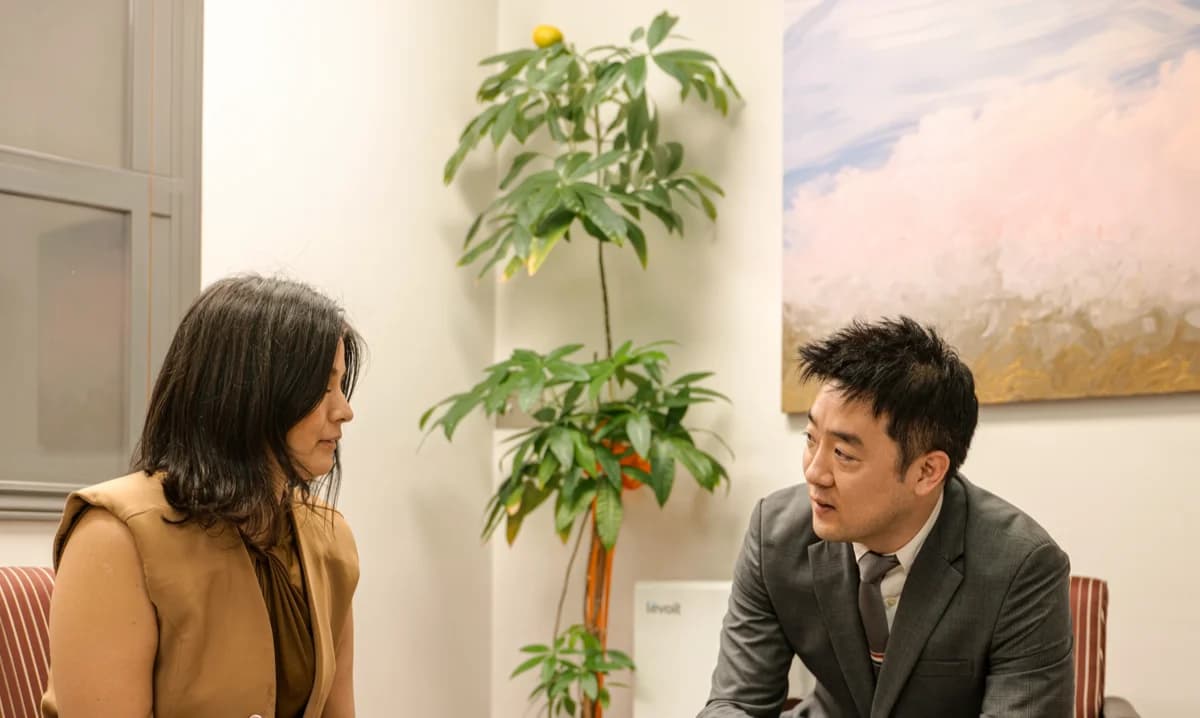
A VC Lawyers lawyer in consultation with a client at the North York office

Background

Medical malpractice in North York: what you need to know

North York's care map is dense. North York General and Humber River anchor the area's hospital care, with Sunnybrook and the downtown teaching hospitals minutes away. Hundreds of clinics, surgical centres, and pharmacies line every arterial, and a large long-term care and retirement home sector houses the region's elders.

The overwhelming majority of that care is good. This practice exists for the encounters that weren't, and for the patients and families who deserve to know, on the evidence, which kind theirs was.

The kinds of error, case by case

Misdiagnosis and delayed diagnosis. This is the practice's largest category. The cancer visible on imaging months before anyone acted. The stroke symptoms attributed to something benign. The cardiac presentation discharged. The infection's markers charted and unescalated. The fracture read as a sprain. The claim rests on the gap between the outcome timely diagnosis offered and the outcome delay produced. It is proven through staging and progression medicine, which is why these cases turn on oncology, cardiology, and radiology experts as much as on the records.

Surgical and procedural errors. These go beyond the known risks every consent form lists: wrong sites and procedures, structures damaged outside the operation's accepted complication profile, retained instruments and materials, and anesthesia errors. They also include the post-operative cases where the surgery succeeded and the monitoring failed: the bleed, the infection, the deterioration charted by nurses and answered by no one.

Medication errors. Wrong drug, wrong dose, missed interactions and allergies, in hospital and at the pharmacy counter. These are among the most documentable errors in medicine, because the order, the administration record, and the formulary standards are all paper.

Emergency department negligence. Triage that scored the presentation too low, workups abandoned at shift change, and premature discharge of conditions whose return visits tell the story. All of it is judged against emergency medicine's own realistic standard, which is demanding precisely because the stakes are.

Informed consent failures. The doctrine has its own logic: material risks and reasonable alternatives must be disclosed before you agree. A serious risk never mentioned that then materializes can ground a claim even where the hands that operated were competent. These claims turn on what was actually said, the documentation of the consent discussion, and what a reasonable patient would have decided if properly informed.

Hospital, nursing, and systems negligence. These are the institutional cases: monitoring and escalation failures, communication breakdowns between teams, understaffing, and protocol violations. Here the defendant is the hospital itself, and the evidence is its own policies measured against its own charts.

Long-term care and nursing home negligence. These cases involve North York's most vulnerable patients: falls in facilities that assessed the risk and didn't act, pressure injuries that develop only where repositioning failed, dehydration and malnutrition, medication chaos, and neglect. We treat them with particular seriousness. Regulatory inspection records and the home's own documentation routinely prove the case, and families' instincts that "something was wrong" are usually right.

Fatal outcomes. Where negligence ends a life, the claim continues through the estate and the Family Law Act, for spouses, children, parents, and siblings. We handle these claims with the tone and patience of our wrongful death practice.

By the numbers

Medical malpractice facts every North York patient should know

The test, the categories, and the realities that define these claims.

  • Four elements decide every claim

    A duty of care comes from the provider-patient relationship. A breach means falling below what a reasonably competent practitioner in that field would have done in those circumstances. Causation means the breach, not the disease, produced the harm. Damages complete the four elements. Miss any one and the claim fails; build all four and it succeeds.
  • The standard is objective and contextual

    Specialists are held to specialist standards, and emergency care is judged against emergency realities. The measure is always the reasonably competent peer. It is proven exclusively through expert opinion from the same or a similar specialty, the gateway every serious claim passes through.
  • Not every bad outcome is malpractice

    Procedures carry inherent risks, and some conditions defeat the best care. The honest screen separates real claims from false hope: records first, expert second, promises never. We run it on every case.
  • Diagnostic error is the largest category

    Missed and delayed cancers, strokes, heart attacks, and infections lead this category. The claims are built on the difference timely diagnosis would have made, through staging, timing, and lost-chance medicine.
  • Informed consent is its own doctrine

    Ontario law requires disclosure of material risks and alternatives before treatment. An undisclosed risk that materializes can ground a claim even where the procedure was competently performed.
  • Institutions answer too

    Hospitals answer for systems, monitoring, and nursing failures. Long-term care homes answer for the falls, pressure injuries, and neglect of residents. These are defendants beyond the individual physician, each with its own insurer.
  • The defence is institutional

    The CMPA defends physicians, and hospital insurers stand behind institutions. All are well-resourced defendants who litigate hard. That is why we build these cases to trial standard from day one and fund them throughout.
  • The clock runs on discoverability

    The clock generally runs two years from when you knew or reasonably ought to have known of the malpractice, which protects late understanding. Children's claims are paused, and estates run on their own timelines. But the investigation takes months and the records age; the right time to ask is now.
A VC Lawyers lawyer meeting a client at the North York office

For patients carrying an unanswered question

How a malpractice file is run in this office

Malpractice claims carry a particular loneliness. The system you trusted hurt you. The explanations came from the people who provided the care. And everyone around you, including sometimes other lawyers, seemed reluctant to take the question seriously.

Here is our commitment. The question taken seriously, every time. The screen run honestly, with the records and the right experts, at no cost to you. The answer delivered plainly in both directions, including when the care, on review, met the standard. And where it didn't, a file built with the rigour the defence demands and the patience your family deserves, with one lawyer, at your pace, the whole way.

The deadlines here are shorter than most people expect.

Step by step

What to do if you suspect medical negligence

  1. 01

    Get the care you need now

    Second opinions, corrective treatment, and ongoing care come first. The legal question runs in parallel, and we carry it.
  2. 02

    Write the timeline while it's fresh

    Symptoms, visits, what was said, who saw you, what changed and when. The patient's own chronology is evidence the charts don't capture.
  3. 03

    Request your complete records

    You are entitled to them, or let us obtain them. What's in them decides everything, and delays in production are themselves common and telling.
  4. 04

    Keep everything

    Discharge summaries, prescriptions, imaging discs, appointment cards, and the names of every provider in the chain.
  5. 05

    Don't accept "complications happen" as the final word

    It may be true, and the records will say so if it is. The difference between a complication and a breach is precisely what the expert review determines.
  6. 06

    Be measured with the hospital's own processes

    Patient relations and internal reviews serve the institution. Participate where it helps your care, but route the accountability questions through us, and never let an internal process run out your clock.
  7. 07

    Track every cost the harm created

    Treatment, care, travel, and lost work. The damages record builds from day one.
  8. 08

    Mind the special clocks

    Estates and fatal cases carry strict timelines, children's claims pause, and discoverability protects late understanding but rewards early action.
  9. 09

    Don't post or speculate publicly

    About the care or the providers. The file is built on records and experts, not allegations, and public statements only complicate it.
  10. 10

    Contact a North York medical malpractice lawyer when you're ready

    The screen is free, the investigation is funded by us, and the answer belongs to you either way.

Our process

How our North York medical malpractice lawyers handle your case

  1. 01

    Free consultation and the honest screen

    Contact us when you're ready. Our North York medical malpractice lawyer team will take the full story: the care, the timeline, and the explanations. We will assess whether the file warrants investigation and tell you plainly where it doesn't. Zero obligation, zero cost, no false hope.
  2. 02

    Records first, experts second

    We obtain the complete medical record: hospital charts, physician and nursing notes, imaging and reports, lab results, medication records, consent documentation, and institutional policies. We review it against the timeline you lived. Where the records show what you suspected, we retain expert physicians in the same or similar specialty to opine on the standard of care and causation. Those are the opinions Ontario malpractice claims are built on and cannot proceed without. You receive the honest answer either way. Where the answer is yes, you get a claim built on medicine, not allegation.
  3. 03

    Build all four elements to trial standard, then litigate

    We prove the breach through same-specialty expert opinion. We build causation with the rigour the defence will test. In delayed-diagnosis cases that means staging evidence, showing how far the disease had advanced at each point. In monitoring failures it means rebuilding the timeline. Where the outcome was never certain, it means lost-chance analysis, which weighs the probability of a better outcome with proper care. We assemble damages at our practice's full depth, covering care costs and life-care planning, income loss, pain and suffering, and Family Law Act claims for families in fatal cases. Against files the CMPA defends, we prepare for trial from the first pleading, the formal court document that starts the lawsuit. That means discoveries, the pre-trial phase where both sides exchange evidence and question witnesses, plus expert reports and the visible readiness that produces proper settlements. We try the cases that don't settle.
  4. 04

    Resolution, and how the fee is taken

    Once the claim is resolved by settlement or judgment, the recovery is paid to you. We then take our fee from it at the percentage set out in your written contingency fee agreement, and no legal fee is payable if the claim does not succeed. Along the way we carry the cost of the records, the multiple expert reviews, and the other disbursements, meaning out-of-pocket costs like expert fees. Before you sign, we explain how those costs are accounted for at the end.

Important

The malpractice clock generally runs two years from discovery: from when you knew or reasonably ought to have known. Children's claims are paused, and estate claims run on their own strict timelines. But these cases cannot be built quickly. Records take months to assemble, experts take months to opine, and every year ages the evidence. Whether the care was last month or several years ago, the right time to ask the question is now. Contact a medical malpractice lawyer in North York today.

Every situation is different. Yours deserves a specific answer.

Know their playbook

Defence tactics in medical malpractice claims

  • "Complications happen"

    The universal first answer. Known risk is invoked before anyone has checked whether this harm was the known risk or the breach. We answer with the records and the same-specialty expert who knows the difference.
  • The causation pivot

    "The outcome was coming regardless," with the disease blamed for what the delay produced. We answer with staging, progression, and lost-chance medicine: the delta between timely care and the care you got, quantified.
  • The chart that explains everything

    Documentation written in the institution's voice, reading smoother than the events you lived. We answer with your timeline, the nursing notes that often tell the truer story, and the gaps between entries that say what the entries don't.
  • The consent form shield

    Your signature waved as if it disclosed what was never discussed. We answer with the consent doctrine's actual test: material risks, real alternatives, and what a reasonable patient would have chosen, plus the thin documentation of conversations that never happened.
  • The expert wall

    Defence opinions from credentialed names, deployed early. We answer in kind: our experts retained first, from the same specialties, chosen because they testify, not just opine.
  • The attrition calendar

    Years of process against patients already depleted: the institutional defendant's structural advantage. We answer with contingency funding, trial-standard preparation that makes delay costly for them too, and a firm that doesn't need your money to keep going.

In the news

Patient safety's public record and the gap between standards and bedsides

Medical error is a permanent subject of Canadian health reporting and research. Patient-safety studies estimate the national toll of preventable harm. Recurring investigations examine emergency department pressures and missed diagnoses, along with the long-term care failures the pandemic years forced into public view. Behind every claim sits the institutional defence system: the CMPA's scale and litigation posture.

Ontario's response runs through oversight bodies: the regulatory colleges that license and discipline each health profession, such as the College of Physicians and Surgeons of Ontario, and the Patient Ombudsman, who investigates complaints about public hospitals and long-term care homes. Where harm calls for compensation, the response runs instead through the civil courts, and those courts are where this practice works.

For patients, the record carries a double message. The standards that should have protected you are real, written, and provable, from clinical guidelines to hospital protocols to the consent doctrine. That means their breach is provable too.

The system defending against your claim is institutional and well-funded. That is not a reason for silence. It is the reason these cases need lawyers who build them to trial standard, funded so that no patient is priced out of the question.

Rather ask someone who handles these matters every week?

Why VC Lawyers

Why hire a medical malpractice lawyer in North York at VC Lawyers

  • We screen honestly

    Records first, experts second, promises never. Not every bad outcome is malpractice, and patients deserve the true answer more than they deserve a hopeful one.
  • We build to CMPA standard from day one

    Same-specialty expert opinions, causation constructed to survive the defence's best argument, and trial preparation visible from the first pleading. That is the only method that settles these cases properly.
  • We fund the entire investigation

    Records, expert reviews, and opinions across specialties are all carried by us on contingency. Institutional resources never decide which patients get answers.
  • Contingency fee basis

    No upfront legal fees and a free consultation. Our fee is an agreed percentage of the recovery, written down before we start, and nothing is owed in legal fees unless the claim succeeds.
  • We price damages at full depth

    Life-care planning, income loss, and family claims, all through the same methodology our catastrophic injury practice brings to everything.
  • We handle every category

    Diagnostic, surgical, medication, ER, consent, hospital systems, and long-term care files, with birth injuries through our dedicated practice.
  • Multilingual service

    English, Korean (한국어), Hebrew, Mandarin, and more, for patients navigating a system that failed them, in their own language.

Choosing wisely

How to choose the right medical malpractice lawyer in North York

Before entrusting any firm with this, ask a few questions. Will they screen honestly, with records and experts before promises, and tell you when there's no case? Do they retain same-specialty experts who testify, not just opine? Do they build causation to survive the defence's best argument, through staging, timing, and lost chance? Will they fund the whole investigation on contingency, against institutional defendants built for attrition? Do they price damages at the actual lifetime? And are they genuinely prepared for the years these cases take and the trial they may require?

At VC Lawyers, the answer to each is yes, from an office in the heart of North York, on a contingency fee agreement signed before any work begins, in your language.

Still weighing what to do next? That is what a first conversation is for.

Testimonials

What our North York clients say

4.8★★★★★·140 on Google
After my car accident, I went through an incredibly challenging time. Thanks to Lawyer Jun Lee and his exceptional team, I received tremendous support and strength.

Jay Kim

Personal Injury Client

When my mother suffered a serious head injury, I was devastated. After meeting Lawyer Jae Hyon Cho, my family was able to receive substantial compensation.

Minkyung Park

Personal Injury Client

Avi Vaturi was professional, responsive, and thorough. When the transaction became complex, his calm communication and practical solutions navigated us to a smooth close.

Jordan Glaser

Real Estate Co-Counsel

Mr. Avi Vaturi did a fantastic job. The whole process was seamless — timely, detailed, and professional from start to finish.

Howard Huang

Real Estate Client

He helped me with both my car accident case and the buying and selling of my home. Everything was handled professionally and efficiently.

Yoon Jung

Personal Injury & Real Estate Client

Jae Cho was great to deal with and very attentive to my case. His associate Sunny was also very helpful. I would highly recommend.

Jordan Ungerman

Personal Injury Client

Their professionalism, attention to detail, and commitment to clients truly stand out. Whether handling urgent matters or guiding me through complex issues, the team delivered.

Charles Hong

Long-time Client

It has been my pleasure to work with Jae Cho and his team. Knowledgeable, clear in their explanations, and the process was smooth and stress-free.

Joanne Jeong

Real Estate Client

Vaturi & Cho LLP is an outstanding law firm. They explain even complex matters clearly, and their dedication to achieving the best outcomes is truly impressive.

Jong Ko

Client

The team was not only knowledgeable but also very kind and attentive throughout the entire process. Highly recommended.

Tobi

Client

After my car accident, I went through an incredibly challenging time. Thanks to Lawyer Jun Lee and his exceptional team, I received tremendous support and strength.

Jay Kim

Personal Injury Client

When my mother suffered a serious head injury, I was devastated. After meeting Lawyer Jae Hyon Cho, my family was able to receive substantial compensation.

Minkyung Park

Personal Injury Client

Avi Vaturi was professional, responsive, and thorough. When the transaction became complex, his calm communication and practical solutions navigated us to a smooth close.

Jordan Glaser

Real Estate Co-Counsel

Mr. Avi Vaturi did a fantastic job. The whole process was seamless — timely, detailed, and professional from start to finish.

Howard Huang

Real Estate Client

He helped me with both my car accident case and the buying and selling of my home. Everything was handled professionally and efficiently.

Yoon Jung

Personal Injury & Real Estate Client

Jae Cho was great to deal with and very attentive to my case. His associate Sunny was also very helpful. I would highly recommend.

Jordan Ungerman

Personal Injury Client

Their professionalism, attention to detail, and commitment to clients truly stand out. Whether handling urgent matters or guiding me through complex issues, the team delivered.

Charles Hong

Long-time Client

It has been my pleasure to work with Jae Cho and his team. Knowledgeable, clear in their explanations, and the process was smooth and stress-free.

Joanne Jeong

Real Estate Client

Vaturi & Cho LLP is an outstanding law firm. They explain even complex matters clearly, and their dedication to achieving the best outcomes is truly impressive.

Jong Ko

Client

The team was not only knowledgeable but also very kind and attentive throughout the entire process. Highly recommended.

Tobi

Client

After my car accident, I went through an incredibly challenging time. Thanks to Lawyer Jun Lee and his exceptional team, I received tremendous support and strength.

Jay Kim

Personal Injury Client

When my mother suffered a serious head injury, I was devastated. After meeting Lawyer Jae Hyon Cho, my family was able to receive substantial compensation.

Minkyung Park

Personal Injury Client

Avi Vaturi was professional, responsive, and thorough. When the transaction became complex, his calm communication and practical solutions navigated us to a smooth close.

Jordan Glaser

Real Estate Co-Counsel

Mr. Avi Vaturi did a fantastic job. The whole process was seamless — timely, detailed, and professional from start to finish.

Howard Huang

Real Estate Client

He helped me with both my car accident case and the buying and selling of my home. Everything was handled professionally and efficiently.

Yoon Jung

Personal Injury & Real Estate Client

Jae Cho was great to deal with and very attentive to my case. His associate Sunny was also very helpful. I would highly recommend.

Jordan Ungerman

Personal Injury Client

Their professionalism, attention to detail, and commitment to clients truly stand out. Whether handling urgent matters or guiding me through complex issues, the team delivered.

Charles Hong

Long-time Client

It has been my pleasure to work with Jae Cho and his team. Knowledgeable, clear in their explanations, and the process was smooth and stress-free.

Joanne Jeong

Real Estate Client

Vaturi & Cho LLP is an outstanding law firm. They explain even complex matters clearly, and their dedication to achieving the best outcomes is truly impressive.

Jong Ko

Client

The team was not only knowledgeable but also very kind and attentive throughout the entire process. Highly recommended.

Tobi

Client

After my car accident, I went through an incredibly challenging time. Thanks to Lawyer Jun Lee and his exceptional team, I received tremendous support and strength.

Jay Kim

Personal Injury Client

When my mother suffered a serious head injury, I was devastated. After meeting Lawyer Jae Hyon Cho, my family was able to receive substantial compensation.

Minkyung Park

Personal Injury Client

Avi Vaturi was professional, responsive, and thorough. When the transaction became complex, his calm communication and practical solutions navigated us to a smooth close.

Jordan Glaser

Real Estate Co-Counsel

Mr. Avi Vaturi did a fantastic job. The whole process was seamless — timely, detailed, and professional from start to finish.

Howard Huang

Real Estate Client

He helped me with both my car accident case and the buying and selling of my home. Everything was handled professionally and efficiently.

Yoon Jung

Personal Injury & Real Estate Client

Jae Cho was great to deal with and very attentive to my case. His associate Sunny was also very helpful. I would highly recommend.

Jordan Ungerman

Personal Injury Client

Their professionalism, attention to detail, and commitment to clients truly stand out. Whether handling urgent matters or guiding me through complex issues, the team delivered.

Charles Hong

Long-time Client

It has been my pleasure to work with Jae Cho and his team. Knowledgeable, clear in their explanations, and the process was smooth and stress-free.

Joanne Jeong

Real Estate Client

Vaturi & Cho LLP is an outstanding law firm. They explain even complex matters clearly, and their dedication to achieving the best outcomes is truly impressive.

Jong Ko

Client

The team was not only knowledgeable but also very kind and attentive throughout the entire process. Highly recommended.

Tobi

Client

Our team

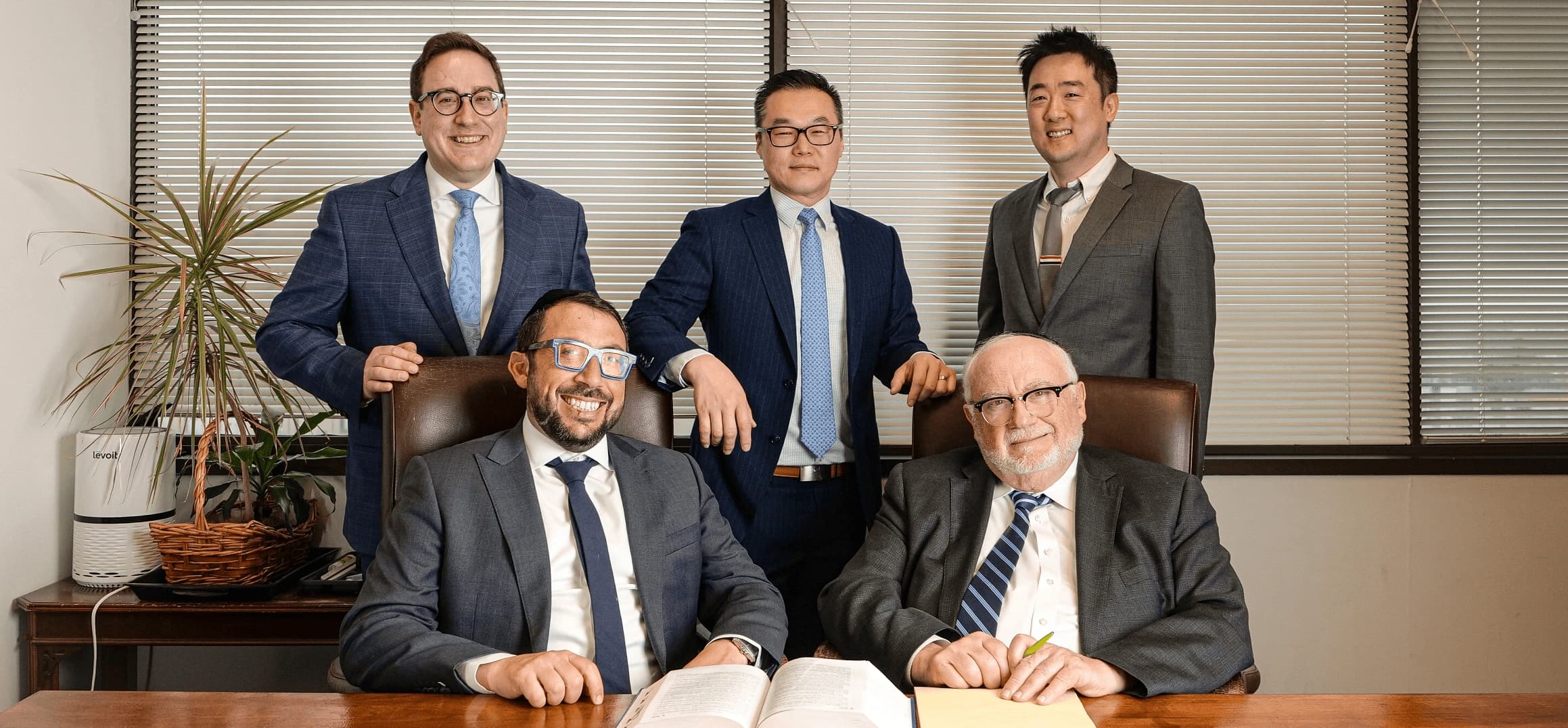
Meet your North York legal team

Our lawyers bring decades of combined experience in complex injury and negligence litigation across North York and Ontario, covering diagnostic, surgical, hospital, and long-term care files, with births through our dedicated birth injury practice. Every client at VC Lawyers works directly with a dedicated North York medical malpractice lawyer. That lawyer runs the honest screen, funds the full investigation, and builds the real claims to trial standard.

Who handles your file

The people on your matter

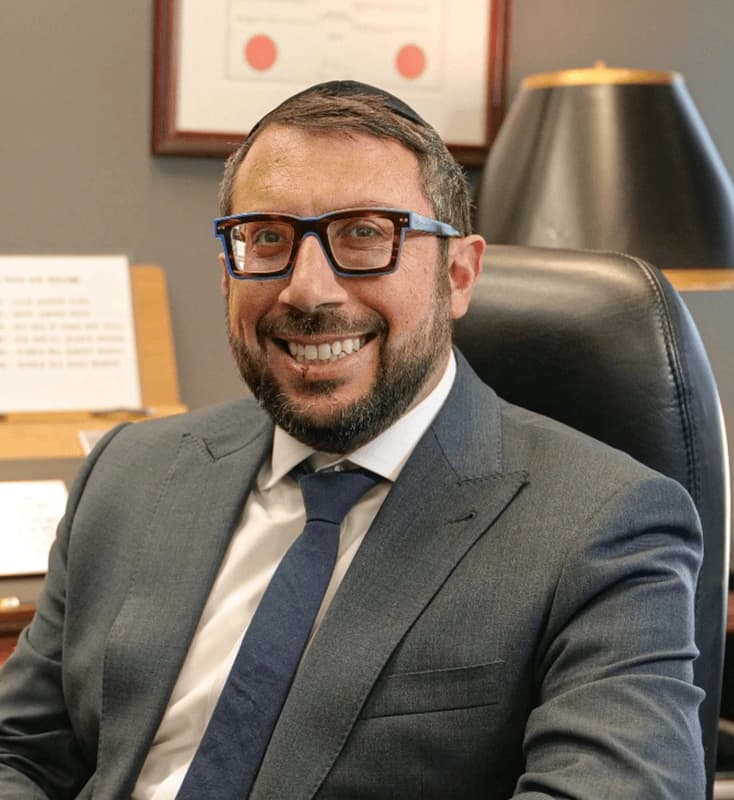
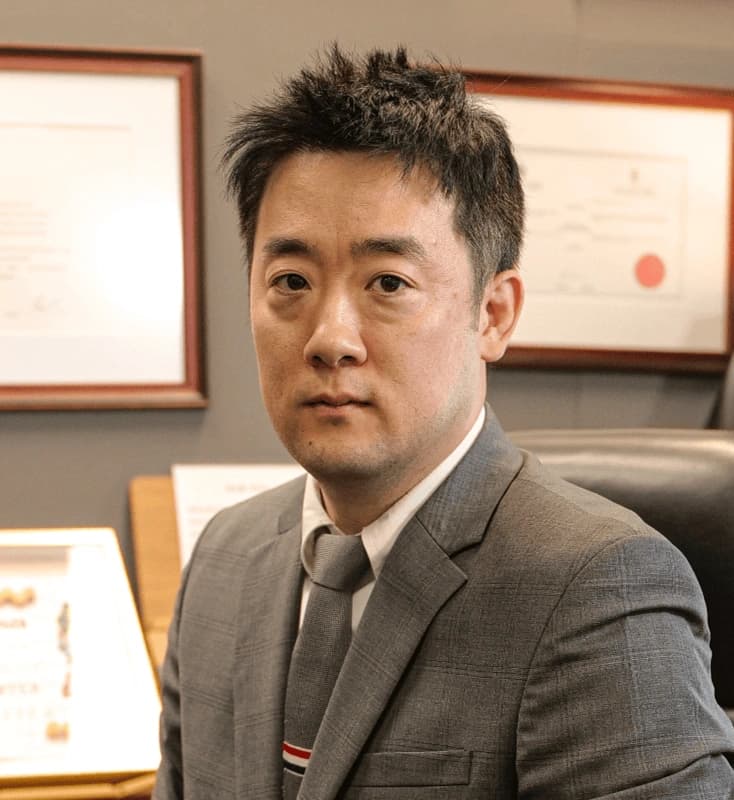
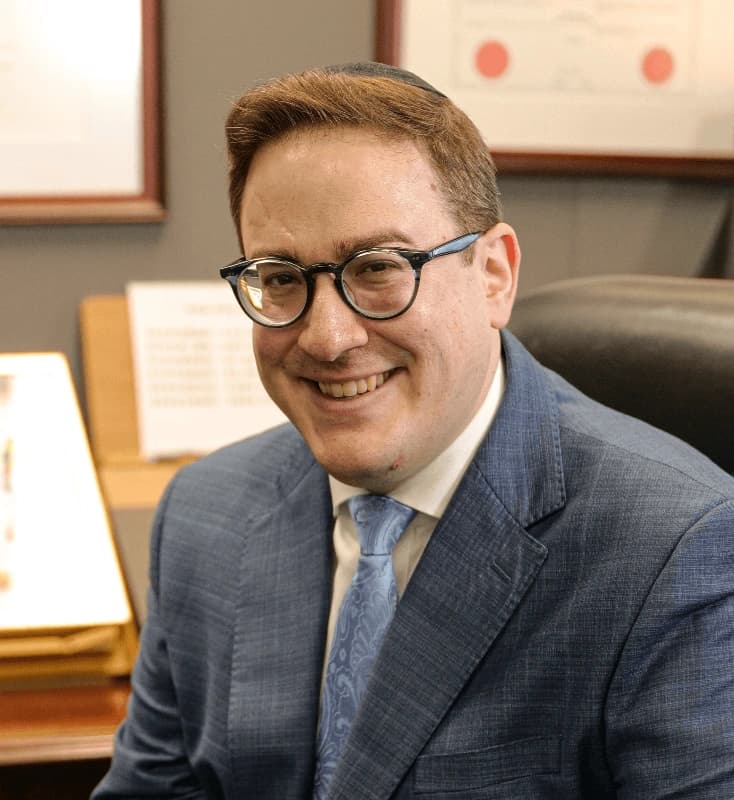
  • Avi Vaturi, Partner

    Senior litigation counsel with extensive experience in expert-driven negligence claims and institutional defendants.
  • Jae Hyon Cho, Co-Managing Partner

    Experienced counsel focused on serious harm files, including delayed diagnosis, surgical, and long-term care claims.
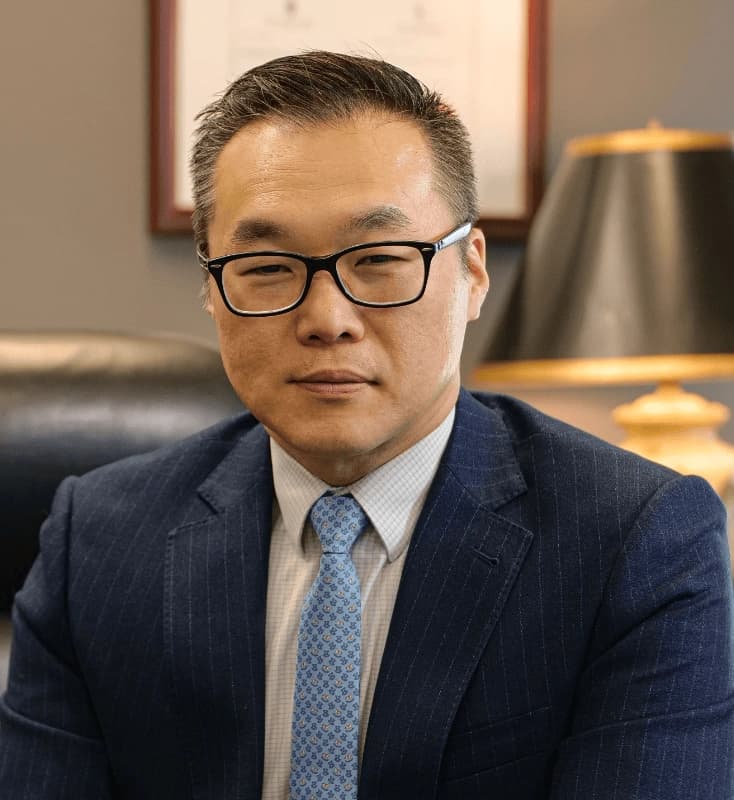
  • Jun Ki Lee, Associate

    Dedicated associate handling medical records, expert coordination, and litigation support across North York and the GTA.
  • Allan Weiss, Associate

    Veteran legal counsel providing strategic guidance on high-value medical negligence lawsuits and appeals.

Not sure where you stand? One conversation will tell you.

Key metrics

In the numbers

Recovered for injured clients
$30M+
Cases handled
4,000+
Years combined experience
70+
No fee, contingency basis
No Win
VC Lawyers Toronto legal team, Vaturi & Cho LLP

Talk to us

Every bad outcome deserves the question asked properly and answered honestly

The first 30-minute consultation is free and confidential. Bring the timeline, the diagnoses, and the explanations you were given. We will tell you whether the records are worth investigating. If they are, we will obtain them, put them before the right experts, and tell you what they say, whichever way it goes.

No fee unless we recover. Home and hospital visits across North York and the GTA.

Book Free Consultation

Frequently asked questions

We answered all

  • Something went wrong with my care. How do I know if it was actually malpractice?
    You can't know from the outcome alone, because bad outcomes happen in competent care. Malpractice is a breach of the standard of care that caused the harm, and the difference lives in the records, read by expert physicians in the same specialty. Our screen runs exactly that way: records first, expert second, and a plain answer in both directions, at no cost to you. The question deserves a real answer, not a guess.
  • What do I actually have to prove?
    Four elements: a duty of care, a breach of the standard of care, causation, and damages. The duty comes from the provider-patient relationship and is rarely disputed. The breach is measured against what a reasonably competent practitioner in that field, in those circumstances, would have done, proven through same-specialty expert opinion. Causation, the hardest-fought element, requires that the breach, not the underlying condition, produced the harm. We build all four to the standard an institutional defence will test.
  • The hospital says it was a "known complication." Is that the end of it?
    No. A "known complication" label is the beginning of the analysis, not the end of it. Every procedure has genuine inherent risks, and some bad outcomes are exactly that. But it is also the system's universal first answer, offered before anyone has checked whether this harm came from the risk or from a breach: technique below standard, monitoring that missed the deterioration, a response that came too late. The records and the expert review tell the difference; the label doesn't.
  • My cancer, stroke, or heart condition was diagnosed late. Do I have a claim?
    Possibly. Delayed diagnosis is the largest category in malpractice law, and the claim turns on two questions. Should it have been caught earlier, judged on the imaging, the symptoms, and the test results against the standard? And what did the delay cost, measured by the staging and prognosis difference between then and when it was finally found? Both are answerable with the records and the right specialists in oncology, cardiology, and radiology. The delta between the two outcomes is the claim.
  • Nobody told me this risk existed before my procedure. Does that matter?
    Yes. An undisclosed risk can be the whole case. Ontario's informed consent doctrine requires disclosure of the material risks of treatment and its reasonable alternatives before you agree. A serious, undisclosed risk that materializes can ground a claim even where the procedure itself was competently performed. The file turns on what was actually discussed, what the documentation shows, and what a reasonable patient in your position would have chosen if properly told.
  • Can I sue a hospital or nursing home, or only the doctor?
    Both, and often together. Hospitals answer for their systems, staffing, protocols, and nursing care. Long-term care and retirement homes answer for the falls, pressure injuries, dehydration, medication errors, and neglect of their residents, categories where the institution's own records and the regulator's inspection reports routinely prove the case. We pursue every defendant in the chain whose breach contributed, each with its own insurer.
  • Everyone says suing doctors in Canada is nearly impossible. Is it?
    It's hard, not impossible, and the hardness has a shape worth understanding. Physicians are defended by the CMPA, a deeply resourced institutional defender that litigates vigorously and settles only trial-ready claims. That reality eliminates weak claims and weakly built strong ones. But properly screened cases, built on same-specialty expert opinions with causation constructed to survive the defence, succeed regularly. The method is everything, which is why ours starts with the honest screen and builds to trial standard from day one.
  • How long do I have to bring a claim?
    Generally two years from discovery: from when you knew or reasonably ought to have known the malpractice occurred. That principle protects patients whose understanding came late, like the missed finding revealed by a later doctor, or the pattern that only made sense afterward. Children's claims are paused until 18, and estate and fatal claims carry their own strict timelines. The investigation itself takes months and evidence ages, so whatever your timeline, the right moment to ask is now.
  • What is my malpractice claim worth?
    What the negligence cost you, built through our practice's full damages methodology. That covers care and treatment costs, with life-care planning where harm is permanent, lost income and earning capacity, pain and suffering, housekeeping and care claims, and Family Law Act damages for spouses, children, and parents in fatal cases. Malpractice damages follow the same common-law principles as our catastrophic injury work. We price them the same way: to the actual lifetime, never to the first offer.
  • I can't afford a fight against a hospital. How does anyone fund these cases?
    Through us. Malpractice cases demand records, multiple expert reviews, and years of litigation, and our contingency arrangement funds all of it as the case proceeds. There are no upfront costs and no legal fee at all unless the claim succeeds. Institutional resources should never decide which patients get answers, and the contingency arrangement, set out in writing before we start, exists for exactly this kind of case.
  • My loved one died and we believe the care failed them. What can the family do?
    The claim survives through the estate, and Ontario's Family Law Act gives spouses, children, parents, and siblings their own claims for the loss. We handle these claims with the tone of our wrongful death work: one lawyer, your pace, honesty throughout. Note that fatal claims carry strict timelines, so the question should be asked sooner rather than later, however hard the asking is.
  • How much does a medical malpractice lawyer cost in North York?
    Nothing upfront, and nothing ever unless we win. VC Lawyers works on a contingency fee basis: no win, no fee, with the full investigation and expert costs funded by us. The first consultation is free and carries no obligation at all.

North York medical malpractice lawyers
You trusted the care. The care failed. Find out why, free.

Somewhere in the charts is the answer to the question you've been carrying. The result nobody flagged. The deterioration nobody escalated. The risk nobody mentioned. Or, sometimes, the honest record of care that met the standard against an illness that didn't cooperate. Either way, the answer is readable, and you are entitled to it. Finding it costs you nothing: the records, the experts, and the fight, where there is one, are all ours to fund and carry. The first consultation is free, and you pay no legal fees unless we win your case.

Toronto Office

Vaturi & Cho LLP

1110 Finch Ave W #310
North York, ON M3J 2T2
info@vclawyers.ca
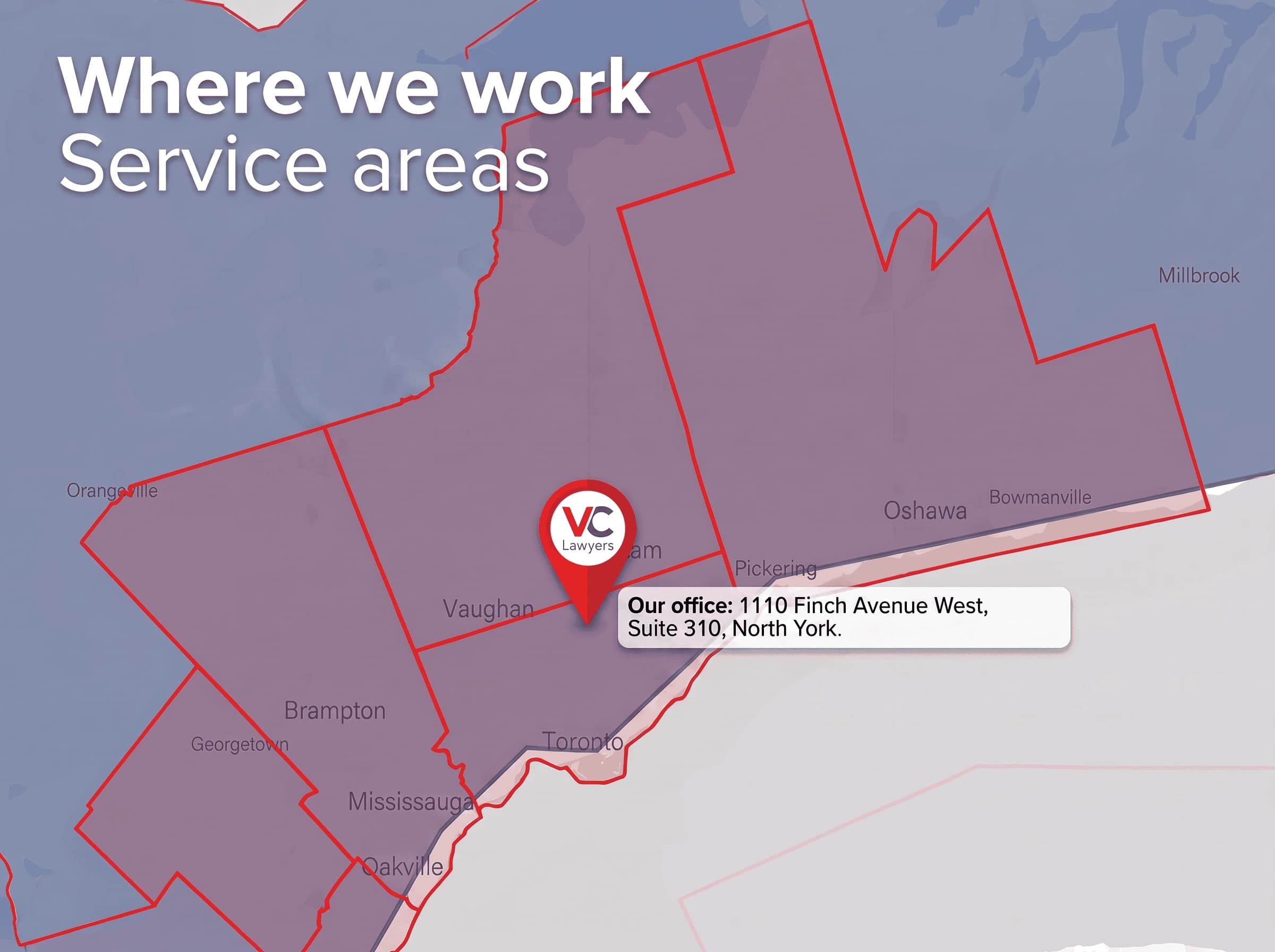
VC Lawyers service area map, Toronto and the Greater Toronto Area, with our North York office marked

Service areas

North York medical malpractice lawyers serving every neighbourhood

From our office at Finch Ave W and Keele, we represent malpractice patients and families across all of North York, including: Willowdale, Don Mills, Downsview, York Mills, Bathurst Manor, Lansing, Newtonbrook, Bayview Village, Flemingdon Park, Jane and Finch, Yorkdale and Glen Park, Clanton Park, Parkwoods, and Victoria Village, plus neighbouring communities in Vaughan, Thornhill, Richmond Hill, Markham, Scarborough, Etobicoke, and Downtown Toronto.

Wherever the care happened, our North York medical malpractice lawyers provide the honest screen these questions deserve and the trial-standard build the real claims demand. That includes North York General, Humber River, Sunnybrook, a downtown teaching hospital, a clinic, a pharmacy, or a long-term care home anywhere in Ontario. We offer home and hospital visits, with parking and TTC access (Finch West Station) at our office.

Our office is at 1110 Finch Ave W #310, near Finch and Keele, with parking on site. By transit, take the Finch West LRT or the bus network connecting from Finch West Station on Line 1. If your injuries or circumstances make travel difficult, we come to you at home or in hospital, anywhere in North York.

Related practice areas

Continue exploring