VC·Lawyers®
North York spousal support lawyer, VC Lawyers

North York

North York Spousal Support Lawyer

Toronto Lawyers Association
Ontario Trial Lawyers Association (OTLA)
The Canadian Bar Association
Love Toronto
Consulate General of the Republic of Korea in Toronto
Korean Legal Clinic
Ontario Bar Association
Toronto Lawyers Association
Ontario Trial Lawyers Association (OTLA)
The Canadian Bar Association
Love Toronto
Consulate General of the Republic of Korea in Toronto
Korean Legal Clinic
Ontario Bar Association
Toronto Lawyers Association
Ontario Trial Lawyers Association (OTLA)
The Canadian Bar Association
Love Toronto
Consulate General of the Republic of Korea in Toronto
Korean Legal Clinic
Ontario Bar Association

Trusted by accident victims and businesses across Ontario

Overview

Spousal support in North York

Dealing with spousal support in North York? Our experienced spousal support lawyers in North York act on both sides of family law's most discretionary issue. We act for the spouse whose career carried the family and now needs the support the law was built for. We also act for the payor facing a claim that needs honest testing and fair limits. We handle the whole lifecycle. We analyze entitlement before anyone argues numbers, and we negotiate and litigate amount and duration through the Spousal Support Advisory Guidelines. We fight out income determination in self-employed and corporate cases, and we draft agreements with the reviews, security, and releases that hold. We handle variations when jobs end, retirement arrives, or new relationships begin, and enforcement when payments stop. Based at 1110 Finch Ave W, our team brings 70+ years of combined legal experience, and the both-sides candour this issue demands more than any other. Spousal support has the widest honest range in family law, and the spouse who doesn't know their range negotiates against themselves.

Start with the discipline that organizes every well-run support file: entitlement comes first. Spousal support is not automatic. Not for wives, not after long marriages, and not because one spouse earns more. Before any number means anything, the legal basis must exist, and Ontario recognizes three.

North York Spousal Support Lawyer, VC Lawyers

The formula everyone quotes, and the inputs that decide it

Compensatory support compensates the economic disadvantage the relationship created, or the advantage it conferred. That covers the career interrupted or downsized for children and moves, and the spouse whose unpaid work freed the other's earning power. It is the classic North York pattern: one career accelerated, one absorbed the family.

Non-compensatory (needs-based) support addresses the genuine need separation creates, measured against the standard the relationship established, where one spouse simply cannot meet reasonable needs the other can. Contractual support is the third basis, meaning the marriage contract or separation agreement that promised it.

Skipping the entitlement step is why support negotiations turn emotional fast. The parties argue amounts before agreeing there is a legal basis for any amount at all. We run the analysis in order, basis and then range. For claimants, we build entitlement on the caregiving and career record. For payors, the honest defence often lives at this first step, not the second.

Then comes the framework everyone has heard of and few understand: the Spousal Support Advisory Guidelines (SSAG). They are not law, only advisory. Courts use them constantly and treat properly run calculations as highly persuasive, so they are the language every negotiation speaks.

The without-child-support formula keys everything to relationship length. It runs at roughly 1.5% to 2% of the gross income difference for each year of marriage or cohabitation. In long relationships the running total stops climbing and hits a cap, because beyond that point the formula would tip into income-sharing, meaning the two spouses' incomes effectively pooled and shared. A 20-year relationship with a $60,000 gap yields a range around $18,000 to $24,000 annually.

Duration under that formula runs half a year to a full year per year of the relationship. It becomes indefinite after 20 years, or earlier under the Rule of 65, where the recipient's age at separation plus the relationship's years totals 65 or more, in relationships of five-plus years. That is a duration rule, not an entitlement rule, and it is the provision that matters most to the grey-divorce files this area's demographics produce.

The with-child-support formula works in a completely different way. It is built on net disposable incomes after child support, which always takes priority, and it is complex enough that real software, not napkin math, runs it.

Critically, the SSAG produce ranges, low, mid, and high, for both amount and duration. Where your case lands inside those ranges, or outside them, is exactly what lawyering determines, through strength of entitlement, ability to pay, needs, and the facts argued well. Courts also deviate for retraining needs, property-division effects, payor hardship, and special circumstances.

Two more realities shape the practice, and the first is that income is the real fight. The SSAG are only a calculation. The fight is over the numbers that go into it.

The same disputes recur: the self-employed spouse whose lifestyle outruns the tax return, the corporation retaining earnings that are really available income, and the bonus and RSU (restricted stock unit) structures of the Yonge corridor. Underemployment invites imputation (where a court attributes a fair income to someone who is earning less than they could or should) in both directions, against the payor who quit down and the recipient who will not work up. Our corporate-practice fluency in retained earnings, management fees, and valuations is exactly what these disclosure fights demand.

The second reality is that support is built to live. Structures matter. Periodic support is generally deductible to the payor and taxable to the recipient, while the lump sum buys finality at a discounted, tax-adjusted figure. Review terms and time limits belong in agreements drafted with foresight.

Material changes such as job loss, genuine retirement, and the recipient's remarriage or self-sufficiency ground variation and termination, because indefinite never meant infinite. Security, meaning insurance and estate-binding terms, protects the stream. And the Family Responsibility Office enforces it through garnishment, licence suspension, and tax intercepts when payors stop.

Common-law partners should note this carefully. Support entitlement is yours too, after three years' cohabitation, or in a relationship of permanence with a child together, on the same SSAG framework, counted by cohabitation years. Common-law partners here often own seven-figure homes, and they sit outside equalization, the regime that applies only to married spouses and evens out the value of the property built up during the marriage. That is why support is often the claim that matters most to them.

Consultations are billed and confidential, and what the work costs depends on the complexity of the matter, set out in writing before it begins. With the honest range delivered first, whichever side of it you are on, VC Lawyers turns family law's vaguest issue into a structured one.

Get in touch

Looking for legal help? Speak directly with a lawyer

Tell us what happened and a lawyer will personally review your case. Personal injury consultations are free and there are no fees unless we win. For all other practice areas, a consultation fee applies.

  • $30M+ recovered for injury clients
  • Available 24/7, including weekends
  • Service in English, Korean, and 6+ more languages

Prefer to call? (416) 661-4529

A VC Lawyers lawyer in consultation with a client at the North York office

Background

Spousal support in North York: what you need to know

North York's support files map its households. There are the single-career families where one spouse's job moved them here and the other's career absorbed it. There are the dual-income Yonge-corridor couples where bonuses and RSUs (restricted stock units) make "income" a negotiation.

Then come the self-employed and incorporated, whether the contractor, the clinic, or the consultancy, where the tax return is the opening position rather than the answer. There are the long marriages ending at sixty, where the Rule of 65 and pension division interlock. And there are the common-law households discovering that while equalization passed them by, support did not.

The analysis, in order

Entitlement. The three bases are built on evidence. Compensatory entitlement reconstructs how the relationship organized the couple's economic lives: who moved for whose job, who left work or went part-time for the children, and whose unpaid labour subsidized whose advancement. It is the strongest and most durable basis.

Non-compensatory entitlement measures genuine need against the marital standard and the post-separation gap. Contractual entitlement turns on domestic contracts honoured or challenged. A payor-side note, stated plainly: many claims are properly answered here, in short relationships between self-sufficient earners and in gaps that reflect choices rather than the relationship. The honest defence lives at basis, not at haggling the range.

Amount and duration: reading the SSAG ranges. Without child support, the length-driven formula runs at 1.5% to 2% of the gross gap per year, with duration of 0.5 to 1 year per year, producing the low, mid, and high ranges. Duration becomes indefinite at 20 years or via the Rule of 65. Where you sit within the range is argued on entitlement strength, needs, and ability to pay.

With child support, a different formula runs. Children's support comes first, then spousal ranges are calculated on net disposable income. Software runs the numbers and strategy chooses among scenarios, because the trade-offs between child-support structures, section 7 allocations, and spousal ranges are real and negotiable.

Deviation is available too. The Guidelines bend for retraining periods, property-division consequences, payor hardship, and special circumstances, argued rather than assumed. And throughout, "indefinite" means no end date set, not unreviewable, because self-sufficiency, retirement, and repartnering all remain live.

Income: where cases are won. The same disputes recur. There is the self-employed payor, with revenues, personal expenses run through the business, and the lifestyle audit. There is the corporation, where retained earnings are argued as available income, the argument our business practice makes and answers weekly.

Bonus and equity compensation gets averaged honestly across years. Imputation attributes income to the payor who engineered unemployment, or to the recipient who declines reasonable self-sufficiency. Behind all of it sits the disclosure process of sworn statements, corporate records, and valuators that turns positions into numbers.

Structure and security. Periodic support is monthly, generally deductible to the payor and taxable to the recipient. That tax asymmetry makes gross numbers misleading and after-tax modelling essential. Lump sum purchases finality, with no variation risk and no monthly relationship, at a figure discounted and tax-adjusted properly, a calculation that does not survive napkins.

Reviews and time limits are the honest middle for genuinely uncertain futures, with support set now and revisited at defined milestones, without relitigating entitlement. Security means life insurance maintained and assigned, and support binding on estates where intended, coordinated with the estate planning our wills practice runs alongside.

Variation, termination, enforcement. Material change is the gateway. Job loss that is real rather than engineered, genuine retirement at a reasonable age, the recipient's remarriage or achieved self-sufficiency, and health events each ground variation or termination when brought properly. The payor who unilaterally stops has built arrears, not a defence.

Enforcement runs through the FRO, using garnishment, bank seizure, licence suspension, and credit reporting. That is why agreements get filed, why arrears get addressed early, and why payors in genuine hardship vary instead of defaulting.

By the numbers

Spousal support facts every North York spouse should know

The entitlement bases, the formulas, and the lifecycle.

  • Entitlement comes first

    Support isn't automatic. It requires a legal basis: compensatory for the career sacrificed or the advantage conferred, non-compensatory for genuine need against the relationship's standard, or contractual where an agreement promised it. Arguing numbers before basis is how support fights turn emotional and expensive.
  • The SSAG are advisory but everywhere

    They are not law. Courts still treat properly run calculations as highly persuasive, which makes the Guidelines the language of every negotiation, and a properly software-run range the price of entry.
  • The without-child formula, roughly

    Roughly 1.5% to 2% of the gross income difference per year of marriage or cohabitation, capped as long relationships approach income-sharing, with duration of half a year to one year per relationship year.
  • Indefinite support has two doors

    The first is a relationship of 20+ years. The second is the Rule of 65, where the recipient's age at separation plus relationship years totals 65 or more, in relationships of five or more years. It is a duration rule, not an entitlement rule, and it is the grey-divorce provision that decides many North York cases.
  • Child support always ranks first

    The with-child formula runs on net disposable incomes after child support's priority. It is a different calculation entirely, and it takes software to run.
  • The range is the fight

    SSAG outputs come low, mid, and high for both amount and duration. Where you land turns on entitlement strength, ability to pay, needs, and advocacy, and courts can also deviate for retraining, property effects, and hardship.
  • Common-law partners qualify

    Three years of continuous cohabitation, or a relationship of permanence with a child together, grounds the same SSAG-framework claim, counted by cohabitation years.
  • Support lives and ends

    Material changes such as job loss, real retirement, remarriage, and self-sufficiency ground variation and termination, because "indefinite" never meant infinite. Unpaid support compounds as enforceable arrears through the FRO's garnishments, licence suspensions, and intercepts.
A VC Lawyers lawyer meeting a client at the North York office

Both sides of the cheque

We act on both sides of this issue

Spousal support is the issue clients feel most morally. Recipients hear "dependence," payors hear "punishment," and both are wrong.

The law's actual idea is narrower and fairer. Relationships reorganize two economic lives, and when they end, the reorganization's costs shouldn't land on one person alone.

Our practice holds both truths at once. Where a claimant's career genuinely carried the family, we argue the formula's range fully and on the record. Where we act for the payor, we test entitlement honestly, work from real numbers, and press for the end date the law actually supports. Same analysis, same candour, either chair, at Finch and Keele, in your language, with the range on the table before anyone negotiates blind.

The deadlines here are shorter than most people expect.

Step by step

What to do in a support matter

  1. 01

    Run the entitlement analysis before taking positions

    Basis first. The claim or defence built in order is the one that holds.
  2. 02

    Gather the income record both ways

    Three years of returns, statements, and corporate financials. The range is only as honest as its inputs.
  3. 03

    Reconstruct the relationship's economics

    The moves, the leaves, the part-time years, and who paid for whose credentials. The compensatory record is built from exactly this.
  4. 04

    Don't quit, downshift, or restructure income strategically

    Courts will attribute a fair income to you based on what you could be earning, and credibility lost on income never returns.
  5. 05

    Claimants: document self-sufficiency efforts

    Keep the job search and the retraining on record. The law expects them, and the record protects duration.
  6. 06

    Payors: never just stop paying

    Vary properly on material change. Unilateral default builds FRO-enforced arrears, not leverage.
  7. 07

    Model after-tax, always

    Periodic support's deductible and taxable asymmetry makes gross offers misleading in both directions.
  8. 08

    Think structure, not just size

    The lump sum that buys finality, the review term that fits uncertainty, and the insurance that secures the stream.
  9. 09

    Mind the interactions

    Child support's priority, equalization's effects, and the pension division. Support is one number in one settlement.
  10. 10

    Bring it to a North York spousal support lawyer early

    Come before the interim arrangement hardens, the arrears compound, or the range gets negotiated blind.

Our process

How our North York spousal support lawyers handle your case

  1. 01

    The consultation, basis first, then the range

    The ordered analysis starts at the first meeting. Does entitlement exist, and on which basis? We look at the compensatory record, meaning careers, caregiving, moves, and how the family's finances were actually organized, then at the needs picture, then at the contracts. Only then do we run the SSAG range on the best available inputs, low, mid, and high, for amount and duration. You get an honest assessment of where your facts land, whichever side retained us.
  2. 02

    The inputs fixed, because the formula is only as good as the incomes

    Financial disclosure runs both ways and gets pressed to reality. Employment income is documented. Self-employment and corporate income takes more work to establish, covering retained earnings, management fees, personal expenses run through the business, and the valuator and accountant work our corporate practice reads fluently. Bonus, commission, and equity compensation gets read as a pattern across several years rather than cherry-picked from one. We argue imputation where an income is being managed, against the payor who engineered a downturn and against the recipient who is not making the self-sufficiency efforts the law expects. The range is then recalculated on the real numbers, which is where most support cases are actually won.
  3. 03

    Resolved and structured, or litigated

    Most files run on the agreement track. The number and duration are negotiated inside the range your facts support. The structure is chosen deliberately, whether periodic with its tax treatment, lump-sum finality at the properly discounted figure, or a hybrid. Review terms, time limits, and step-downs are drafted where the future is genuinely uncertain. Security, meaning life insurance maintained and estate-binding provisions, protects the stream. Where support is waived or bought out, the release is engineered to survive on full disclosure and independent advice. On the court track, we bring interim support motions where the gap can't wait, build the entitlement and income case to trial standard, and run the litigation fully when the other side's range isn't honest.
  4. 04

    The lifecycle managed

    Support is registered with the Family Responsibility Office where enforcement needs teeth. Variations are brought and defended as lives change, whether the job lost, the genuine retirement, the remarriage, or the self-sufficiency achieved or avoided. Terminations are sought when the basis has run its course. Arrears are enforced or fairly compromised. And the file is kept current, because support orders live as long as their terms do.

Important

Delay costs you quietly in a support matter. If you support yourself for years after separation, your entitlement claim gets weaker. A temporary arrangement that runs on starts to look like the status quo a court is reluctant to disturb. Arrears build month by month, with FRO enforcement behind them. And nothing changes unless you bring the motion to vary it. The payor who retires without varying first, and the recipient who tolerates non-payment for years, both pay for the delay. Whichever side you're on, the right time for the analysis is now. Contact a spousal support lawyer in North York this week.

Every situation is different. Yours deserves a specific answer.

Know the pitfalls

Where spousal support goes wrong, and how we keep yours from joining them

  • The numbers-first negotiation

    Amounts get argued before entitlement is established, so emotion comes in and structure goes out. We answer with the ordered analysis: basis, then range, then bargaining.
  • The tax-return ceiling

    The self-employed payor's declared income is taken as the input, and the range gets run on managed numbers. We answer with the reconstruction: corporate records, lifestyle evidence, retained-earnings arguments, and imputation.
  • The engineered downturn

    Income drops strategically as separation looms. We answer with imputation and with the credibility cost that follows the payor through every issue in the file.
  • The blind waiver

    Support is released without disclosure or advice, then reopened years later or regretted permanently. We answer with the pillars every release needs: full disclosure, independent advice, and a bargain within the law's range.
  • The unilateral stop

    The payor retired, repartnered, or just quit paying, without varying first. There is only one answer: material change brought to the court, because arrears accrue until orders change, and the FRO does not negotiate.
  • The gross-number deal

    Offers get compared before tax, the periodic and lump-sum asymmetry gets ignored, and thousands go missing. We answer with after-tax modelling on every option, both sides of the table.

In the news

The discretionary issue in a formula age

Spousal support is the most contested issue in family law. The Advisory Guidelines, formally non-binding, now frame nearly every negotiation and judgment, even as courts insist entitlement remains the legal gateway formulas can't replace.

The grey-divorce demographic pushes the Rule of 65 and retirement-variation law to the forefront as long marriages end near pension age. Self-employment and incorporation keep income determination the genuinely contested ground. And enforcement consolidates through the FRO's administrative process, as Ontario's spousal support guidance sets out.

The case law's throughline is candour's friend. Ranges run on real inputs get respected. Positions built on managed incomes and skipped entitlement analysis get expensive.

For North York's spouses the read is steadying. The issue with the widest range is also the most analyzable, through basis, inputs, formula, and structure, and outcomes follow preparation more than sympathy, on both sides of the cheque.

Rather ask someone who handles these matters every week?

Why VC Lawyers

Why hire a spousal support lawyer in North York at VC Lawyers

  • Entitlement-first discipline

    Basis before numbers, on every file. It is the method that keeps negotiations structured, and it stops both the over-claim and the under-settlement.
  • The honest range, both directions

    SSAG calculations properly run and plainly delivered, including against your hopes, because the spouse who knows the range never negotiates against themselves.
  • Depth on the income fight

    Self-employment reconstructions, corporate retained-earnings arguments, and imputation both ways. These are the disclosure battles that actually decide support, and we fight them with our corporate practice's fluency.
  • Structures chosen deliberately

    Periodic versus lump-sum with the tax treatment understood, reviews and time limits drafted with foresight, security protecting the stream, and agreements built for year five.
  • The whole lifecycle under one roof

    The claim, the agreement, the variation when life changes, and the FRO enforcement when payment stops. Our wills practice completes the estates coordination, including support binding on estates and insurance security.
  • Candour as policy

    What your case is worth, what the fight costs against the spread, and when the deal on the table is the win.
  • Multilingual service

    English, Korean (한국어), Hebrew, Mandarin, and more, for the most personal financial issue in family law, discussed in your own language.

Choosing wisely

How to choose the right spousal support lawyer in North York

Before hiring any firm, ask how they run the analysis. Do they run entitlement before numbers, and tell you honestly when the basis is thin? Are the SSAG calculations properly software-run, after-tax, with both structures modelled?

Then ask about the harder work. Can they fight the income fight, covering corporate structures, imputation, and lifestyle reconstruction, with real fluency? Do they draft for the lifecycle, with reviews, security, and releases that survive? Will they handle the variation and enforcement chapters under the same roof? And do they bring the same candour to claimants and payors alike?

At VC Lawyers, the answer to each is yes, from an office in the heart of North York, with the range delivered before the rhetoric, in your language.

Still weighing what to do next? That is what a first conversation is for.

Testimonials

What our North York clients say

4.8★★★★★·140 on Google
After my car accident, I went through an incredibly challenging time. Thanks to Lawyer Jun Lee and his exceptional team, I received tremendous support and strength.

Jay Kim

Personal Injury Client

When my mother suffered a serious head injury, I was devastated. After meeting Lawyer Jae Hyon Cho, my family was able to receive substantial compensation.

Minkyung Park

Personal Injury Client

Avi Vaturi was professional, responsive, and thorough. When the transaction became complex, his calm communication and practical solutions navigated us to a smooth close.

Jordan Glaser

Real Estate Co-Counsel

Mr. Avi Vaturi did a fantastic job. The whole process was seamless — timely, detailed, and professional from start to finish.

Howard Huang

Real Estate Client

He helped me with both my car accident case and the buying and selling of my home. Everything was handled professionally and efficiently.

Yoon Jung

Personal Injury & Real Estate Client

Jae Cho was great to deal with and very attentive to my case. His associate Sunny was also very helpful. I would highly recommend.

Jordan Ungerman

Personal Injury Client

Their professionalism, attention to detail, and commitment to clients truly stand out. Whether handling urgent matters or guiding me through complex issues, the team delivered.

Charles Hong

Long-time Client

It has been my pleasure to work with Jae Cho and his team. Knowledgeable, clear in their explanations, and the process was smooth and stress-free.

Joanne Jeong

Real Estate Client

Vaturi & Cho LLP is an outstanding law firm. They explain even complex matters clearly, and their dedication to achieving the best outcomes is truly impressive.

Jong Ko

Client

The team was not only knowledgeable but also very kind and attentive throughout the entire process. Highly recommended.

Tobi

Client

After my car accident, I went through an incredibly challenging time. Thanks to Lawyer Jun Lee and his exceptional team, I received tremendous support and strength.

Jay Kim

Personal Injury Client

When my mother suffered a serious head injury, I was devastated. After meeting Lawyer Jae Hyon Cho, my family was able to receive substantial compensation.

Minkyung Park

Personal Injury Client

Avi Vaturi was professional, responsive, and thorough. When the transaction became complex, his calm communication and practical solutions navigated us to a smooth close.

Jordan Glaser

Real Estate Co-Counsel

Mr. Avi Vaturi did a fantastic job. The whole process was seamless — timely, detailed, and professional from start to finish.

Howard Huang

Real Estate Client

He helped me with both my car accident case and the buying and selling of my home. Everything was handled professionally and efficiently.

Yoon Jung

Personal Injury & Real Estate Client

Jae Cho was great to deal with and very attentive to my case. His associate Sunny was also very helpful. I would highly recommend.

Jordan Ungerman

Personal Injury Client

Their professionalism, attention to detail, and commitment to clients truly stand out. Whether handling urgent matters or guiding me through complex issues, the team delivered.

Charles Hong

Long-time Client

It has been my pleasure to work with Jae Cho and his team. Knowledgeable, clear in their explanations, and the process was smooth and stress-free.

Joanne Jeong

Real Estate Client

Vaturi & Cho LLP is an outstanding law firm. They explain even complex matters clearly, and their dedication to achieving the best outcomes is truly impressive.

Jong Ko

Client

The team was not only knowledgeable but also very kind and attentive throughout the entire process. Highly recommended.

Tobi

Client

After my car accident, I went through an incredibly challenging time. Thanks to Lawyer Jun Lee and his exceptional team, I received tremendous support and strength.

Jay Kim

Personal Injury Client

When my mother suffered a serious head injury, I was devastated. After meeting Lawyer Jae Hyon Cho, my family was able to receive substantial compensation.

Minkyung Park

Personal Injury Client

Avi Vaturi was professional, responsive, and thorough. When the transaction became complex, his calm communication and practical solutions navigated us to a smooth close.

Jordan Glaser

Real Estate Co-Counsel

Mr. Avi Vaturi did a fantastic job. The whole process was seamless — timely, detailed, and professional from start to finish.

Howard Huang

Real Estate Client

He helped me with both my car accident case and the buying and selling of my home. Everything was handled professionally and efficiently.

Yoon Jung

Personal Injury & Real Estate Client

Jae Cho was great to deal with and very attentive to my case. His associate Sunny was also very helpful. I would highly recommend.

Jordan Ungerman

Personal Injury Client

Their professionalism, attention to detail, and commitment to clients truly stand out. Whether handling urgent matters or guiding me through complex issues, the team delivered.

Charles Hong

Long-time Client

It has been my pleasure to work with Jae Cho and his team. Knowledgeable, clear in their explanations, and the process was smooth and stress-free.

Joanne Jeong

Real Estate Client

Vaturi & Cho LLP is an outstanding law firm. They explain even complex matters clearly, and their dedication to achieving the best outcomes is truly impressive.

Jong Ko

Client

The team was not only knowledgeable but also very kind and attentive throughout the entire process. Highly recommended.

Tobi

Client

After my car accident, I went through an incredibly challenging time. Thanks to Lawyer Jun Lee and his exceptional team, I received tremendous support and strength.

Jay Kim

Personal Injury Client

When my mother suffered a serious head injury, I was devastated. After meeting Lawyer Jae Hyon Cho, my family was able to receive substantial compensation.

Minkyung Park

Personal Injury Client

Avi Vaturi was professional, responsive, and thorough. When the transaction became complex, his calm communication and practical solutions navigated us to a smooth close.

Jordan Glaser

Real Estate Co-Counsel

Mr. Avi Vaturi did a fantastic job. The whole process was seamless — timely, detailed, and professional from start to finish.

Howard Huang

Real Estate Client

He helped me with both my car accident case and the buying and selling of my home. Everything was handled professionally and efficiently.

Yoon Jung

Personal Injury & Real Estate Client

Jae Cho was great to deal with and very attentive to my case. His associate Sunny was also very helpful. I would highly recommend.

Jordan Ungerman

Personal Injury Client

Their professionalism, attention to detail, and commitment to clients truly stand out. Whether handling urgent matters or guiding me through complex issues, the team delivered.

Charles Hong

Long-time Client

It has been my pleasure to work with Jae Cho and his team. Knowledgeable, clear in their explanations, and the process was smooth and stress-free.

Joanne Jeong

Real Estate Client

Vaturi & Cho LLP is an outstanding law firm. They explain even complex matters clearly, and their dedication to achieving the best outcomes is truly impressive.

Jong Ko

Client

The team was not only knowledgeable but also very kind and attentive throughout the entire process. Highly recommended.

Tobi

Client

Our team

Meet your North York legal team

Our lawyers bring decades of combined experience to local support cases. Entitlement built and tested, ranges run honestly, incomes fought to reality, and the lifecycle managed from first claim to final termination. Every client at VC Lawyers works with a dedicated North York spousal support lawyer who delivers the range before the rhetoric.

Who handles your file

The people on your matter

  • Avi Vaturi, Partner

    Senior counsel handling complex-income support litigation, including corporate structures, imputation fights, and high-stakes negotiation.
  • Jae Hyon Cho, Co-Managing Partner

    Experienced counsel guiding North York's spouses, including the Korean-speaking community, through support claims and defences with candour.
  • Jun Ki Lee, Associate

    Dedicated associate handling disclosure, SSAG calculations, variations, and FRO coordination across North York and the GTA.
  • Allan Weiss, Associate

    Experienced lawyer providing strategic guidance on structures, releases, and appeals.

Not sure where you stand? One conversation will tell you.

Key metrics

In the numbers

Years combined legal experience
70+
Languages served
8+
Sides, claimants & payors
Both
Fees set out before work begins
Written
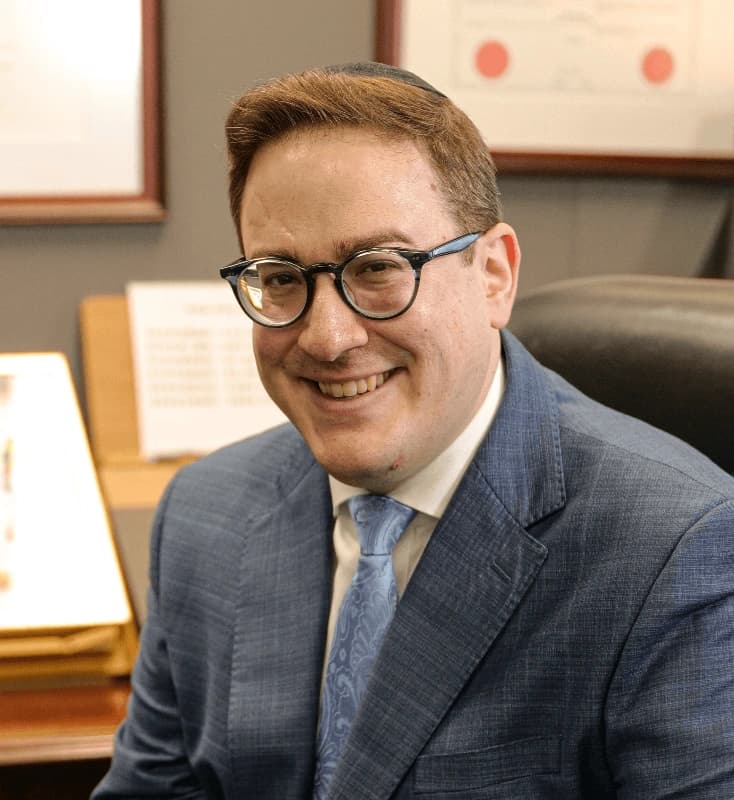
VC Lawyers Toronto legal team, Vaturi & Cho LLP

Talk to us

Claiming or defending, the honest range comes first

Bring the incomes as best you know them, the relationship's length and story, and the career history on both sides. We will run the entitlement analysis and give you the realistic SSAG range, low, mid, and high, for both amount and duration. Then we give you the strategy that fits your side of it.

The consultation is billed, and the cost of everything after it depends on the matter. No pressure, and no negotiating blind. Office, video, or phone. Confidential throughout.

Book a Consultation

Frequently asked questions

We answered all

  • Am I entitled to spousal support, or am I going to have to pay it?
    The same analysis answers both, and it starts with entitlement, which needs a legal basis. Compensatory means the relationship disadvantaged your economics: the career interrupted for children, the moves for the other's job, the unpaid work that freed their earning power. Non-compensatory means genuine need against the standard the relationship set. Contractual means an agreement promised it. Long marriages with income gaps and traditional roles trend strongly toward entitlement. Short relationships between self-sufficient earners often resolve at "no basis." The honest answer takes one consultation, before any number.
  • How is the amount actually calculated?
    Through the Spousal Support Advisory Guidelines: advisory, not law, but highly persuasive to courts when properly run. Without child support, the formula keys to length: roughly 1.5% to 2% of the gross income difference per year of marriage or cohabitation, producing low, mid, and high ranges. A 20-year relationship with a $60,000 gap lands around $1,500 to $2,000 monthly. With children, a different formula runs on net disposable incomes after child support's priority, which is software work. Where you land in the range, and whether deviation applies, is what lawyering determines.
  • How long does spousal support last?
    Roughly half a year to one year per year of the relationship, becoming indefinite after 20 years, or earlier under the Rule of 65, where your age at separation plus the relationship's years totals 65 or more in relationships of five-plus years. Two clarifications prevent most misunderstanding. The Rule of 65 is a duration rule, not an entitlement shortcut, because the basis must still exist. And "indefinite" means no end date set, not unchangeable, because self-sufficiency, genuine retirement, and material changes keep even indefinite orders reviewable.
  • We were never married. Can I still claim support?
    Very likely yes. Common-law partners qualify after three years of continuous cohabitation, or sooner in a relationship of some permanence with a child together. The claim runs on the same compensatory and needs bases, through the same SSAG framework, counted by cohabitation years. In this part of the city, where common-law couples sit outside the property-equalization regime entirely, support is frequently the claim that matters most, and the one partners least know they have.
  • My ex is self-employed / runs everything through a corporation. The tax return says $40,000 but the lifestyle says otherwise. What now?
    Now comes the real fight, and it is our home ground, because support runs on actual available income, not declared income. The approach is established: corporate financials disclosed, retained earnings argued as available, personal expenses through the business added back, lifestyle evidence marshalled, and income imputed where the numbers are managed. Our corporate and shareholder-agreement practice speaks these structures natively. The tax return is the opening position, never the answer.
  • Can I just pay (or take) one lump sum and be done?
    Often yes, and often wisely, because lump-sum support buys finality: no variation risk, no monthly relationship, and no enforcement future. The figure must be discounted and tax-adjusted properly, since periodic support is generally deductible to the payor and taxable to the recipient while lump sums are not, so the conversion is real math rather than a multiplication. We model both structures after-tax on every file. Sometimes the lump sum is the win for both sides, and sometimes its price reveals it isn't.
  • My ex remarried / I'm retiring / I lost my job. Does support just end or change?
    It changes only when it is changed. Material changes such as the recipient's remarriage or achieved self-sufficiency, or the payor's genuine retirement or involuntary job loss, ground variation or termination, brought properly by motion or negotiated amendment. The cardinal rule for payors is never unilaterally stop. Arrears accrue until the order changes, the FRO enforces them mechanically, and the court you eventually face starts with your default. Vary first, because the law rewards the payor who did it properly.
  • What happens if support just isn't paid?
    Enforcement follows, and it has teeth. Orders and filed agreements run through the Family Responsibility Office, which uses wage garnishment, bank seizure, driver's licence suspension, passport measures, and credit reporting, while arrears keep accumulating month after month. Recipients should file early and act on default promptly. Payors in genuine hardship should treat variation as the lawful exit, because default never is.
  • Does it matter who caused the separation? They had an affair.
    Legally, almost never. Spousal support in Canada is needs-and-compensation law, not conduct law. Entitlement and quantum run on economics rather than fault, and courts don't price infidelity. The energy spent litigating blame is energy the file bills and the range ignores. We will always tell you where the leverage actually lives.
  • Can we agree to waive spousal support, and will the waiver hold?
    You can, and it holds when it is built properly. Three pillars carry it: full financial disclosure both ways, independent legal advice on each side, and a bargain within the law's reasonable bounds. Those are the same pillars as every domestic contract, applied to the clause courts scrutinize hardest. The waiver signed blind, under pressure, or against undisclosed income is the one that comes back years later. We draft them to survive, and we challenge the ones that shouldn't.
  • How do spousal support, child support, and property division fit together?
    They fit as one settlement, sequenced. Child support ranks first, and the with-child SSAG formula literally runs after it. Equalization and support interact, because capital received affects needs and ability to pay, and the SSAG deviation factors say so. Pensions, the home, and the support stream get modelled together, which is why our files price the package rather than the line items. Negotiating support in isolation is how spouses win a number and lose a settlement.
  • What does this cost, and is it worth fighting about?
    It depends on the matter. The consultation is billed, and the cost of the work that follows depends on the complexity of the file: the range, the spread between the parties' positions, and the cost of closing it. We keep the proportionality conversation current, because support's wide ranges can justify fights worth having and fights that cost more than they recover. Fees are set out in writing before work begins, budgets stay transparent, and we are always candid about which your file is.

North York spousal support lawyers

Book a consultation with a North York lawyer

Spousal support is where unadvised spouses lose the most, on both sides of the cheque. It is the entitlement question nobody analyzed, the tax return that isn't the income, the gross offer that isn't the net, and the "indefinite" that was never infinite. The antidote is the ordered analysis of basis, inputs, range, and structure, delivered plainly in one conversation, before any position hardens or any number gets negotiated blind. No rhetoric, no guesswork. Just your range, your options, and the strategy that fits which side of the file you're on. Consultations are billed, and the cost depends on the complexity of the matter. Fees are set out in writing before work begins.

Toronto Office

Vaturi & Cho LLP

1110 Finch Ave W #310
North York, ON M3J 2T2
info@vclawyers.ca
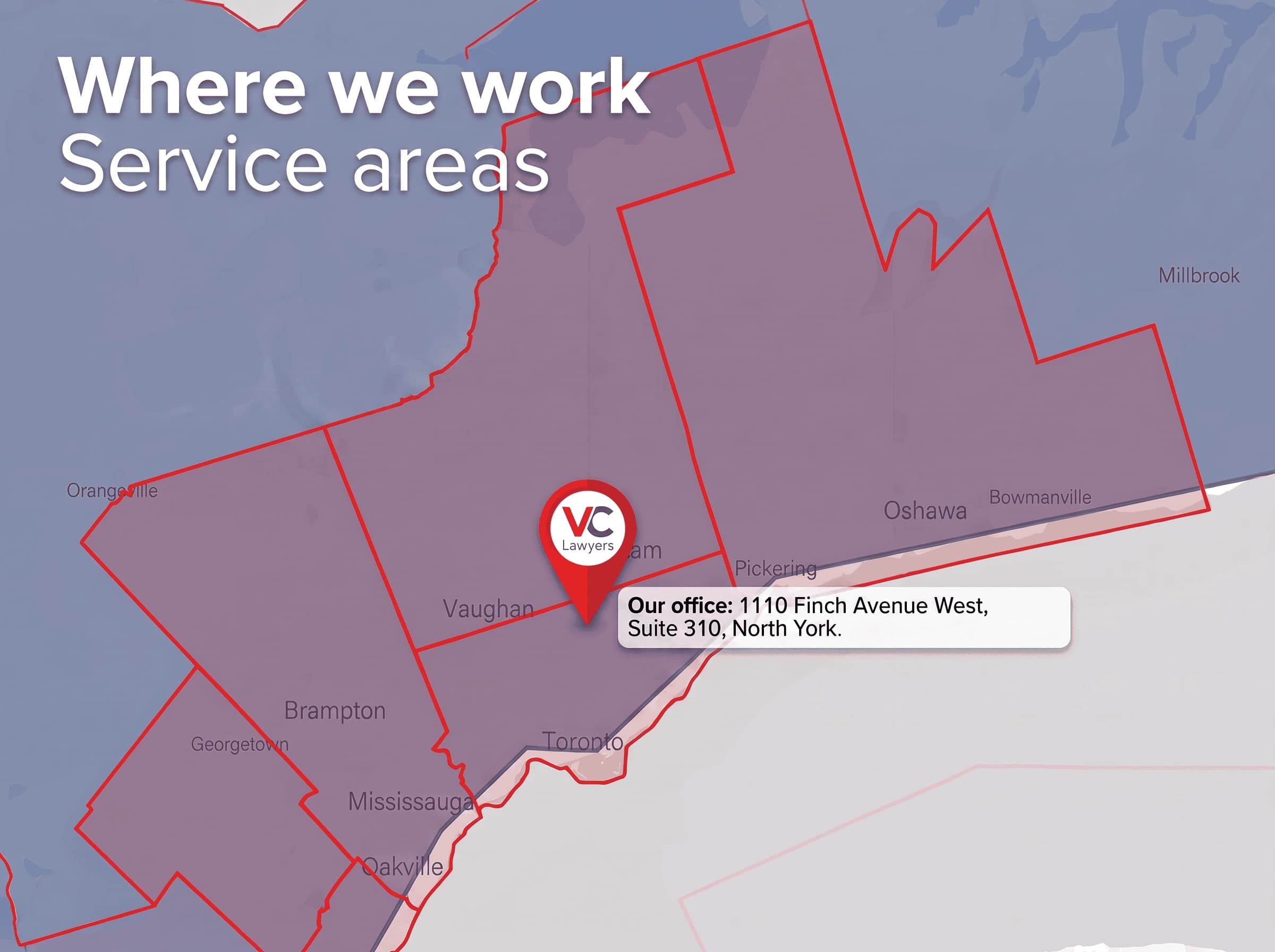
VC Lawyers service area map, Toronto and the Greater Toronto Area, with our North York office marked

Service areas

North York spousal support lawyers serving every neighbourhood

From our office at Finch Ave W and Keele, we handle spousal support matters across all of North York, including Willowdale, Don Mills, Downsview, York Mills, Bathurst Manor, Lansing, Newtonbrook, Bayview Village, Flemingdon Park, Jane and Finch, Yorkdale and Glen Park, Clanton Park, Parkwoods, and Victoria Village. We also serve neighbouring communities in Vaughan, Thornhill, Richmond Hill, Markham, Scarborough, Etobicoke, and Downtown Toronto.

Yours may be a compensatory claim from a single-career Willowdale marriage, a corporate-income fight on the Keele corridor, a Rule-of-65 grey divorce in Bathurst Manor, or a common-law claim anywhere in the area. In each case, our North York spousal support lawyers run the analysis and deliver the range, with office, video, and phone meetings, and parking and TTC access (Finch West Station) at our office.

Our office is at 1110 Finch Ave W #310, near Finch and Keele, with parking on site. By transit, take the Finch West LRT or the bus network connecting from Finch West Station on Line 1. If your injuries or circumstances make travel difficult, we come to you at home or in hospital, anywhere in North York.

Related practice areas

Continue exploring