VC·Lawyers®
North York contract dispute lawyer, VC Lawyers

North York

North York Contract Dispute Lawyer

Toronto Lawyers Association
Ontario Trial Lawyers Association (OTLA)
The Canadian Bar Association
Love Toronto
Consulate General of the Republic of Korea in Toronto
Korean Legal Clinic
Ontario Bar Association
Toronto Lawyers Association
Ontario Trial Lawyers Association (OTLA)
The Canadian Bar Association
Love Toronto
Consulate General of the Republic of Korea in Toronto
Korean Legal Clinic
Ontario Bar Association
Toronto Lawyers Association
Ontario Trial Lawyers Association (OTLA)
The Canadian Bar Association
Love Toronto
Consulate General of the Republic of Korea in Toronto
Korean Legal Clinic
Ontario Bar Association

Trusted by accident victims and businesses across Ontario

Overview

Contract disputes in North York

In a contract dispute in North York? Our experienced contract dispute lawyers in North York act for businesses and individuals on both sides of broken agreements across the GTA. We handle the unpaid invoices and uncollected debts that strangle small-business cash flow, and the supplier and service failures where what was promised never arrived, arrived late, or arrived wrong. We act in homeowner-contractor disputes over renovations abandoned, botched, or billed beyond the quote. We take the commercial lease defaults, franchise conflicts, and partnership fallouts of the local business corridors, and the purchase agreements where one side backed out before closing. And we take the defence side of all of it, because being accused of breach is as serious as suffering one, and we take both seats. Based at 1110 Finch Ave W, our team brings 70+ years of combined litigation experience to the day one side stops performing. That is the moment every agreement exists for, and the one most agreements never reach.

Start with what a contract dispute legally is, because the vocabulary frames the strategy. A breach is non-performance without lawful excuse: the payment not made, the goods not delivered, the work not done to the standard the agreement set.

North York Contract Dispute Lawyer, VC Lawyers

The doctrines, the remedies, and the strategy

The questions that decide these cases are surprisingly consistent. What did the contract actually require? The written terms come first, but Ontario enforces oral and partly-written agreements too, proven through conduct, correspondence, and performance. Was performance excused? Excuse can come from the other side's own prior breach, from a condition never satisfied, or from the contract's own terms. Was the breach fundamental, meaning it went to the root of the deal and let the innocent party treat the contract as over? Or was it minor, so the contract carries on and the only remedy is money?

Then the modern classic: was there a repudiation? That means one party's words or conduct show it no longer intends to be bound. The innocent party may accept the repudiation, ending the contract and suing, or reject it and hold the deal alive. That election is one of the most consequential and most commonly botched moments in contract law. Respond to the other side's repudiation wrongly and you can repudiate yourself.

The first days of a dispute decide more than the trial does. That is why "call before you reply" is the closest thing this practice has to a slogan.

Now the remedies, because the law offers more of them than people expect. Expectation damages are the default: money putting you in the position the contract's performance would have. They cover the unpaid price, the lost profits, and the cost of completing or correcting the work. Reliance damages recover what you spent on the strength of the deal.

Specific performance, the court ordering the contract actually performed, remains available where money can't substitute, such as unique property and certain shares and assets. An injunction is a court order telling a party to stop doing something, or in some cases to do something, and it can be interim, interlocutory, or permanent. Any of them can stop a threatened breach before the damage lands, such as the departing partner about to violate the non-compete, or the other side about to spend, hide, or transfer away assets.

Rescission unwinds agreements induced by misrepresentation. Ontario law grades misrepresentations as innocent (honestly believed, with rescission as the main remedy), negligent, and fraudulent, each with its own damages consequences. The craft is matching remedy to facts, and often combining them, or using the credible threat of one to settle for another.

Then the strategy layer that separates litigation from mere suing. Forum comes first: claims up to $50,000 belong in Small Claims Court, which is faster, cheaper, and built for exactly the unpaid-invoice tier of this practice. Larger and more complex claims proceed in the Superior Court of Justice. Choosing, and sometimes structuring, the forum is an economics decision we make with you, openly.

The contract's own terms come next. Notice clauses with short deadlines, arbitration clauses, limitation-shortening provisions, and entire-agreement clauses all change the path. Ontario courts generally enforce arbitration clauses, so your dispute may already be promised to a private tribunal. We read those clauses before the first letter goes out.

Then the clock. Ontario's general two-year limitation runs from discovery of the claim. The evidence, meaning the emails, the texts, the site photos, and the witnesses, degrades faster than the deadline.

And the economics, always. Most disputes should settle, and the well-built ones do: through the demand letter that shows the file is real, through the negotiation and mediation that resolve while relationships and legal budgets survive, and through litigation that proceeds only where it's worth more than it costs, prosecuted then like we mean it, because we do. We'll tell you at the first meeting which kind of file you have, including when the honest advice is that the principle isn't worth the fight.

This is the litigation arm of everything our business practice puts in writing. The same firm that drafts the shareholder agreements, closes the leases, and reads the fine print before anyone signs it goes to court when that fine print is broken. Consultations are billed, with the fee depending on the complexity of the matter and our fees set out in writing before work begins. With service in 8+ languages, VC Lawyers is where North York's broken deals get fixed, or fought.

Get in touch

Looking for legal help? Speak directly with a lawyer

Tell us what happened and a lawyer will personally review your case. Personal injury consultations are free and there are no fees unless we win. For all other practice areas, a consultation fee applies.

  • $30M+ recovered for injury clients
  • Available 24/7, including weekends
  • Service in English, Korean, and 6+ more languages

Prefer to call? (416) 661-4529

A VC Lawyers lawyer in consultation with a client at the North York office

Background

Contract disputes in North York: what you need to know

This part of the city generates this practice's docket daily. The Keele-corridor supplier with ninety days of unpaid invoices from a customer who's gone quiet. The Willowdale homeowner with a half-finished renovation and a contractor who stopped answering. The plaza landlord with a defaulting tenant, and the tenant with a landlord who never delivered the premises promised.

Add the franchisee squeezed by a franchisor's new terms, the partners whose handshake deal is ending without paper, and the business that paid a deposit for equipment that never shipped. Different facts, same law, and the same first question: what does the document, or the deal the conduct proves, actually say?

The doctrines that decide these cases

Formation and proof. Written contracts govern by their terms, but the unsigned deal lives too. Ontario enforces oral and partly-documented agreements, proven through the quote accepted by conduct, the invoices paid without protest, and the emails that contain the whole bargain. The flip side: negotiations marked "subject to contract" (meaning no deal until a formal agreement is signed) and missing essential terms defeat claims that assumed a deal existed. We establish what was actually agreed before arguing about its breach.

Performance, excuse, and who breached first. Doing what you promised ends your obligation, and a lawful excuse for not doing it forgives you. That excuse can be a condition that never happened, cooperation the other side withheld, or the other side's own earlier breach that put your obligations on hold. Half of contract litigation is sequencing: establishing whose failure came first, because the first breacher rarely collects.

Fundamental breach and repudiation. Minor breaches sound in damages while the contract continues. Breaches going to the root, and repudiations where words or conduct renounce the deal, give the innocent party the election: accept, terminate, and sue, or affirm and insist on performance. The election is irreversible, consequential, and routinely botched. Parties "terminate" without grounds and become the breacher, or keep performing into a dead deal and compound their losses. It's the single moment where early advice pays for itself most visibly.

Misrepresentation. Contracts induced by false statements unwind differently by grade. Innocent misrepresentation was honestly believed, and rescission is its domain. Negligent misrepresentation means a duty of care failed, with damages available. Fraudulent misrepresentation is the knowing lie, bringing rescission, damages, and the court's displeasure. Misrepresentation claims run alongside breach claims constantly, especially in business-purchase and investment disputes.

Damages, and their limits. Expectation damages aim at the position performance would have produced: the price, the lost profits, the cost of cure. But the law limits them honestly, and so do we. Losses must be reasonably foreseeable, and plaintiffs must mitigate, the duty to reasonably cut your own losses, where failures shrink awards daily. A clause that fixes in advance what must be paid for a breach is enforced as liquidated damages if the figure was a genuine estimate of the loss the breach was likely to cause. If the figure bears no real relation to that loss and works as a punishment rather than compensation, it is a penalty clause, and the court strikes it out. Realistic valuation is the start of every strategy conversation.

The equitable remedies. Specific performance where the subject is unique. Injunctions are for a breach that is threatened when money won't fix it. They have to be sought urgently, and the court weighs the strength of your case along with the balance of harm, meaning whether you would be hurt more without the order than the other side would be with it. Both are time-sensitive by nature: the injunction that would have stopped the breach is worth little the month after.

Not sure where you stand? One conversation will tell you.

A VC Lawyers lawyer meeting a client at the North York office

The contract's own rules

Before any strategy, the contract gets read in full. The notice clause: defaults often must be declared in writing, to an address, with cure periods, and skipping it means your termination fails. The arbitration clause: Ontario courts enforce them, so your "lawsuit" may be an arbitration, with its own appointment mechanics and timelines.

Then the rest of the fine print. Limitation and claims-bar provisions, because some contracts lawfully shorten the window. Entire-agreement clauses, which may exclude the side promises. And forum and law clauses, because the dispute may belong in another province's courts entirely. Twenty minutes of reading can reroute an entire case, which is why the reading comes first here.

By the numbers

Contract dispute facts every North York business and individual should know

The doctrines, the remedies, and the strategy that decide these cases.

  • Breach is non-performance without lawful excuse

    And the excuses are real law: the other side's prior breach, unmet conditions, and the contract's own termination clauses. Who actually breached first is the question half these cases turn on.
  • Oral and half-written deals are still contracts

    Ontario enforces agreements proven through conduct, correspondence, invoices, and performance. "Nothing was signed" ends fewer cases than people hope and fear.
  • Repudiation is an election, not an event

    When one side shows it won't be bound, the innocent party chooses: accept and sue, or affirm and hold the deal alive. The wrong response can flip who's in breach. The most expensive emails in contract law are sent in the first angry week, unadvised.
  • The remedies run wider than damages

    Expectation damages put you in the position performance would have given you, lost profits included. Reliance damages recover what you spent. Specific performance is available for unique assets, and injunctions restrain threatened breaches. Rescission unwinds contracts induced by misrepresentation, whether innocent, negligent, or fraudulent, each graded differently.
  • Forum is an economics decision

    Claims up to $50,000 belong in Small Claims Court: fast, proportionate, and built for the unpaid-invoice tier. Above it, the Superior Court of Justice. Suing in the right room is half of suing affordably.
  • Your contract may have already chosen the path

    Notice clauses with short deadlines, arbitration clauses courts generally enforce, and limitation-shortening terms. All of it gets read before the first letter, because those clauses bind you.
  • The clock is two years from discovery

    Ontario's general limitation is two years from discovery of the claim. The evidence, meaning emails, texts, photos, witnesses, and the other side's solvency, decays faster than the deadline.
  • Most disputes should settle, and well-built ones do

    The demand letter proves the file is real. Mediation resolves it while the relationship and the budget survive. Litigation is reserved for the cases worth it, then prosecuted to trial standard.
Boardroom at VC Lawyers, 1110 Finch Avenue West, North York

Doing business on a handshake and a hope

A note for North York's small businesses

Much of the commerce here still runs on quotes accepted by email, invoices on thirty days, and relationships that made paper feel unnecessary. Then the customer stops paying, the supplier stops shipping, or the partner stops talking.

Hear the two things our small-business cases prove weekly. First, your deal is probably still a contract, provable through the conduct and correspondence you already have. Second, the economics can still work: Small Claims for the proportionate tier, demand-letter resolutions for the collectable, and honest advice about which is which. The receivable you've written off in your head may be a file we'd open tomorrow. Bring it in and we'll read it.

The deadlines here are shorter than most people expect.

Step by step

What to do in a contract dispute

  1. 01

    Stop and read the contract before responding

    Especially the notice, termination, and dispute clauses. Those terms bind you both.
  2. 02

    Don't terminate, walk away, or declare the deal dead without advice

    Wrongful termination converts the innocent party into the breacher more often than any other mistake.
  3. 03

    Preserve the record now

    Every email, text, invoice, photo, and version of the agreement. Write your timeline while memory is fresh.
  4. 04

    Keep performing your own obligations

    Unless advised otherwise, because your clean hands are your leverage.
  5. 05

    Mitigate visibly

    Cover the supply, re-let the unit, finish the work reasonably. Courts reward the party who cut losses and punish the one who let them run.
  6. 06

    Mind the short deadlines

    Contractual notice windows, the two-year limitation from discovery, and lien deadlines in construction cases. Calendar them today.
  7. 07

    Watch the other side's solvency

    Judgments against empty defendants are expensive paper. Collectability shapes strategy from day one.
  8. 08

    Put nothing aggressive in writing unadvised

    The angry email is Exhibit A somewhere, always.
  9. 09

    Stay open to resolution at every stage

    The best outcomes in this practice are settlements that arrived because litigation was visibly ready.
  10. 10

    Bring it to a North York contract dispute lawyer this week

    With the documents, before the reply, while every option is still on the table.

Our process

How our North York contract dispute lawyers handle your case

  1. 01

    Consultation, the contract read, the position mapped

    We read the agreement, and the correspondence that may be the agreement. We establish what performance was owed and what actually happened. We check the contract's own notice, arbitration, and termination clauses, and confirm the limitation position. Then we give you the honest map: your exposure or entitlement, the remedy menu, the forum, and the realistic economics. All before you've replied to anything.
  2. 02

    Position protected, evidence built

    The first moves get made right. Responses are drafted so nothing concedes, waives, or accidentally repudiates, and required notices are served inside their windows. The record gets assembled and preserved before it degrades: contracts and amendments, the email and text trail, invoices and payment history, photos and site records in construction cases, and witness accounts. Urgent remedies such as injunctions and preservation orders are moved where threatened breaches or vanishing assets demand them. And the other side's solvency is assessed, because a judgment's value is the defendant's ability to pay it.
  3. 03

    Resolved cheaply, or litigated properly

    The escalation runs in order. First, the demand letter with the file visibly behind it. Then negotiation and mediation, pressed where resolution preserves money and relationships; most disputes end here, on terms the preparation earned. Where the other side won't move, litigation proceeds in the right forum: Small Claims for proportionate stakes, the Superior Court for the rest, or arbitration where the clause requires. The case is pleaded, discovered, and prepared for trial with the visible readiness that makes settlement offers improve. Defence work runs the same steps in reverse: the claim tested, the excuses and counterclaims built, the exposure managed.
  4. 04

    Judgment into money

    Resolution gets enforced. Settlements are documented with enforcement terms built in, including default provisions and security where warranted. Judgments are collected through examinations, garnishments, and liens, the enforcement work that turns paper wins into payment. The file isn't over when the judge agrees with you. It's over when the money clears.

Important

Contract deadlines stack from day one: the two-year limitation from discovery, the contract's own notice deadlines (sometimes days), and arbitration clauses that bar the courthouse. The evidence and the other side's solvency decay on their own schedules, and every unadvised reply risks conceding or repudiating. Whatever the dispute, the order is fixed: advice first, response second. Contact a contract dispute lawyer in North York today, before you send the email you've drafted.

Every situation is different. Yours deserves a specific answer.

Know their playbook

Opposing-party tactics in contract disputes, and how we answer them

  • The provoked repudiation

    Pressure, ambiguity, and goading designed to make you terminate without grounds, flipping the breach. Answered by the first-week discipline: nothing declared dead, nothing walked away from, until the grounds are confirmed.
  • The starve-out

    Delay deployed against your cash flow, with the breacher betting you'll settle cheap before you can afford judgment. Answered by forum economics (Small Claims where it fits), targeted motions, and settlement pressure built on visible trial readiness.
  • The paper-everything rewrite

    Months of silence, then a letter recasting history with new "agreements," invented complaints, and backdated grievances. Answered by the record we preserved in week one: the real-time trail beats the rewritten story.
  • The empty-pocket defence

    "Sue me, there's nothing here." Sometimes true, sometimes a bluff. Answered by solvency assessment up front, security demanded in settlements, and enforcement tools (examinations, garnishments, liens) that find the assets a bluff is hiding.
  • The technicality ambush

    Your claim met with the notice clause you skipped, the arbitration clause nobody read, and the limitation provision in the fine print. Answered the only reliable way: we read the whole contract first, so the ambush is ours to spring, not suffer.
  • The mitigation attack

    Your damages met with "you let the losses run." Answered in advance: mitigation done visibly and documented from the start, so the duty becomes our evidence of reasonableness, not their discount.

In the news

An economy of agreements, and the courts that keep score

Contract litigation tracks the economy that generates it. Payment disputes climb through every tightening cycle as receivables stretch and insolvencies ripple down supply chains. Construction and renovation conflicts fill dockets wherever building booms, and the steady judicial enforcement of arbitration clauses keeps moving commercial disputes into private rooms.

Ontario's courts continue to refine the doctrines this page runs on: good faith in contractual performance, the limits of termination rights, and the line between liquidated damages and penalties. All of it runs against the fixed backdrop of the Limitations Act, 2002. Small Claims' monetary jurisdiction keeps the unpaid-invoice tier proportionate; the Superior Court and the arbitral system carry the rest.

For North York's businesses and households, the throughline is practical. The law of broken deals is mature, and the remedies are real. Outcomes turn less on indignation than on discipline: the contract read, the election made correctly, the evidence preserved, the forum chosen for proportion, and the file built so settlement arrives on your terms.

Rather ask someone who handles these matters every week?

Why VC Lawyers

Why hire a contract dispute lawyer in North York at VC Lawyers

  • Litigators who start with the document

    The same practice that fights insurers and drafts the agreements brings careful contract-interpretation skills to every dispute. Yours gets read completely before anyone moves.
  • We act for both sides of contract disputes

    We prosecute breaches and defend against them. Whichever side you're on, the other side's playbook is one we've run.
  • The first-week discipline

    Responses that don't concede, decisions that don't backfire, and notices served inside their deadlines. These are the early moves that decide cases before court documents exist.
  • Honest economics, file by file

    Forum chosen for proportionality, settlement pressed where it's the win, litigation reserved for stakes that justify it, and the candour to say "this fight isn't worth it."
  • The full range of remedies

    Damages, specific performance, injunctions, and rescission, matched to facts, combined where strategy serves, and moved urgently where assets or breaches threaten.
  • Collection through to cash

    Enforcement through examinations, garnishments, and liens as part of the file, because judgments are paper until they're paid.
  • Multilingual service

    English, Korean (한국어), Hebrew, Mandarin, and more, for the businesses of North York, in the language the deal was actually done in.

Choosing wisely

How to choose the right contract dispute lawyer in North York

Before hiring any firm, ask the hard questions. Will they read the entire contract, including notice clauses, arbitration, and limitation terms, before the first move? Have they sat on both sides of these disputes? Will they protect your critical early decisions, like whether to end the contract or keep it alive, in week one? Is the forum chosen for proportionality, with Small Claims used where it fits, and the economics discussed openly, including when the fight isn't worth it? Is the full remedy toolkit in play, meaning injunctions and specific performance, not just damages? And does the file include enforcement, so judgment becomes money?

At VC Lawyers, the answer to each is yes, from an office in the heart of North York, with fees set out in writing before work begins, in your language.

Still weighing what to do next? That is what a first conversation is for.

Testimonials

What our North York clients say

4.8★★★★★·140 on Google
After my car accident, I went through an incredibly challenging time. Thanks to Lawyer Jun Lee and his exceptional team, I received tremendous support and strength.

Jay Kim

Personal Injury Client

When my mother suffered a serious head injury, I was devastated. After meeting Lawyer Jae Hyon Cho, my family was able to receive substantial compensation.

Minkyung Park

Personal Injury Client

Avi Vaturi was professional, responsive, and thorough. When the transaction became complex, his calm communication and practical solutions navigated us to a smooth close.

Jordan Glaser

Real Estate Co-Counsel

Mr. Avi Vaturi did a fantastic job. The whole process was seamless — timely, detailed, and professional from start to finish.

Howard Huang

Real Estate Client

He helped me with both my car accident case and the buying and selling of my home. Everything was handled professionally and efficiently.

Yoon Jung

Personal Injury & Real Estate Client

Jae Cho was great to deal with and very attentive to my case. His associate Sunny was also very helpful. I would highly recommend.

Jordan Ungerman

Personal Injury Client

Their professionalism, attention to detail, and commitment to clients truly stand out. Whether handling urgent matters or guiding me through complex issues, the team delivered.

Charles Hong

Long-time Client

It has been my pleasure to work with Jae Cho and his team. Knowledgeable, clear in their explanations, and the process was smooth and stress-free.

Joanne Jeong

Real Estate Client

Vaturi & Cho LLP is an outstanding law firm. They explain even complex matters clearly, and their dedication to achieving the best outcomes is truly impressive.

Jong Ko

Client

The team was not only knowledgeable but also very kind and attentive throughout the entire process. Highly recommended.

Tobi

Client

After my car accident, I went through an incredibly challenging time. Thanks to Lawyer Jun Lee and his exceptional team, I received tremendous support and strength.

Jay Kim

Personal Injury Client

When my mother suffered a serious head injury, I was devastated. After meeting Lawyer Jae Hyon Cho, my family was able to receive substantial compensation.

Minkyung Park

Personal Injury Client

Avi Vaturi was professional, responsive, and thorough. When the transaction became complex, his calm communication and practical solutions navigated us to a smooth close.

Jordan Glaser

Real Estate Co-Counsel

Mr. Avi Vaturi did a fantastic job. The whole process was seamless — timely, detailed, and professional from start to finish.

Howard Huang

Real Estate Client

He helped me with both my car accident case and the buying and selling of my home. Everything was handled professionally and efficiently.

Yoon Jung

Personal Injury & Real Estate Client

Jae Cho was great to deal with and very attentive to my case. His associate Sunny was also very helpful. I would highly recommend.

Jordan Ungerman

Personal Injury Client

Their professionalism, attention to detail, and commitment to clients truly stand out. Whether handling urgent matters or guiding me through complex issues, the team delivered.

Charles Hong

Long-time Client

It has been my pleasure to work with Jae Cho and his team. Knowledgeable, clear in their explanations, and the process was smooth and stress-free.

Joanne Jeong

Real Estate Client

Vaturi & Cho LLP is an outstanding law firm. They explain even complex matters clearly, and their dedication to achieving the best outcomes is truly impressive.

Jong Ko

Client

The team was not only knowledgeable but also very kind and attentive throughout the entire process. Highly recommended.

Tobi

Client

After my car accident, I went through an incredibly challenging time. Thanks to Lawyer Jun Lee and his exceptional team, I received tremendous support and strength.

Jay Kim

Personal Injury Client

When my mother suffered a serious head injury, I was devastated. After meeting Lawyer Jae Hyon Cho, my family was able to receive substantial compensation.

Minkyung Park

Personal Injury Client

Avi Vaturi was professional, responsive, and thorough. When the transaction became complex, his calm communication and practical solutions navigated us to a smooth close.

Jordan Glaser

Real Estate Co-Counsel

Mr. Avi Vaturi did a fantastic job. The whole process was seamless — timely, detailed, and professional from start to finish.

Howard Huang

Real Estate Client

He helped me with both my car accident case and the buying and selling of my home. Everything was handled professionally and efficiently.

Yoon Jung

Personal Injury & Real Estate Client

Jae Cho was great to deal with and very attentive to my case. His associate Sunny was also very helpful. I would highly recommend.

Jordan Ungerman

Personal Injury Client

Their professionalism, attention to detail, and commitment to clients truly stand out. Whether handling urgent matters or guiding me through complex issues, the team delivered.

Charles Hong

Long-time Client

It has been my pleasure to work with Jae Cho and his team. Knowledgeable, clear in their explanations, and the process was smooth and stress-free.

Joanne Jeong

Real Estate Client

Vaturi & Cho LLP is an outstanding law firm. They explain even complex matters clearly, and their dedication to achieving the best outcomes is truly impressive.

Jong Ko

Client

The team was not only knowledgeable but also very kind and attentive throughout the entire process. Highly recommended.

Tobi

Client

After my car accident, I went through an incredibly challenging time. Thanks to Lawyer Jun Lee and his exceptional team, I received tremendous support and strength.

Jay Kim

Personal Injury Client

When my mother suffered a serious head injury, I was devastated. After meeting Lawyer Jae Hyon Cho, my family was able to receive substantial compensation.

Minkyung Park

Personal Injury Client

Avi Vaturi was professional, responsive, and thorough. When the transaction became complex, his calm communication and practical solutions navigated us to a smooth close.

Jordan Glaser

Real Estate Co-Counsel

Mr. Avi Vaturi did a fantastic job. The whole process was seamless — timely, detailed, and professional from start to finish.

Howard Huang

Real Estate Client

He helped me with both my car accident case and the buying and selling of my home. Everything was handled professionally and efficiently.

Yoon Jung

Personal Injury & Real Estate Client

Jae Cho was great to deal with and very attentive to my case. His associate Sunny was also very helpful. I would highly recommend.

Jordan Ungerman

Personal Injury Client

Their professionalism, attention to detail, and commitment to clients truly stand out. Whether handling urgent matters or guiding me through complex issues, the team delivered.

Charles Hong

Long-time Client

It has been my pleasure to work with Jae Cho and his team. Knowledgeable, clear in their explanations, and the process was smooth and stress-free.

Joanne Jeong

Real Estate Client

Vaturi & Cho LLP is an outstanding law firm. They explain even complex matters clearly, and their dedication to achieving the best outcomes is truly impressive.

Jong Ko

Client

The team was not only knowledgeable but also very kind and attentive throughout the entire process. Highly recommended.

Tobi

Client

Our team

Meet your North York legal team

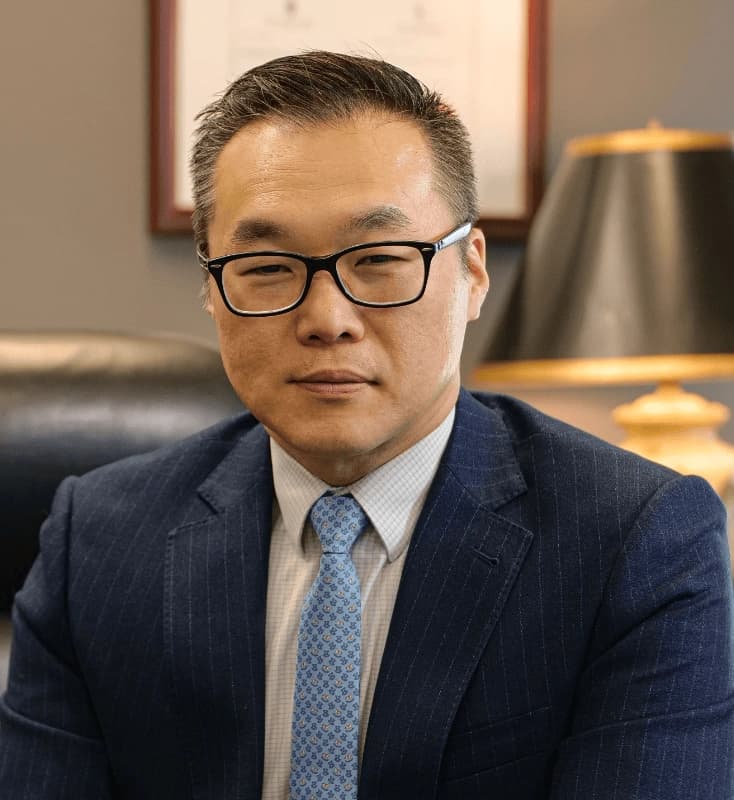
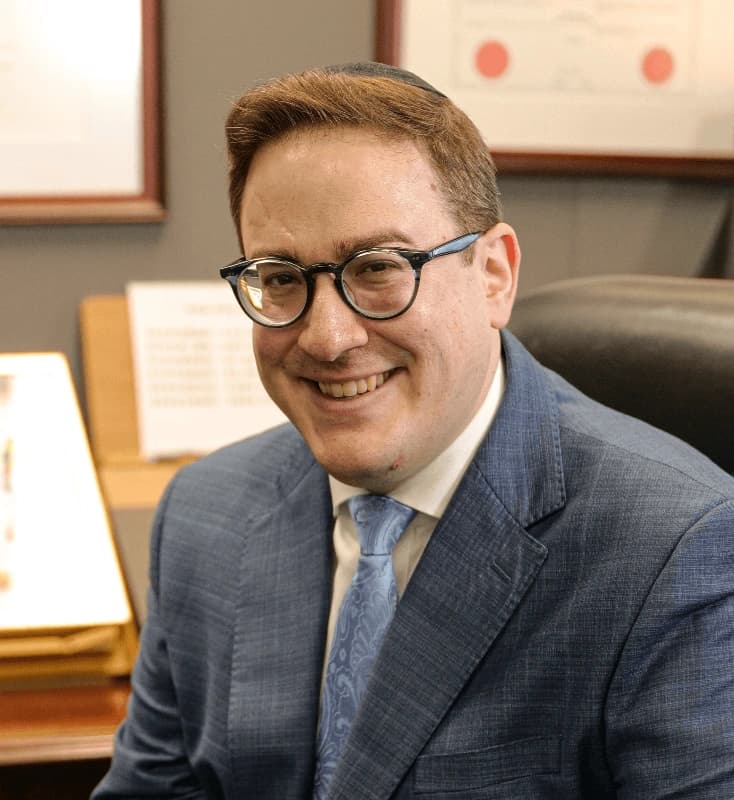
Our lawyers bring decades of combined litigation experience to the area's broken agreements. That covers payment claims, construction disputes, lease and franchise conflicts, and partnership fallouts, prosecuted and defended across every forum from Small Claims to the Superior Court and arbitration. Every client at VC Lawyers works with a dedicated North York contract dispute lawyer who reads first, moves carefully, and litigates to win.

Who handles your file

The people on your matter

  • Avi Vaturi, Partner

    Senior litigation counsel with extensive experience in commercial disputes, urgent remedies, and trial advocacy.
  • Jae Hyon Cho, Co-Managing Partner

    Experienced counsel serving North York's business communities, including Korean-speaking owners, across disputes and resolutions.
  • Jun Ki Lee, Associate

    Dedicated associate handling demand work, pleadings, discovery, Small Claims matters, and enforcement across North York and the GTA.
  • Allan Weiss, Associate

    Experienced lawyer providing strategic guidance on complex commercial litigation and arbitration.

Not sure where you stand? One conversation will tell you.

Key metrics

In the numbers

Years combined litigation experience
70+
Languages served
8+
Sides, claims prosecuted and defended
Both
Fees set out before work begins
Written
VC Lawyers Toronto legal team, Vaturi & Cho LLP

Talk to us

Before you reply, before you terminate, before you sue, talk to us

Bring the contract (or the emails that are the contract), the story, and the other side's last move. We'll tell you what the agreement actually requires, what your options are worth, and what the clock says. We'll also tell you whether this is a demand letter, a mediation, a lawsuit, or a fight not worth having.

Office, video, or at your place of business across North York and the GTA.

Book a Consultation

Frequently asked questions

We answered all

  • Nothing was signed, we did the deal by email and a handshake. Do I still have a contract?
    Very possibly, yes: Ontario enforces oral and partly-written agreements proven through conduct and correspondence. The quote followed by performance, the invoices paid without protest, and the email chain containing the essential terms can all establish the contract. "Nothing signed" weakens proof, not existence. Bring the trail; assessing what it establishes is exactly what the first consultation does.
  • The other side clearly breached. Can I just stop performing and walk away?
    No, not without advice, because this is the most dangerous moment in contract law. Walking away is lawful only if their breach was fundamental, or a true repudiation you're accepting. Misjudge it and you become the breacher, converting your claim into your liability. The election between terminating and affirming is irreversible and fact-driven. One conversation before you act protects everything after.
  • What can I actually recover if I win?
    The default is expectation damages: money putting you where performance would have, covering the unpaid price, lost profits, and the cost of completing or correcting, limited by foreseeability and your duty to mitigate. Alternatives and additions include reliance damages for what you spent on the deal, specific performance where the subject is unique, injunctions restraining threatened breaches, and rescission with damages where misrepresentation induced the deal. We match the remedy to the facts, and value it realistically before anyone spends a dollar pursuing it.
  • The amount is about $25,000. Is that even worth a lawyer?
    Yes. That amount sits squarely in Small Claims Court territory, which covers claims up to $50,000: a faster, cheaper, proportionate forum built for exactly this tier. Strategic help with pleadings, evidence, and settlement often costs a fraction of the recovery. The unpaid-invoice file you've mentally written off is frequently the most economical case in this practice. We'll give you the honest cost-benefit at the first meeting.
  • My contract has an arbitration clause. Can I still sue in court?
    Usually not: Ontario courts generally enforce arbitration clauses and will stay lawsuits brought in their face, with narrow exceptions for invalidity or non-arbitrable subject matter. That isn't necessarily bad news, because arbitration can be faster and private. But it changes the path entirely, including appointment mechanics, timelines, and costs. That's why the clause gets read before the first letter, not after the statement of claim.
  • How long do I have to sue?
    Ontario's general limitation is two years from discovery of the claim: when you knew or ought to have known the loss, its cause, and that proceedings were the remedy. Some contracts lawfully shorten the window through claims-bar provisions, and construction matters carry their own lien deadlines measured in weeks. The evidence decays faster than any of it. Whatever your timeline, the safe answer is this month.
  • The contractor took our deposit and abandoned the renovation. What are our options?
    You have the full menu, in economic order: the demand letter with the file behind it, then the claim, in Small Claims or Superior Court by amount, for the deposit, the cost-to-complete differential, and consequential losses. The practical layer of lien considerations, other claimants, and the contractor's solvency gets assessed early, because strategy follows collectability. Document the site now: photos, the state of work, every text. Get completion quotes and bring it in; homeowner-contractor claims are a staple of this practice.
  • A customer owes us months of invoices and has gone quiet. Lawsuit or write-off?
    Usually neither, at first: the lawyer's demand letter collects a remarkable share of commercial receivables by itself, by showing the file is real, the interest is running, and the next step is drafted. Where it doesn't, the claim proceeds in Small Claims or Superior Court by amount, with default judgment where they don't respond, and enforcement through examinations, garnishment, and liens where they don't pay. We assess collectability honestly before you spend, including the rare honest answer that the write-off is right.
  • We're being sued for breach, and we don't think we did anything wrong. Now what?
    Move inside the deadlines, because defences have short clocks. Then build the answer: what the contract actually required, the plaintiff's own prior failures, the conditions never met, the losses they failed to mitigate, and the counterclaim your side of the story supports. Defence is half this practice, and well-built defences settle plaintiffs down as effectively as well-built claims settle defendants.
  • Will this destroy the business relationship?
    Not necessarily. Protecting relationships worth protecting is a strategy input we take seriously: measured demand letters, negotiation and mediation before pleadings, and settlements structured so both sides keep doing business. Some relationships end regardless, because the dispute was the symptom, and then the goal shifts cleanly to outcome. You set the priority; the strategy follows it.
  • What does contract litigation cost, and how do you charge?
    Our fees depend on the matter and the situation, and they are set out in writing before work begins. Demand-letter and Small Claims work is scoped tightly, and larger litigation runs on budgets with decision points so costs never surprise. At every stage we keep the proportionality conversation current: what this fight costs against what it's worth. Consultations are billed, and the first conversation covers the economics, not just the merits.
  • Do you handle disputes outside North York?
    Yes. We handle contract disputes across the GTA and Ontario, in every forum: Small Claims, the Superior Court of Justice, and arbitration. Wherever the courtroom sits, the file is run from our Finch Ave W office.

North York contract dispute lawyers

Book a consultation with a North York lawyer

Contract disputes are won and lost before any judge sees them: in the reply you're tempted to send, the termination you're tempted to declare, and the deadline running in fine print nobody's read. The discipline is simple and rare. Read first, elect correctly, preserve everything, choose the proportionate forum, and build the file so settlement arrives on your terms, or trial does. The first conversation covers the economics alongside the merits, and the email you've drafted can wait one more day. Consultations are billed, and the cost depends on the complexity of the matter. Fees are set out in writing before work begins.

Toronto Office

Vaturi & Cho LLP

1110 Finch Ave W #310
North York, ON M3J 2T2
info@vclawyers.ca
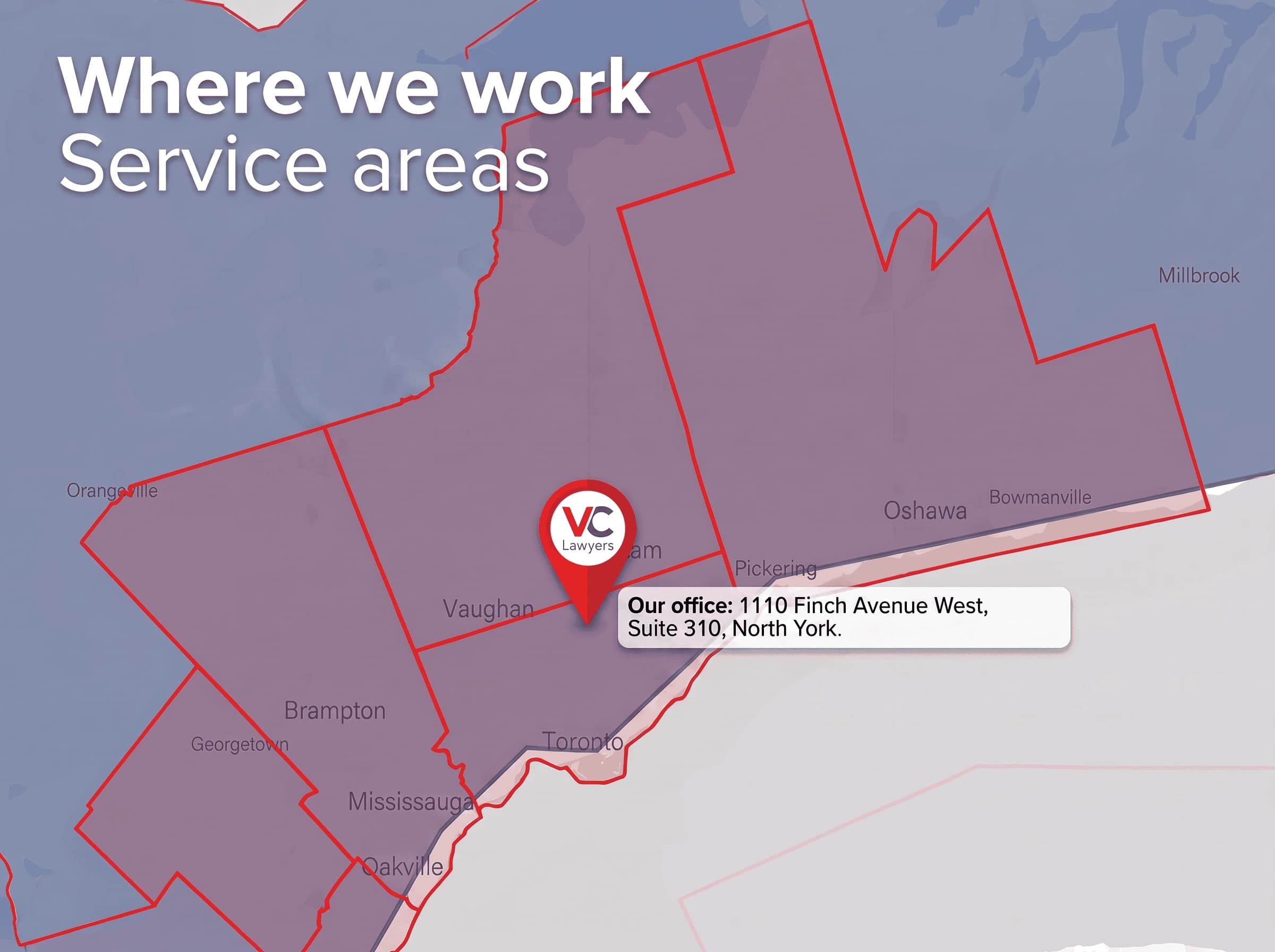
VC Lawyers service area map, Toronto and the Greater Toronto Area, with our North York office marked

Service areas

North York contract dispute lawyers serving every neighbourhood

From our office at Finch Ave W and Keele, we handle contract disputes across all of North York, including Willowdale, Don Mills, Downsview, York Mills, Bathurst Manor, Lansing, Newtonbrook, Bayview Village, Flemingdon Park, Jane and Finch, Yorkdale and Glen Park, Clanton Park, Parkwoods, and Victoria Village, plus neighbouring communities in Vaughan, Thornhill, Richmond Hill, Markham, Scarborough, Etobicoke, and Downtown Toronto.

Whether it's an unpaid receivable on the Keele corridor, a renovation gone wrong in Willowdale, a lease default on a Finch plaza, or a partnership unwinding anywhere in the area, our North York contract dispute lawyers bring the read-first discipline and the courtroom strength. We offer office, video, and on-site meetings, with parking and TTC access (Finch West Station) at our office.

Our office is at 1110 Finch Ave W #310, near Finch and Keele, with parking on site. By transit, take the Finch West LRT or the bus network connecting from Finch West Station on Line 1. If your injuries or circumstances make travel difficult, we come to you at home or in hospital, anywhere in North York.

Related practice areas

Continue exploring